
Can You Replace Bedroom Carpet Without Replacing Hallway Carpet?
You can replace your bedroom carpet without replacing the hallway carpet. Each room functions as an independent installation zone, with carpet sections terminating at the doorway. Your installer will use connection hardware — like a Z-bar or joining strip — to create a clean join between the two surfaces. Matching pile height and fiber type minimizes any visible contrast. Keep going to learn everything you need for a seamless result.
Key Takeaways
- Yes, you can replace bedroom carpet independently, as each room acts as a separate installation zone with carpet sections terminating at doorways.
- Transition strips, Z-bars, or joining strips create a clean junction between new bedroom carpet and existing hallway carpet.
- Match fiber type, pile height, and color by bringing a hallway carpet sample when selecting new bedroom carpet.
- Matching pile heights between bedroom and hallway minimizes visible contrast and ensures a seamless, professional-looking transition.
- Replacing both carpets simultaneously may reduce labor costs and improve aesthetic continuity, but it is not required.
Can You Replace Just the Bedroom Carpet?
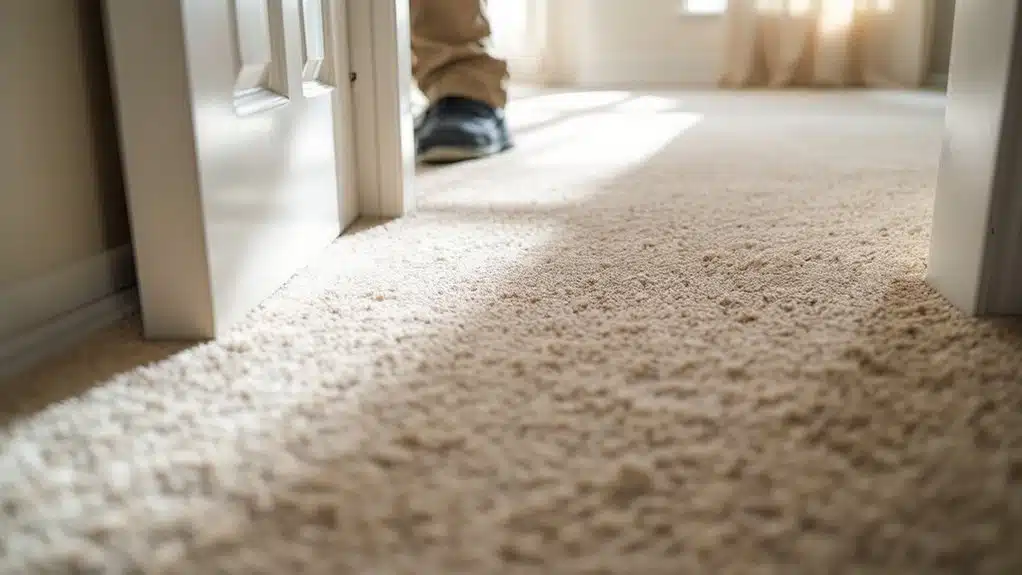
Yes, you can replace just the bedroom carpet without touching the flooring in other rooms. Each room functions as an independent installation zone, so you’re not obligated to replace adjacent or connecting carpet simultaneously. Carpet sections terminate at doorways, typically beneath the door’s threshold or tack strip line, making room-by-room replacement structurally practical.
Following proper installation tips guarantees a seamless changeover between old and new flooring. You’ll want to match pile height and fiber density as closely as possible to minimize visible contrast at doorway edges. Understanding fiber characteristics helps ensure compatibility between rooms and creates a cohesive look throughout your home. Use a proper transition strip where the bedroom carpet meets hallway flooring to create a clean, professional finish. Securing tack strips along the perimeter and stretching the bedroom carpet correctly prevents buckling and extends the flooring’s functional lifespan.
How Carpet Transitions Between Bedroom and Hallway Work
Where your bedroom carpet meets the hallway, a joining strip bridges the two surfaces and keeps edges secured. Installers typically use a joining strip, Z-bar, or tack strip depending on the carpet types involved and the height differential between surfaces.
When replacing only your bedroom carpet, the installer must carefully remove the existing joining hardware, install the new carpet, then reattach or replace the strip to create a clean seam. Different installation techniques apply depending on whether you’re joining carpet to carpet or carpet to hard flooring. For those considering hard flooring alternatives in their hallway, luxury vinyl planks offer a durable and waterproof option that pairs seamlessly with bedroom carpet.
If your hallway carpet sits higher or lower than the new bedroom carpet, the installer selects an appropriate reducer strip to eliminate tripping hazards. Matching pile heights between rooms produces the most seamless, professional result for those entering the space.
Matching New Bedroom Carpet to Your Existing Hallway

Achieving a seamless look between your new bedroom carpet and existing hallway carpet depends on matching three key characteristics: fiber type, pile height, and color. For texture considerations, bring a small cutting of your hallway carpet to the flooring retailer. Measure the pile height precisely using a ruler, noting whether it’s cut, looped, or textured. For color coordination, photograph your hallway carpet under natural light, since artificial lighting distorts tone. Request physical carpet samples rather than relying on digital swatches. Test samples in your bedroom’s lighting conditions before committing. If an exact match proves impossible, choose a complementary color within the same tonal family. Consider nylon carpets for their excellent durability and stain resistance, which can help your new bedroom carpet withstand wear just as well as your existing hallway. A transition strip will minimize visual inconsistency, but closer initial matching reduces its prominence considerably.
When It Makes More Sense to Replace Both at Once
Sometimes matching new bedroom carpet to existing hallway carpet isn’t worth the effort. If your hallway carpet shows significant wear, fading, or damage, replacing both simultaneously makes practical sense. You’ll benefit from style continuity throughout the space, creating a unified look that serves your household’s aesthetic needs long-term.
From a cost considerations standpoint, bundling both installations often reduces your total labor expenses. Installers can complete the work in a single visit, minimizing disruption to your home and the people living in it. You’ll as well gain stronger negotiating leverage with suppliers when purchasing larger quantities of carpet.
If your hallway carpet has fewer than five years of remaining lifespan, replacing both now prevents a second costly installation project in the near future.
How to Get a Clean, Professional Finish at the Doorway
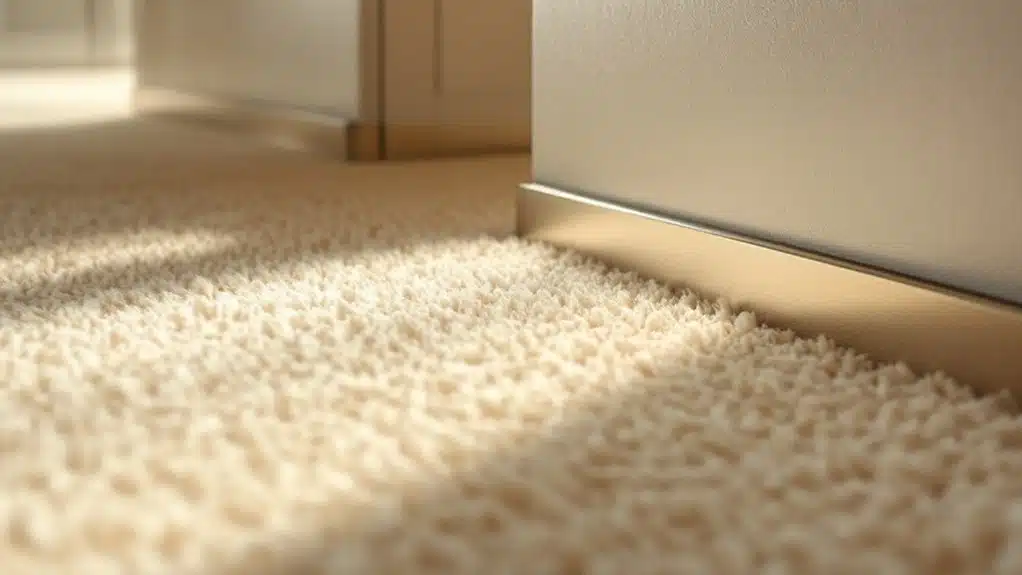
The doorway shift between your new bedroom carpet and the hallway defines how professional the entire installation looks. During carpet installation, use a shift strip to bridge the height difference cleanly. Choose the correct strip type based on your specific doorway shifts.
| Shift Type | Best Use Case | Finish Quality |
|---|---|---|
| Z-Bar Strip | Carpet to carpet | Seamless, flush |
| T-Molding | Equal height floors | Clean, balanced |
| Overlap Reducer | Height difference exists | Smooth, tapered |
| Tack Strip Edge | Hidden under door | Invisible finish |
Secure your chosen strip directly to the subfloor, tucking carpet edges underneath tightly. Always work with the door closed to verify clearance. A properly installed shift protects both carpets while delivering the polished result your household deserves.
Frequently Asked Questions
How Long Does Bedroom Carpet Replacement Typically Take to Complete?
You’ll typically complete a bedroom carpet replacement in 2-4 hours. The installation process moves quickly when you’re prepared, but timeline expectations vary based on room size, furniture removal, and subfloor condition you’re working with.
Will New Carpet Installation Cause Damage to Existing Baseboards or Walls?
You’ll minimize wall damage and guarantee baseboard protection when you hire skilled installers who use proper tack strip placement, carefully trim carpet edges, and apply protective coverings to baseboards throughout the entire installation process.
Can I Install Bedroom Carpet Myself Without Hiring a Professional?
You can tackle DIY carpet installation yourself using a proper carpet tools checklist, including a knee kicker, tack strips, and a carpet stretcher. You’ll achieve professional results if you follow precise measurements and manufacturer guidelines carefully.
What Is the Average Cost of Replacing Carpet in One Bedroom?
You’ll typically spend $300-$1,200 replacing bedroom carpet, depending on cost factors like room size and labor. Carpet types—from budget polyester to premium wool—significantly influence your final price, helping you serve your household’s comfort and budget needs.
How Do I Dispose of Old Bedroom Carpet After Removal?
You’ve got several disposal methods available. Roll and tie your old carpet, then check local recycling options, as many facilities accept carpet materials. You can additionally contact waste management services or donate reusable carpet to local charities.
Conclusion
Replacing just your bedroom carpet is entirely achievable — your doorway threshold becomes the dividing line between old and new, a seam that separates two chapters of your home’s story. You’ll need the right transition strip, a precise color match, and clean installation technique to pull it off seamlessly. When you execute each step correctly, that threshold doesn’t signal compromise — it signals intentional, strategic renewal where it matters most.