Porcelain vs. Natural Stone: Which Is Easier to Maintain in a Bathroom?
When maintaining a bathroom, you’ll find porcelain considerably easier to manage than natural stone. Porcelain’s non-porous surface resists moisture, staining, and mold with just weekly cleaning using a mild all-purpose cleaner. Natural stone, by contrast, demands cleaning 2–3 times weekly, annual sealing, and pH-neutral products to prevent etching and staining. Over a decade, natural stone can cost 3–5 times more to maintain. The full breakdown ahead will help you decide which material suits your bathroom best.
Key Takeaways
- Porcelain is non-porous and resists moisture, staining, and mold, making it significantly easier to maintain than natural stone in bathrooms.
- Porcelain requires cleaning only weekly, while natural stone needs cleaning 2–3 times per week using specialized pH-neutral products.
- Natural stone must be sealed annually and is vulnerable to etching, adding ongoing maintenance steps porcelain doesn’t require.
- Over 10 years, natural stone maintenance can cost 3–5 times more than porcelain due to sealing and repair expenses.
- Porcelain suits high-traffic, humid bathrooms best, while natural stone demands more effort to preserve its luxury appearance.
How Porcelain and Natural Stone Handle Daily Bathroom Wear
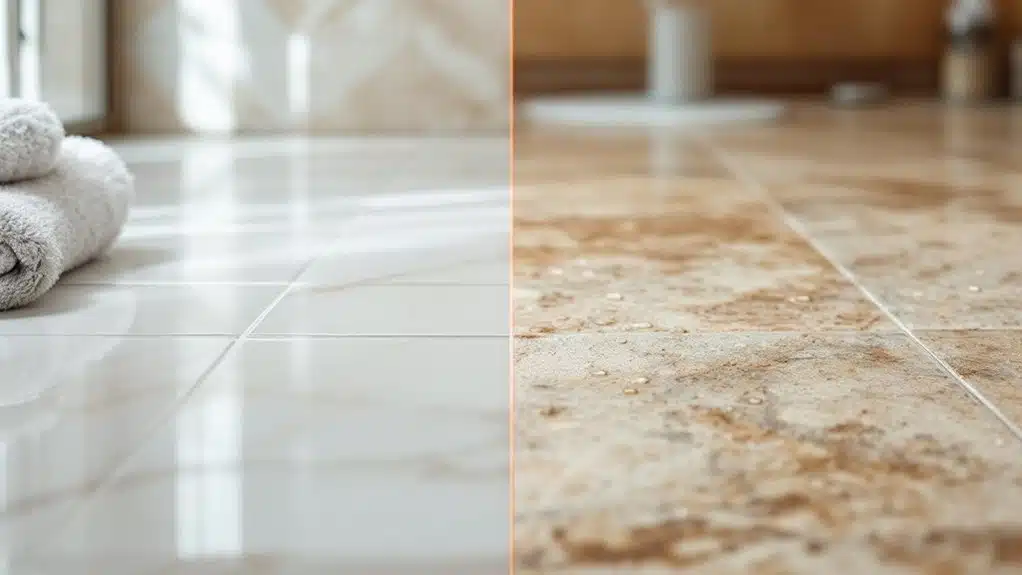
Your bathroom floor takes a beating every day—foot traffic, water exposure, cleaning products, and temperature fluctuations all test a tile’s durability. In any durability comparison, porcelain consistently outperforms natural stone. Its dense, non-porous composition resists moisture absorption, staining, and surface scratching without requiring protective treatments.
Natural stone, while offering undeniable aesthetic appeal, demands more careful handling. Marble, travertine, and limestone are porous materials that absorb liquids quickly, making them vulnerable to etching from acidic cleaners and discoloration from standing water. If you’re selecting tile for a high-traffic family bathroom, those vulnerabilities matter greatly.
Porcelain maintains its integrity under daily stress with minimal intervention, making it an easy to clean option that simplifies your daily maintenance routine. Natural stone can match its beauty long-term, but only if you’re committed to consistent, attentive care protocols.
Cleaning Routines: What Each Material Actually Demands
Cleaning porcelain and natural stone aren’t interchangeable tasks—each material’s composition dictates a distinct set of products, frequencies, and techniques. Porcelain’s surface durability allows aggressive cleaning frequency without degradation. Stone demands pH-neutral solutions and gentler schedules to prevent etching. Porcelain’s water-resistant properties make it particularly forgiving in wet bathroom environments, requiring less frequent sealing compared to natural stone.
| Factor | Porcelain | Natural Stone |
|---|---|---|
| Cleaning Frequency | Weekly or as needed | 2–3 times weekly |
| Recommended Product | Mild all-purpose cleaner | pH-neutral stone cleaner |
| Avoid | Abrasive scrubbers | Acidic or alkaline agents |
You’ll protect your clients’ investments by matching the correct protocol to each material. Skipping stone-specific cleaners accelerates surface breakdown, while over-treating porcelain wastes resources. Precision in product selection and scheduling isn’t optional—it’s the standard responsible maintenance requires.
Which One Is More Vulnerable to Water, Stains, and Humidity?
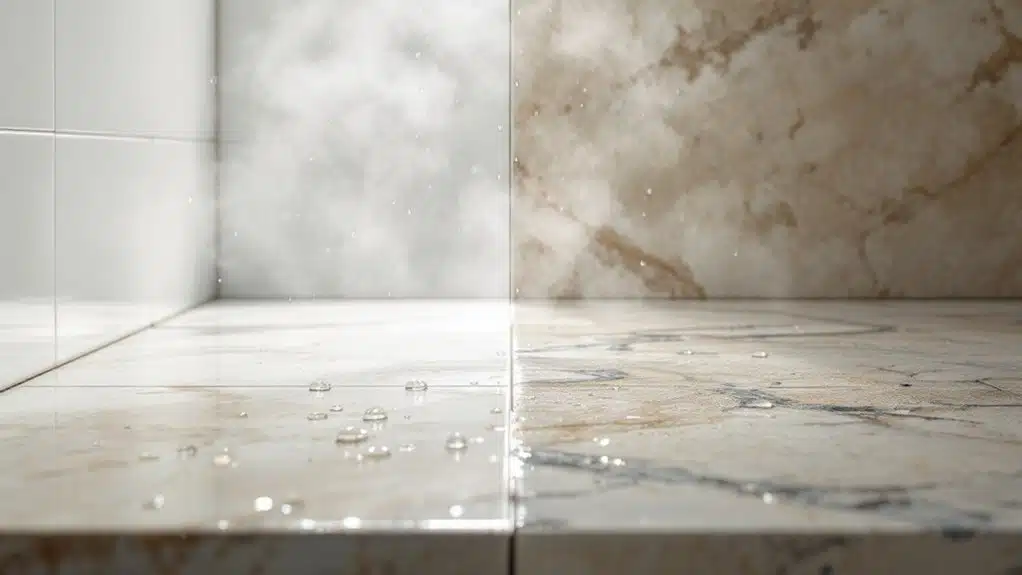
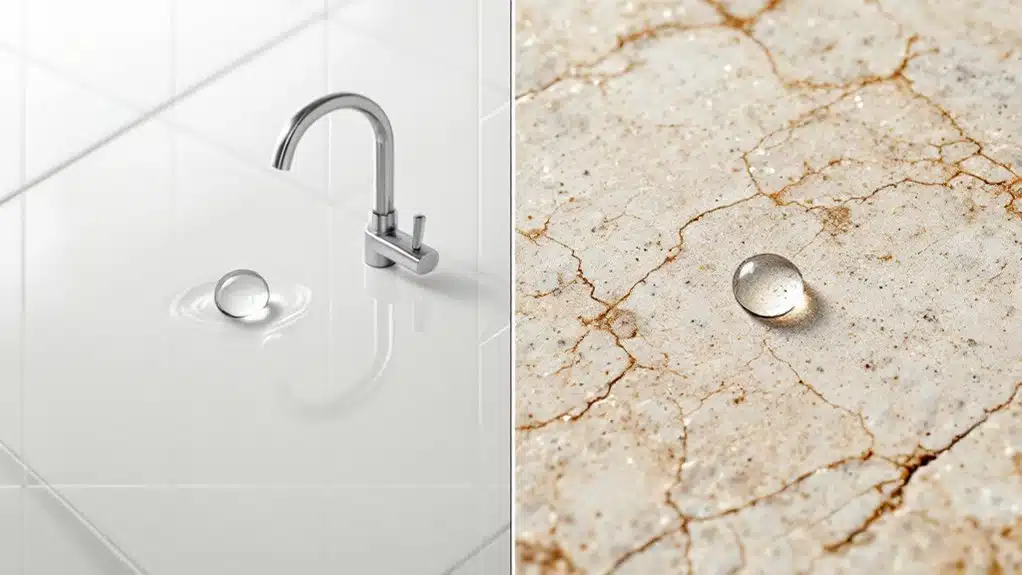
Knowing how to clean each material correctly sets the groundwork, but understanding how each responds to water, stains, and humidity tells you where the real vulnerabilities lie. Porcelain’s near-zero water absorption rate makes it exceptionally resistant to moisture infiltration, mold growth, and staining. You’re working with a material that won’t compromise under prolonged humidity exposure. Natural stone, on the other hand, absorbs water readily because of its porous structure, making stain resistance a genuine concern. Liquids penetrate the surface quickly, allowing mineral deposits, soap residue, and biological growth to embed deeply. Without consistent sealing, you’re leaving the material exposed to accelerating deterioration. Unlike natural stone, porcelain’s non-porous composition eliminates the need for ongoing maintenance through regular sealing, making it more practical for busy households. For clients managing high-use bathrooms, porcelain presents far fewer moisture-related risks, while natural stone demands proactive protection to maintain both function and appearance.
The Real Cost of Maintaining Each Material Over Time
Maintenance costs accumulate differently depending on which material you’re working with, and those differences compound greatly over time. Porcelain carries lower lifetime expenses as it resists staining, requires no sealing, and rarely demands professional intervention. Your clients benefit from predictable upkeep with minimal repair costs beyond routine cleaning.
Natural stone tells a different financial story. Annual sealing, pH-specific cleaners, and professional restoration treatments add up considerably. When etching or fractures occur, repair costs escalate quickly, often requiring specialized stone fabricators. A single crack repair can run $200–$500 depending on stone type and damage severity.
Over a 10-year period, natural stone maintenance can cost three to five times more than porcelain. For budget-conscious clients, that long-term disparity makes porcelain the financially responsible recommendation.
Which Bathroom Material Is Right for Your Lifestyle?
Beyond the numbers, your lifestyle and how you actually use your bathroom determines which material performs best for you. Your lifestyle preferences and aesthetic choices should guide your final decision.
| Factor | Best Choice |
|---|---|
| High-traffic family bath | Porcelain |
| Luxury spa aesthetic | Natural Stone |
| Minimal maintenance time | Porcelain |
| Custom, organic design | Natural Stone |
| Wet, humid environment | Porcelain |
If you’re managing a household with children or elderly individuals, porcelain’s durability and low upkeep protect your investment without demanding constant attention. If you’re designing a restorative space where warmth and natural texture matter deeply, stone rewards your care with timeless beauty. Match the material to how you actually live, not just how you want the space to look.
Frequently Asked Questions
Can Porcelain or Natural Stone Increase My Home’s Resale Value?
Both can boost your home’s resale potential. You’ll attract buyers with porcelain’s durability or natural stone’s timeless aesthetic appeal. Choose wisely, as your selection directly influences perceived value and a buyer’s first impression.
Are Either Materials Safe for Households With Young Children or Elderly?
“Better safe than sorry”—you’ll find both materials can be safe. Prioritize slip resistance by choosing textured finishes for child safety. You’re protecting elderly users too when you select matte or honed surfaces over polished ones.
How Do Extreme Temperature Changes Affect Porcelain Versus Natural Stone?
Porcelain’s low moisture absorption makes it highly resistant to thermal expansion cracking. Natural stone, on the other hand, absorbs more moisture, causing it to expand and contract considerably, so you’ll need to seal it regularly to protect vulnerable users.
Which Material Performs Better in Bathrooms With Poor Ventilation?
Ironically, your “breathable” natural stone invites disaster in poor ventilation—it’s moisture absorption accelerates mold growth rapidly. You’ll find porcelain’s non-porous surface actively repels moisture, preventing mold growth and ensuring your bathroom stays safer for those you serve.
Can Damaged Porcelain or Natural Stone Tiles Be Individually Replaced Easily?
You can replace porcelain tiles individually with relative ease, keeping repair costs low. Natural stone’s unique veining makes aesthetic matching harder, so you’ll want to save extra tiles from your original installation for future repairs.
Conclusion
You’ve likely heard that natural stone adds irreplaceable character to a bathroom—and that’s true—but it’ll cost you in upkeep. Porcelain’s non-porous surface repels moisture, resists staining, and demands minimal intervention, making it the objectively lower-maintenance option. If your lifestyle prioritizes efficiency over aesthetics, porcelain wins. If you’re committed to regular sealing schedules and pH-neutral cleaners, stone delivers unmatched visual depth. Your maintenance tolerance determines the correct answer.