Should You Replace or Refinish Hardwood Floors With Deep Pet Scratches?
Whether you refinish or replace your pet-scratched hardwood floors depends on scratch depth, wood thickness, and how much surface is damaged. Surface scratches respond well to screening and recoating, while deeper gouges may require full sanding if adequate wood thickness remains. Once damage covers more than 30% of your floor or warping appears, replacement becomes the smarter investment. The details below will help you make the right call.
Key Takeaways
- Use the fingernail test to assess scratch depth; if it catches, the damage extends beyond the finish and may require refinishing.
- Refinishing costs $3–$8 per square foot, making it significantly cheaper than replacement at $12–$25 per square foot.
- Replace floors when deep gouging covers more than 30% of the surface or severe pet urine warping is present.
- Floors previously refinished 4–6 times lack sufficient thickness for sanding, making replacement the only viable option.
- Refinishing with aluminum oxide or UV-cured finishes extends floor life 10–15 years and improves scratch resistance.
How Deep Is Too Deep? Reading Your Floor’s Scratch Damage
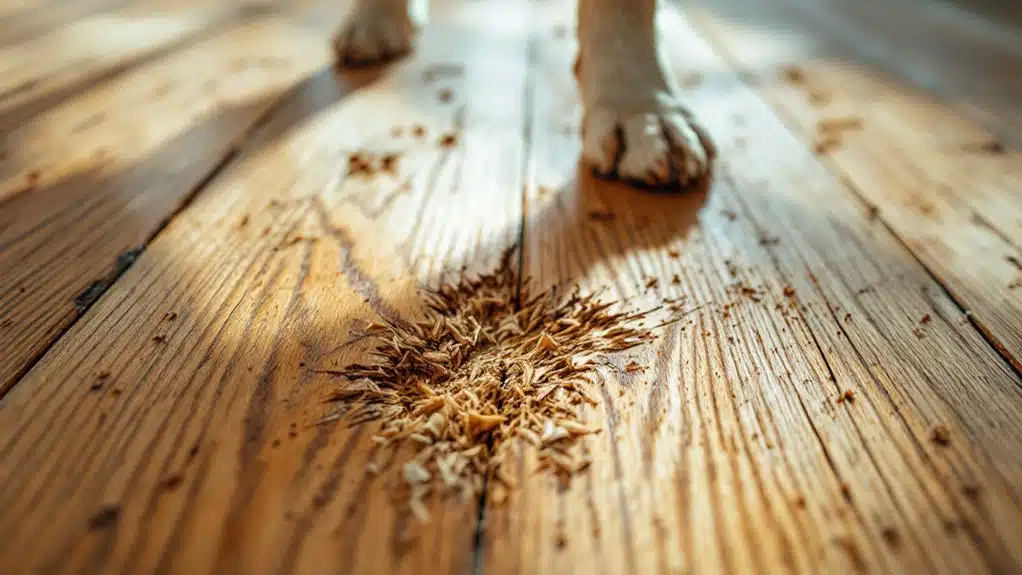
Before deciding whether to refinish or replace your hardwood floors, you need to assess the depth of the scratch damage—because depth, not surface appearance, determines your options. Run your fingernail across each scratch. If it catches, the damage has penetrated beyond the finish layer into the wood itself. Scratch depth directly controls your repair options: surface-level scratches respond well to recoating, mid-level scratches require full sanding and refinishing, and deep gouges that reach the subfloor often demand board replacement. Use a bright flashlight held at a low angle to reveal the true extent of damage. Measure affected boards carefully—if more than one-third of the board’s thickness is compromised, refinishing won’t restore structural integrity, and replacement becomes the responsible choice. For a professional assessment of your specific situation, hardwood floor repair experts can evaluate whether your floors can be saved through refinishing or if replacement is necessary.
When Refinishing Pet-Scratched Hardwood Floors Makes Sense
Pet scratches typically fall into two damage categories, and knowing which one you’re dealing with determines whether refinishing is a viable path forward. Surface-level scratches that haven’t penetrated the wood’s finish layer respond exceptionally well to refinishing techniques like screening and recoating. These require minimal material removal and preserve more of your floor’s structural integrity.
Deeper scratches that reach the wood fiber but stop short of the subfloor likewise qualify for refinishing, provided the wood retains adequate thickness for sanding—typically 3/32 inch minimum above the tongue. When serving clients with active pets, prioritize pet friendly options like aluminum oxide or UV-cured finishes post-refinishing. These harder finish systems resist future scratching more effectively, extending the refinished floor’s lifespan considerably before replacement becomes necessary. To further protect your newly refinished floors from pet damage, place rubber or felt pads under furniture legs and use area rugs in high-traffic areas where pets spend the most time.
When It’s Time to Replace Hardwood Floors Instead
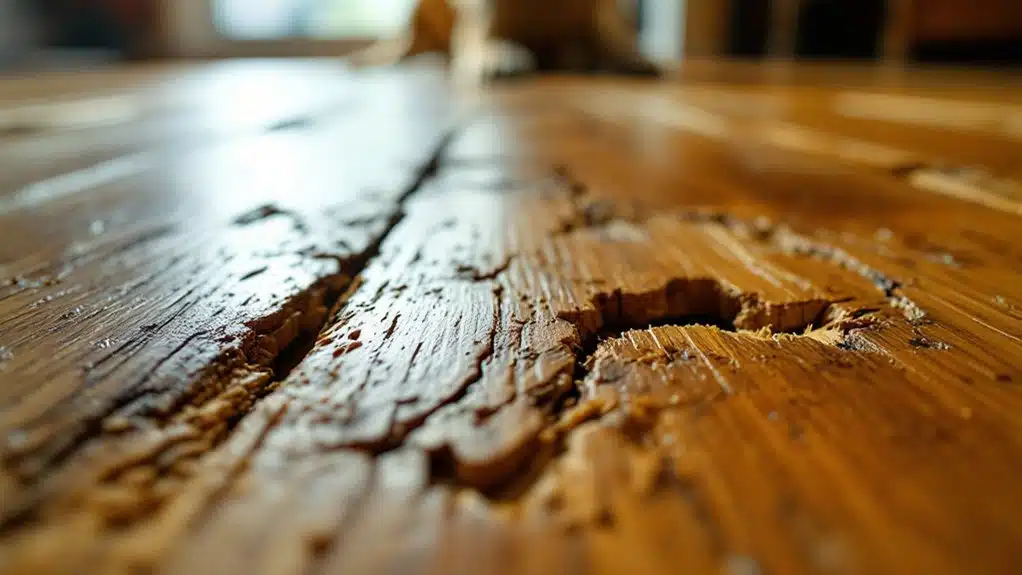
While refinishing solves many pet-related damage scenarios, some floor conditions make replacement the only practical option. Recognizing these situations protects your clients from wasted investment in ineffective repair techniques.
Replace hardwood floors when you encounter:
- Structural instability — boards that flex, squeak persistently, or show subfloor deterioration beneath pet-damaged areas
- Exceeded floor lifespan — flooring that’s been refinished 4–6 times already has insufficient wood thickness for additional sanding
- Widespread deep gouging — damage penetrating beyond the wear layer across more than 30% of the floor’s surface
- Severe moisture damage — pet urine that’s warped, cupped, or permanently stained boards throughout multiple rooms
Attempting refinishing under these conditions wastes time and resources. Unlike carpets that harbor dust mites and allergens, replacement hardwood delivers improved indoor air quality while guaranteeing long-term floor performance. Replacement delivers lasting results your clients deserve and guarantees long-term floor performance.
The Real Cost of Refinishing vs. Replacing Hardwood Floors
Understanding the true cost difference between refinishing and replacing hardwood floors helps you set accurate client expectations and recommend the right solution. This cost comparison matters greatly when guiding homeowners through their decision.
Refinishing typically costs $3–$8 per square foot, covering sanding, staining, and sealing. Replacement runs $12–$25 per square foot, factoring in materials, labor, and disposal fees.
However, a complete long-term investment analysis changes the conversation. Refinishing extends floor life 10–15 years, while quality replacement hardwood lasts decades with proper maintenance. When pet scratches penetrate beyond the wear layer, repeated refinishing attempts accumulate costs that can eventually exceed replacement expenses.
Help clients calculate total projected costs over a 20-year period before making their final decision.
How to Keep Pet Scratches From Ruining Your Floors Again
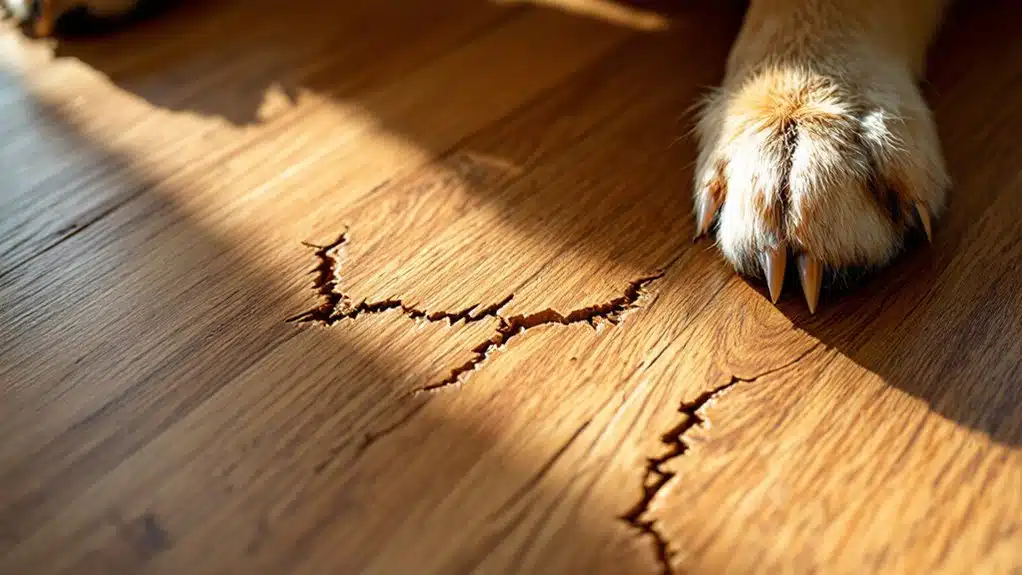
Once you’ve refinished or replaced your hardwood floors, protecting them from pet scratches requires a layered prevention strategy rather than a single fix. Combining scratch prevention habits with smart product choices delivers the most effective solutions long-term.
- Apply pet friendly finishes like aluminum oxide or polyurethane coatings rated for high-traffic wear resistance.
- Trim your pet’s nails every two to three weeks to reduce direct impact pressure on wood fibers.
- Place area rugs over high-traffic zones where pets run, turn, or frequently rest.
- Follow consistent maintenance tips, including weekly dry mopping to remove grit that accelerates surface abrasion.
You’ll markedly extend your floor’s lifespan by treating prevention as an ongoing commitment rather than a one-time correction.
Frequently Asked Questions
Can Pet Scratches on Hardwood Floors Affect My Home’s Resale Value?
Yes, pet scratches can hurt your home’s resale appeal. You’ll want to address deep damage through refinishing or replacement, as flooring upgrades greatly boost buyer confidence and help you maximize your property’s market value.
Are Certain Hardwood Species More Resistant to Pet Scratches Than Others?
Yes, your dog’s reign of terror can be minimized! Choose pet-friendly species like Brazilian cherry or hickory, as they’ll offer superior scratch resistance, helping you maintain beautiful floors while devotedly serving your furry household companions.
Does Homeowner’s Insurance Ever Cover Pet Scratch Damage to Hardwood Floors?
Typically, your homeowner’s insurance won’t cover pet scratch flooring damage, as insurers classify it as preventable wear and tear. Don’t expect insurance claims to succeed; instead, you’ll need to budget personally for refinishing or replacement costs.
How Long Does Refinished Hardwood Flooring Typically Last After Pet Scratch Repairs?
After applying proper refinishing techniques, you’ll typically enjoy 7–10 years of restored flooring. You can extend this lifespan considerably by implementing consistent scratch prevention strategies, like protective paw wax and furniture pads, safeguarding your clients’ investments effectively.
Can I Mix Refinished Sections With Original Flooring Without Visible Differences?
Can you truly achieve a seamless blend? You can mix refinished sections with original flooring, but you’ll need precise color matching and compatible finish types to minimize visible differences, ensuring consistent sheen and tone throughout your floor.
Conclusion
You’ve now got the knowledge to make a confident call: refinish when damage stays above the wood’s surface layer, replace when scratches penetrate the structural core. The common theory that “all pet scratches require replacement” simply doesn’t hold up—scratch depth, not scratch presence, drives the decision. Measure carefully, calculate your costs honestly, and implement protective measures immediately after restoration. Your floors can absolutely recover from pet damage when you approach the problem systematically.