What Products Are Safe to Use on Engineered Hardwood Floors?
To keep your engineered hardwood floors looking great, use eco-friendly, pH-balanced cleaners designed specifically for hardwood. Avoid harsh chemicals like bleach or ammonia, which can strip the protective finish. Opt for a vinegar solution (one part vinegar to three parts water) or a mix of olive oil and mild dish soap for a DIY approach. Always use a damp microfiber mop to prevent excessive moisture. Following these guidelines helps maintain the integrity of your flooring while enhancing its appearance. There’s more to investigate on maintaining your floors properly.
Key Takeaways
- Use eco-friendly, pH-balanced cleaners specifically designed for hardwood to maintain the floor’s finish.
- Opt for reputable commercial cleaners that are certified safe for engineered hardwood.
- Consider a vinegar solution (1 part vinegar to 3 parts water) for effective cleaning without damage.
- Avoid harmful chemicals like bleach or ammonia that can strip the finish and cause discoloration.
- Steer clear of abrasive cleaners and oil-based soaps that may leave residues or scratch the surface.
Understanding Engineered Hardwood Floors
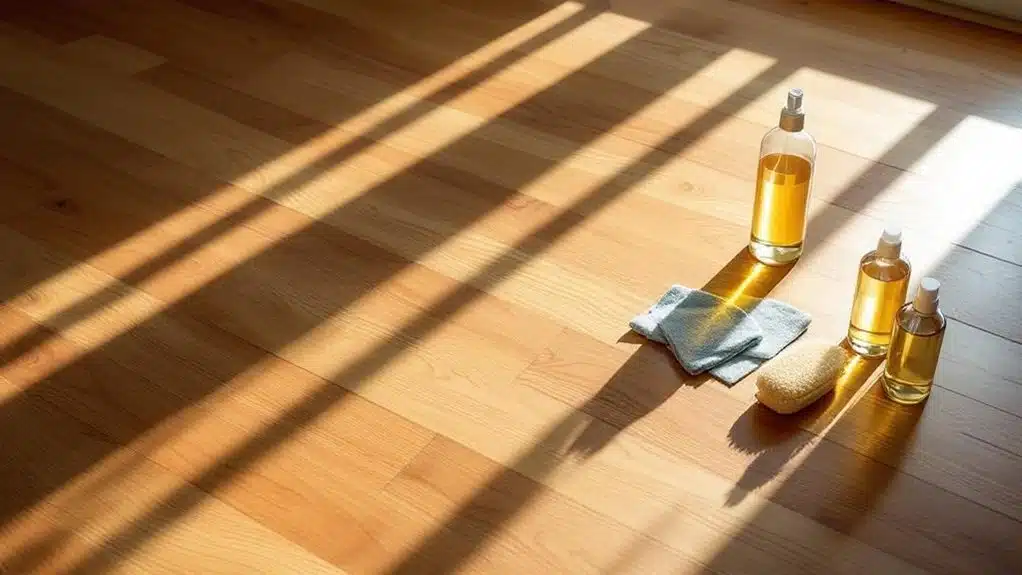
Engineered hardwood floors combine the beauty of natural wood with improved durability, making them a popular choice for many homeowners. Unlike solid hardwood, engineered flooring consists of multiple layers of wood, providing enhanced stability and resistance to moisture. This construction results in superior floor durability, making it suitable for various environments, including basements and areas with fluctuating humidity. When comparing engineered vs solid hardwood, you’ll find that engineered options can withstand temperature changes better, reducing the risk of warping and splitting. Furthermore, the surface veneer of engineered floors can feature a variety of wood species, allowing you to achieve the aesthetic you desire without sacrificing performance. Understanding these differences guarantees you make an informed choice for your flooring needs, especially considering that engineered hardwood offers similar luxurious appearance to solid hardwood.
Recommended Cleaning Solutions
When it comes to maintaining the beauty and integrity of your engineered hardwood floors, choosing the right cleaning solutions is essential. Eco-friendly solutions are often the best choice, as they effectively clean without harming the floor’s finish or the environment. Look for pH-balanced cleaners specifically designed for hardwood, as these will help preserve the wood’s natural luster. If you prefer commercial cleaners, opt for reputable brands that explicitly state they’re safe for engineered hardwood. Always check for certifications or endorsements from flooring manufacturers. Avoid harsh chemicals and abrasive cleaners, as they can cause irreversible damage. Regularly using the right solutions will guarantee your floors remain beautiful and last for years, enhancing your home’s overall appeal. Additionally, regular maintenance helps prolong the life and beauty of hardwood floors.
DIY Cleaning Recipes
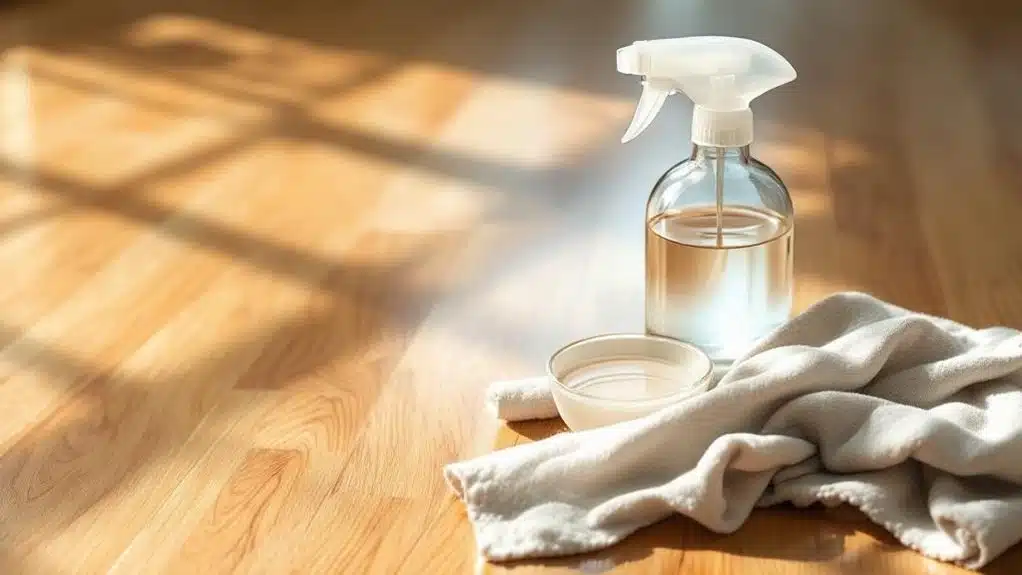
Creating your own cleaning solutions for engineered hardwood floors can be both cost-effective and environmentally friendly. One effective recipe is a vinegar solution, which combines one part white vinegar with three parts water. This natural cleaner effectively removes dirt and grime without damaging your floors. Simply mix the solution in a spray bottle, lightly mist the floor, and wipe it down with a microfiber mop.
For added freshness, you can include a few drops of vital oils like lemon or lavender. Another option is to use a mixture of olive oil and soap: combine a quarter cup of olive oil with a few drops of mild dish soap in a gallon of water, then apply as needed. These DIY recipes keep your floors clean and safe. Additionally, it’s essential to avoid using soap or oil-soap detergent as these can damage the finish of your hardwood floors.
Products to Avoid
Several products can damage your engineered hardwood floors, so it’s crucial to avoid them. First, steer clear of harmful chemicals like bleach or ammonia, as they can strip the protective finish and lead to discoloration. Furthermore, abrasive cleaners, such as scouring pads and harsh powders, can scratch the surface and compromise its integrity. It’s wise to avoid oil-based soaps, which can leave a residue that dulls the shine. Instead of these damaging products, consider using pH-balanced cleaners specifically designed for engineered hardwood. By choosing the right cleaning solutions, you’ll guarantee your floors remain beautiful and last longer, allowing you to serve others with a welcoming and well-maintained space.
Best Practices for Cleaning Engineered Hardwood Floors

To maintain the beauty and longevity of your engineered hardwood floors, it’s essential to follow effective cleaning practices. Start by establishing a consistent cleaning frequency; sweeping or vacuuming at least once a week helps remove dust and debris. For deeper cleaning, use a damp microfiber mop with a pH-balanced cleaner specifically designed for engineered hardwood. Avoid excessive moisture, as it can damage the flooring. Implement maintenance tips, like promptly wiping up spills to prevent stains and using felt pads under furniture to avoid scratches. Furthermore, consider placing mats at entry points to minimize dirt accumulation. These practices not only improve the appearance of your floors but likewise extend their lifespan, ensuring your investment remains protected.
Conclusion
To sum up, keeping your engineered hardwood floors in top shape requires careful attention to the products you choose. Just as a gardener nurtures delicate blooms, you should select gentle cleaning solutions and avoid harsh chemicals that can damage your investment. By following best practices and using recommended products, you’ll guarantee your floors remain beautiful and durable for years to come. Treat them well, and they’ll reflect your care, adding warmth and elegance to your home.