
What Should a Custom Tile Shower Estimate Include?
A custom tile shower estimate should include clearly itemized labor phases, material lists, and waterproofing specifications—because each component drives your final cost. You’ll want line items covering demolition, substrate preparation, tile setting, grouting, and caulking, with labor typically representing 40–60% of the total. Materials should specify brand names, quantities, and coverage rates to prevent substitutions. A detailed scope of work protects you from mid-project surprises, and there’s much more to evaluate before signing anything.
Key Takeaways
- A detailed labor breakdown should cover demolition, waterproofing, backer board, tile setting, grouting, and caulking as separate line items.
- Material specifications must list tile types, substrates, membranes, mortars, and grouts with brand names, quantities, and coverage rates.
- Scope of work should document tile layout, pattern direction, niche placement, grout joint sizing, and slope specifications.
- Special features like linear drains, curbless entries, or niche framing require explicit documentation to avoid unexpected cost increases.
- Payment schedules, project timelines, and warranty terms must be included to reduce financial risk and ensure accountability.
Labor Costs and What Tile Shower Installation Actually Covers
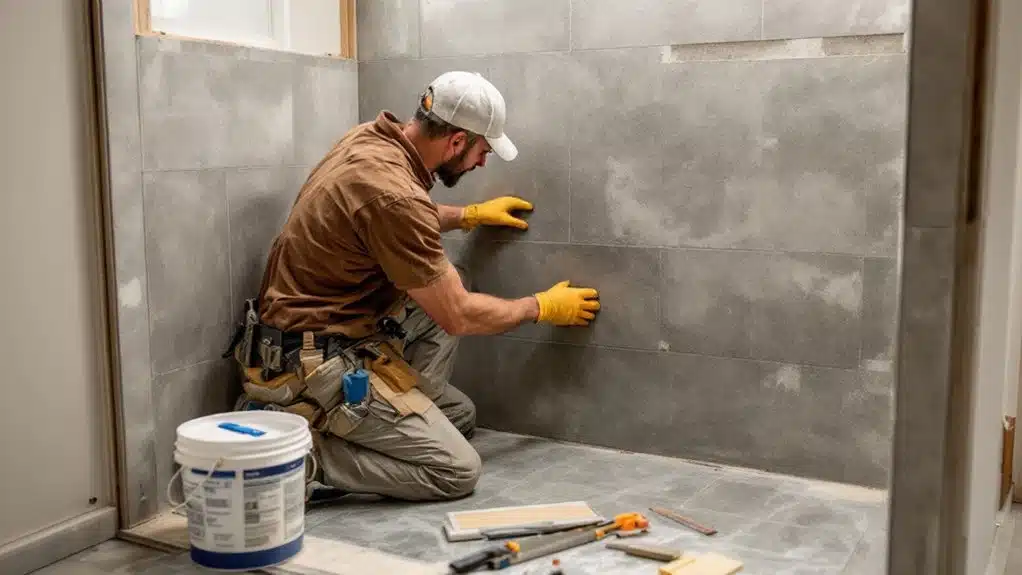
Labor costs typically account for 40–60% of your total custom tile shower estimate, making it the single largest line item in most projects. When you review a labor breakdown, you’ll see charges tied to distinct installation phases: demolition, waterproofing membrane application, backer board installation, mortar bed preparation, tile setting, grouting, and caulking. Each phase carries its own labor rate and timeline. Skilled installers charge between $10–$25 per square foot depending on tile complexity, pattern intricacy, and site conditions. You should expect separate line items for niche framing, curb construction, and drain installation. A transparent contractor won’t bundle these tasks into a single vague figure. Reviewing each installation phase individually helps you verify scope accuracy and protect your clients from costly mid-project surprises. Proper waterproofing membrane application is essential during this process, as a family of waterproofing products ensures your shower remains watertight for years to come.
Materials, Waterproofing, and Supplies in Your Estimate
Beyond labor, materials and waterproofing supplies typically represent 40–60% of your total estimate, and understanding each line item prevents budget overruns. Your estimate should itemize tile types, substrates, membranes, mortars, and grouts separately. Installation techniques—like large-format tile or steam-shower applications—directly affect material selection and cost. Using premium tile options like porcelain or natural stone improves both the aesthetic appeal and long-term durability of your installation.
| Material Category | Purpose |
|---|---|
| Waterproofing Membrane | Prevents moisture infiltration behind tile |
| Tile & Setting Materials | Tile types, thinset, grout, and spacers |
| Substrate & Backer | Structural support layer beneath tile |
Verify your estimate specifies brand names, coverage rates, and quantities. Vague line items like “waterproofing supplies” leave room for substitutions that compromise long-term performance. When you’re serving clients, precise material documentation protects both parties and guarantees the finished installation performs as promised.
What a Detailed Scope of Work Should Spell Out
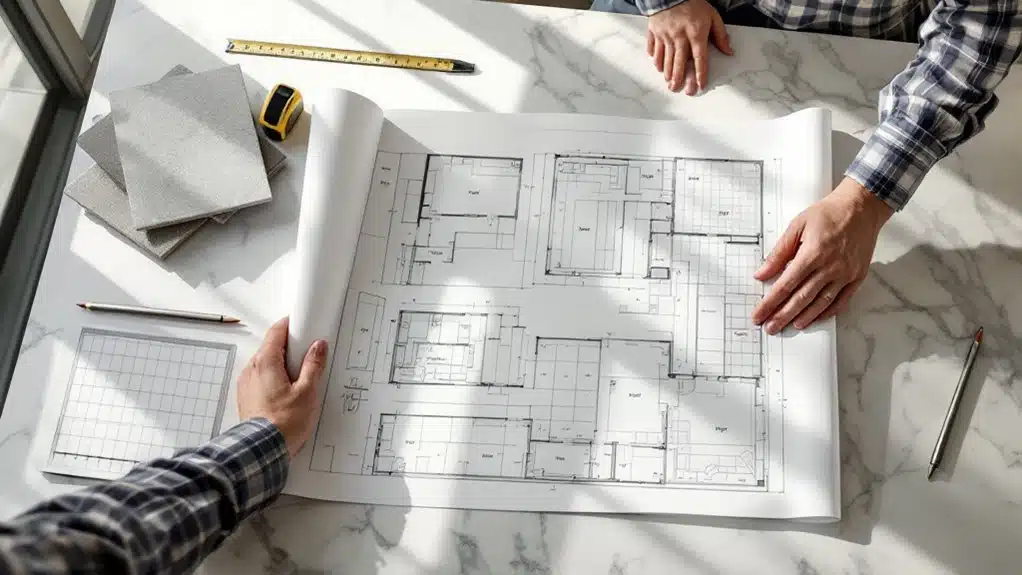
A well-documented materials list only holds value when paired with a scope of work that defines exactly what’s being done, how, and in what sequence. Your estimate’s scope should clearly identify surface preparation requirements, waterproofing application methods, and the specific installation techniques your installer will use—whether that’s back-buttering tile, using a medium-bed mortar, or installing a prefabricated shower system.
It should likewise document design considerations such as tile layout orientation, pattern direction, niche placement, and accent positioning. Grout joint sizing, slope specifications for proper drainage, and connection details at thresholds must all appear explicitly. If your client requests a linear drain or a curbless entry, those elements belong in the scope. Including details about robust waterproofing techniques such as membrane selection and joint sealing ensures your shower will remain durable and protected from water intrusion. Every decision captured here protects both you and your client from misunderstandings mid-project.
Red Flags That Signal an Incomplete Shower Estimate
When reviewing a shower estimate, certain omissions signal that the contractor hasn’t thought through the full scope—or worse, is deliberately leaving room to upsell later. Watch for incomplete measurements—estimates lacking square footage breakdowns for walls, floors, and niches indicate guesswork, not professional planning. Vague line items like “tile installation” without specifying materials, quantities, or labor hours create opportunities for hidden fees once work begins. Be cautious when waterproofing systems, substrate preparation, or fixture rough-ins aren’t listed separately. If the estimate excludes a project timeline, payment schedule, or warranty terms, you’re accepting unnecessary financial risk. A trustworthy contractor documents every component upfront. These red flags don’t just indicate sloppy estimating—they predict cost overruns that ultimately compromise the clients you’re working hard to serve.
How to Compare Custom Tile Shower Quotes Side by Side

Comparing custom tile shower quotes accurately requires a structured approach—not just a glance at the bottom line. Create a side-by-side spreadsheet listing each contractor’s line items, then align identical categories: labor, materials, waterproofing, and finishing work. Don’t assume similar shower design options are priced equivalently—verify tile grades, substrate systems, and fixture allowances match across all quotes.
Conduct a cost breakdown comparison by isolating what each estimate includes and excludes. One quote may appear lower as it omits schluter trim, a liner, or a proper mortar bed. Note payment schedules, warranty terms, and projected timelines as well. These variables directly affect total project value. Once you’ve standardized the data, you can make an informed, confident decision based on genuine scope—not misleading pricing.
Frequently Asked Questions
How Long Does a Custom Tile Shower Installation Typically Take to Complete?
Your custom tile shower’s installation timeline typically spans one to two weeks. Project factors like shower size, tile complexity, and curing time will influence your schedule, so you’ll want to plan accordingly.
Do I Need a Permit for a Custom Tile Shower Installation?
You’ll likely need a permit for your custom tile shower installation. Check your local permit requirements and installation guidelines, as regulations vary by location. Your contractor can help you navigate the approval process efficiently.
How Soon Can I Use My Shower After Tile Installation Is Finished?
You’ll need to wait 24-72 hours after tile installation before using your shower. Make certain grout sealing is fully cured first, as proper shower maintenance depends on allowing complete drying to prevent moisture damage and grout deterioration.
Can I Supply My Own Tiles to Reduce the Overall Project Cost?
Yes, you can supply your own tiles as a cost saving strategy. Nevertheless, confirm your contractor accepts client tile sourcing, as some won’t warranty installations using customer-supplied materials, potentially affecting your project’s overall estimate.
What Tile Patterns Work Best for Making Small Showers Look Larger?
You’ll maximize space by choosing large tile sizes in light colors, minimizing grout lines, and incorporating vertical patterns. Reflective surfaces reduce color contrast, creating depth, while seamless designs visually expand your clients’ small shower enclosures effectively.
Conclusion
When you’re reviewing custom tile shower estimates, every line item matters. A detailed quote protects you from budget surprises and contractor disputes. Consider that labor alone typically accounts for 40–60% of total project costs, making material-only comparisons dangerously misleading. You’ll make smarter decisions when you evaluate waterproofing specs, scope clarity, and material grades together. Don’t sign anything until your estimate addresses every component covered in this guide.