
Quartz vs. Granite: Which Is Better for a Busy Family Kitchen?
For a busy family kitchen, quartz is often the smarter choice. It’s non-porous, so spills won’t stain, and it doesn’t need annual sealing like granite does. Granite handles heat better and brings natural character to your space, but it demands more upkeep. Your decision comes down to lifestyle priorities and how much maintenance you’re willing to take on. Keep exploring to find the surface that truly fits your household.
Key Takeaways
- Quartz is non-porous, making it highly resistant to stains and bacteria, which is ideal for busy family kitchens with young children.
- Quartz requires no sealing and minimal maintenance, saving time for households managing heavy daily kitchen use.
- Granite withstands heat better, making it suitable for families who cook frequently and place hot pans on counters.
- Quartz offers superior scratch and chip resistance, making it more durable under constant everyday wear and tear.
- Granite requires resealing every one to two years, adding maintenance responsibilities that busy families should consider before choosing.
How Quartz and Granite Are Actually Made
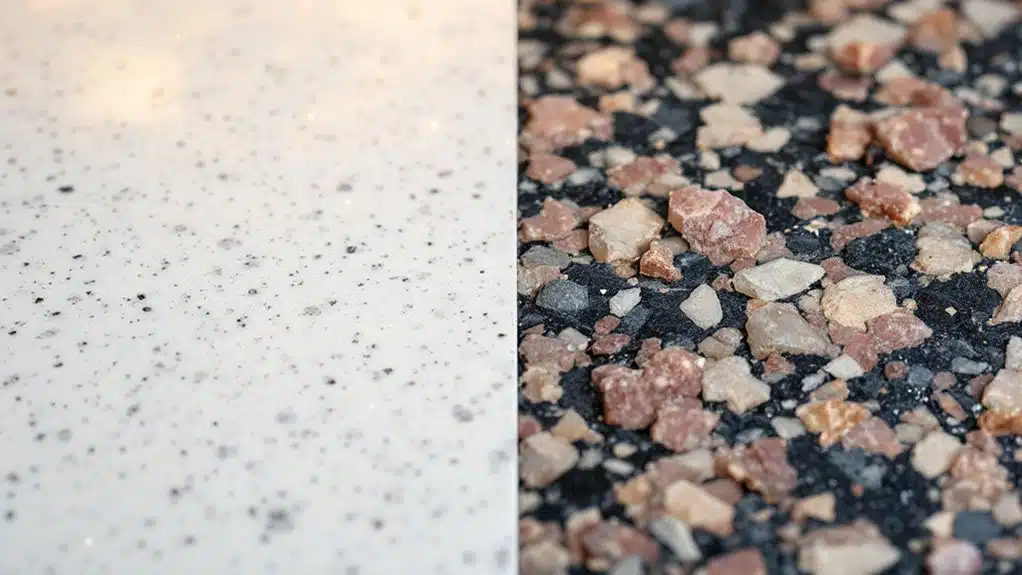
When choosing between quartz and granite for your kitchen, understanding how each material is made helps clarify why they look, perform, and age so differently.
Granite formation happens deep within the earth, where magma slowly cools over millions of years into a hard, crystalline rock. Each slab you select is genuinely one-of-a-kind, carrying a natural pattern no other surface duplicates.
Quartz composition, on the other hand, involves an engineered process. Manufacturers combine roughly 90–95% ground natural quartz with resins, pigments, and bonding agents. This process creates a highly consistent, non-porous surface you can count on for predictability. Because quartz is non-porous, it naturally resists stains and scratches better than granite, making it an ideal choice for busy families.
Both origins shape everything from appearance to maintenance demands. Knowing where each material comes from empowers you to choose the surface that’ll best serve your family’s daily rhythms.
Which Surface Holds Up to Daily Family Abuse?
Daily family life puts countertops through a relentless gauntlet—hot pans, spilled juice, assignment clutter, and the occasional dropped cast-iron skillet. This durability comparison matters when you’re choosing a surface that’ll serve your household faithfully for decades.
Here’s how each material performs:
- Scratch resistance: Quartz edges out granite slightly owing to its engineered density
- Stain resistance: Quartz wins decisively—its non-porous surface repels liquids without sealing
- Heat tolerance: Granite handles heat better; quartz resins can discolor under direct heat
- Impact resistance: Granite’s natural composition absorbs shock more forgivingly
- Maintenance commitment: Granite requires annual sealing; quartz demands almost none
Granite, formed as igneous rock from cooled magma, maintains its integrity under high temperatures and impacts, making it particularly suited for families who frequently cook with heavy heat sources. Understanding these distinctions helps you choose a surface that’ll genuinely support your family’s rhythm rather than complicate it.
Maintenance Differences That Matter for Busy Households
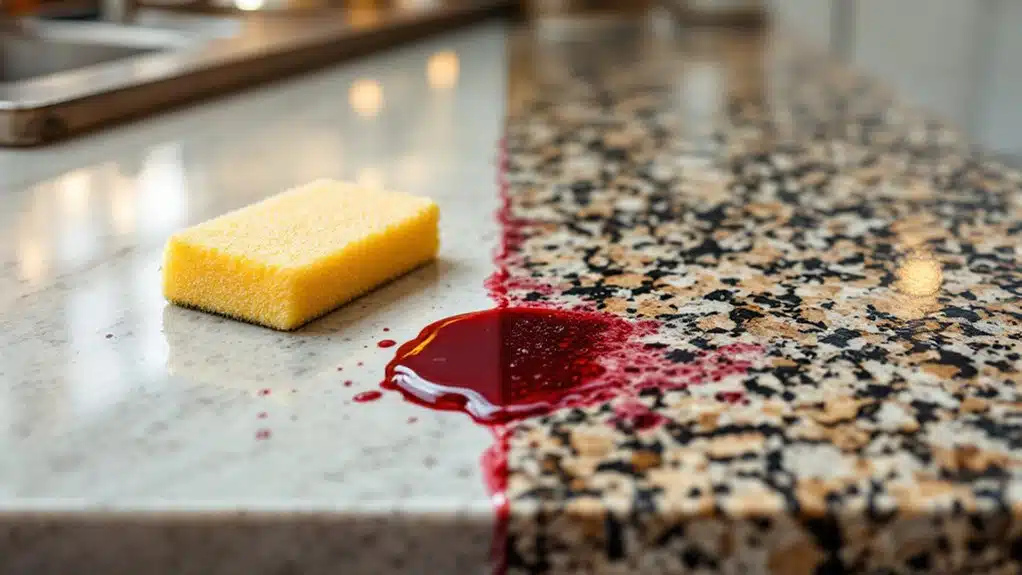
Keeping a family kitchen functional without spending your weekends maintaining it is a legitimate concern—and this is where quartz and granite differ most meaningfully. Quartz wins on stain resistance—it’s non-porous, so spills don’t penetrate the surface. You won’t need to seal it annually. Granite, on the other hand, requires resealing every one to two years to maintain that same protection against liquids and bacteria.
On heat tolerance, granite holds a natural advantage. You can set a hot pan directly on it without damage. Quartz contains resins that can discolor or crack under sudden heat exposure, so you’ll want trivets nearby. For families with children, quartz’s resistance to cracks and chips makes it particularly suitable for high-traffic kitchen environments.
If your household prioritizes effortless upkeep while serving others daily, quartz fits that rhythm. If you prefer natural resilience and don’t mind occasional sealing, granite rewards the commitment.
How Much Does Each Countertop Really Cost?
Maintenance habits shape your budget over time, but the upfront price tag matters just as much when you’re planning a family kitchen. Here’s what you’ll typically encounter:
- Granite runs $40–$100 per square foot, including installation costs
- Quartz ranges from $50–$120 per square foot installed
- Both materials add strong resale value to your home
- Granite prices vary based on rarity, origin, and slab thickness
- Quartz costs stay more predictable since it’s engineered consistently
Ultimately, quartz’s uniform pricing makes budgeting simpler for families managing tight timelines. Granite can cost less if you choose a common variety, but premium slabs climb quickly. Whichever surface you select, both investments serve your household beautifully for decades while meaningfully elevating your home’s market appeal.
Which Is the Better Fit for Your Family Kitchen?
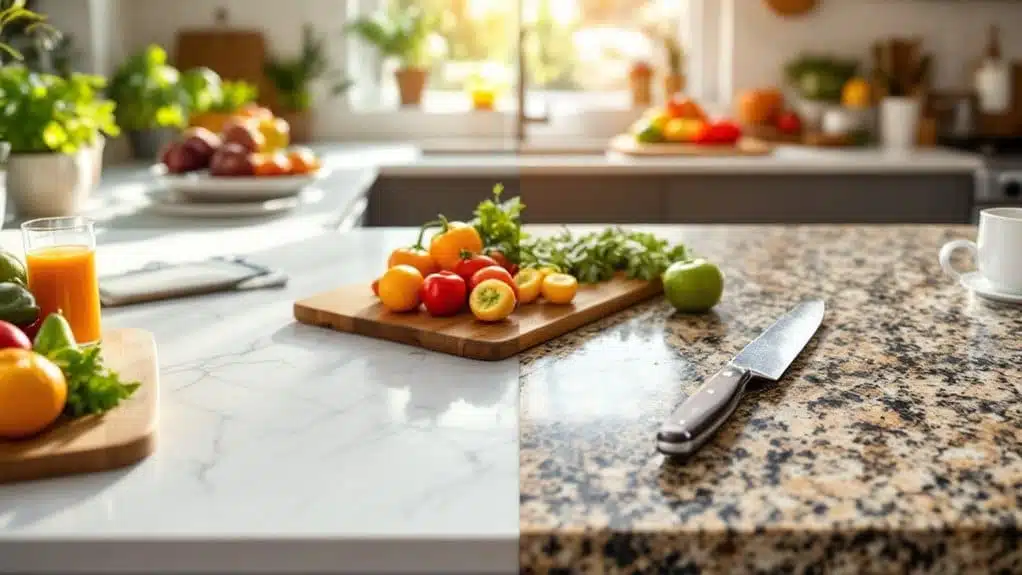
Choosing between quartz and granite ultimately comes down to how your family actually lives in the kitchen. If you’re prioritizing low maintenance and consistent design aesthetics, quartz delivers. If you love natural character and broader color options, granite’s your match.
| Factor | Quartz | Granite |
|---|---|---|
| Maintenance | Minimal | Requires sealing |
| Color Options | Consistent, wide range | Natural, varied patterns |
| Durability | Scratch/stain resistant | Heat resistant |
Consider your household’s daily rhythm. Do you host frequently? Granite’s warmth impresses guests. Are young children constantly at the counter? Quartz’s non-porous surface protects better. Both surfaces serve beautifully when matched intentionally to your lifestyle, ensuring your kitchen remains a welcoming, functional space for everyone you love to gather.
Frequently Asked Questions
Can Quartz or Granite Countertops Increase My Home’s Resale Value?
Both quartz and granite can boost your home’s resale potential considerably. You’ll attract buyers who value material durability and timeless aesthetics, making either choice a smart, practical investment that serves your family and future homeowners beautifully.
Are Either Countertops Safe for Homes With Young Children?
Imagine tiny hands exploring your beautiful kitchen — both countertops prioritize child safety. Granite’s natural heat resistance handles hot pots safely, while quartz’s non-porous surface resists bacteria, keeping your family’s cooking space hygienic and worry-free.
How Do Quartz and Granite Countertops Impact Kitchen Interior Design?
Both countertops transform your kitchen’s aesthetic beautifully. Quartz offers consistent color schemes that’ll complement modern designs, while granite’s natural texture contrasts create a warm, organic feel, helping you craft an inviting space your family and guests will love.
Can You Install Quartz or Granite Countertops as a DIY Project?
You can attempt DIY Installation for both materials, but it’s rarely advisable. The weight and precision required make professional help worth the cost. Carefully weigh Cost Considerations, as mistakes can damage your beautiful countertops beyond repair.
How Environmentally Friendly Are Quartz and Granite Countertop Options?
Both have eco-impacts, but you can make responsible choices. Granite offers sustainable sourcing as a natural material, while quartz’s recycling options reduce waste. You’ll feel good serving your family on a countertop that reflects your values.
Conclusion
You’re choosing between two exceptional surfaces, and the right pick depends on how you live. Quartz wins on low-maintenance durability—it’s non-porous and needs zero sealing. Granite brings natural beauty that’s genuinely one-of-a-kind. Consider this: quartz countertops can last 25+ years with minimal upkeep. If your kitchen sees study sessions, cooking marathons, and weekend chaos, quartz likely fits your life better—though granite’s timeless elegance is hard to resist.