
Do’s and Don’ts of DIY Countertop Maintenance
To maintain your countertops, know your material—granite, quartz, laminate, or wood—and use the right cleaning techniques. Wipe down surfaces daily and treat spills immediately. Choose eco-friendly cleaners, avoiding harsh chemicals. Regularly seal surfaces like granite, and always use cutting boards to prevent scratches. Remember to check for damage and address it promptly. Following these do’s will keep your countertops looking great, while avoiding the don’ts will save you from costly repairs. Uncover more crucial tips ahead.
Key Takeaways
- Do use eco-friendly, biodegradable cleaners compatible with your countertop material to avoid damage and protect health.
- Don’t use harsh chemicals or abrasive scrubs that can scratch or degrade the surface of your countertops.
- Do establish a regular cleaning schedule to prevent buildup and maintain countertop appearance and hygiene.
- Don’t ignore signs of wear, like deep scratches or persistent stains; these may require professional repair.
- Do use cutting boards and trivets to protect countertops from scratches and heat damage during daily use.
Understanding Your Countertop Material
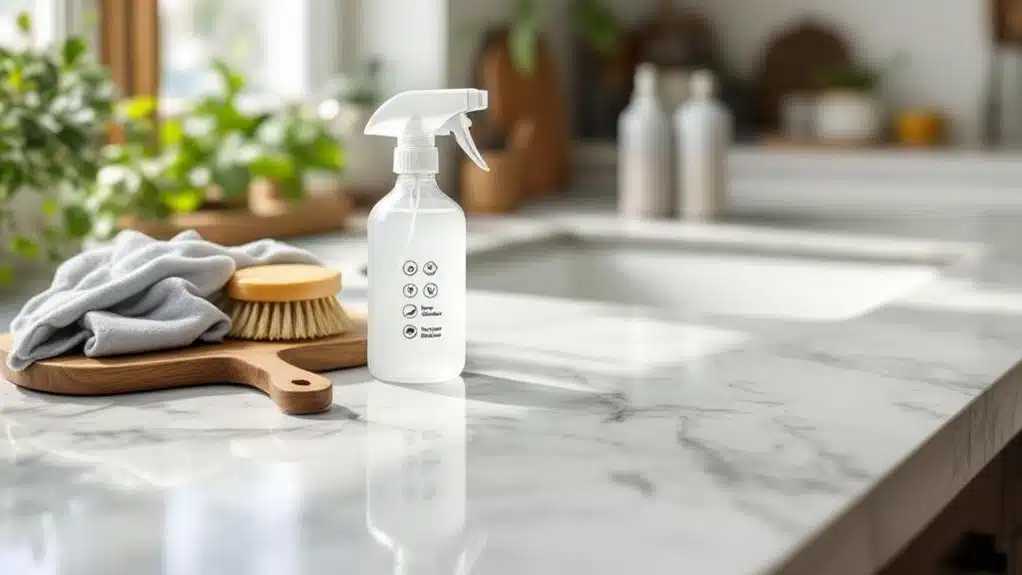
When it comes to maintaining your countertops, understanding the material is key. Different countertop types—like granite, quartz, laminate, or wood—each have unique material properties that affect their care and longevity. For instance, granite is durable and heat-resistant, but it requires periodic sealing to prevent stains. Quartz, on the other hand, is non-porous and easy to clean, making it a favorite for busy kitchens. Laminate offers affordability but can be easily scratched, while wood provides warmth but needs regular oiling to maintain its finish. By knowing these properties, you can choose the right cleaning products and techniques, ensuring your countertops not only look great but serve your kitchen well for years to come. Investing in premium granite, quartz, and marble can significantly enhance both the appearance and durability of your surfaces.
Daily Cleaning Practices
While daily cleaning may seem straightforward, establishing effective practices can greatly prolong the life of your countertops. Incorporating consistent daily routines will help you maintain a clean and inviting kitchen space. Start with simple cleaning tools like microfiber cloths and gentle dish soap. Wipe down your countertops every day to remove crumbs and spills, preventing stains. Additionally, using proper cleaning techniques can help preserve the unique beauty of your premium selection of granite, quartz, and marble.
Here’s a quick reference table for your daily cleaning practices:
| Task | Frequency |
|---|---|
| Wipe down surfaces | Daily |
| Clear clutter | Daily |
| Sanitize high-touch areas | Daily |
| Inspect for damage | Weekly |
Choosing the Right Cleaning Products
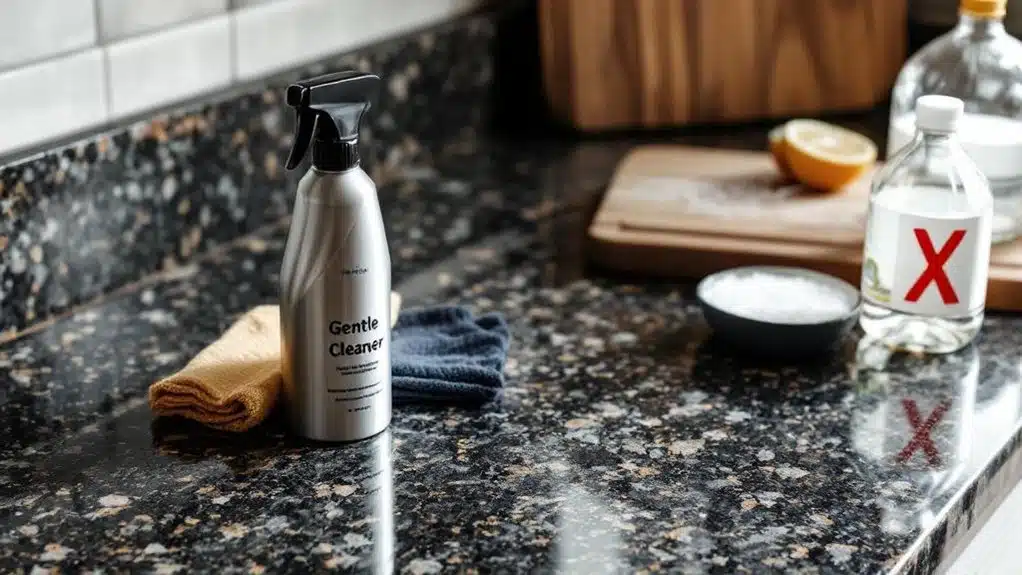
Having a clean surface is just the start; choosing the right cleaning products is key to protecting your countertops. You want to guarantee that the products you use are effective yet gentle, so they won’t damage your surfaces. Consider the following:
- Eco-friendly options: Look for biodegradable cleaners that are safe for the environment and your home.
- Product compatibility: Always check if the cleaner is suitable for your countertop material, whether it’s granite, quartz, or laminate.
- Non-toxic ingredients: Opt for cleaners without harsh chemicals to keep your home safe for your family and pets. Additionally, using the right products will help maintain the durability of granite countertops, ensuring they last for decades with proper care and maintenance.
Avoiding Harsh Chemicals
To maintain the longevity and appearance of your countertops, it’s crucial to steer clear of harsh chemicals that can cause damage. These substances not only compromise your countertops but likewise pose risks to your health and the environment. Instead, consider eco-friendly alternatives like vinegar, baking soda, or plant-based cleaners. They effectively clean without the harmful effects of traditional cleaners. Always prioritize chemical safety by reading labels and ensuring you’re using products that are safe for your surfaces. By opting for gentler cleaning methods, you not only protect your countertops but also create a safer space for your family and guests. Remember, caring for your countertops means choosing products that are both effective and environmentally responsible.
Sealing and Protecting Surfaces
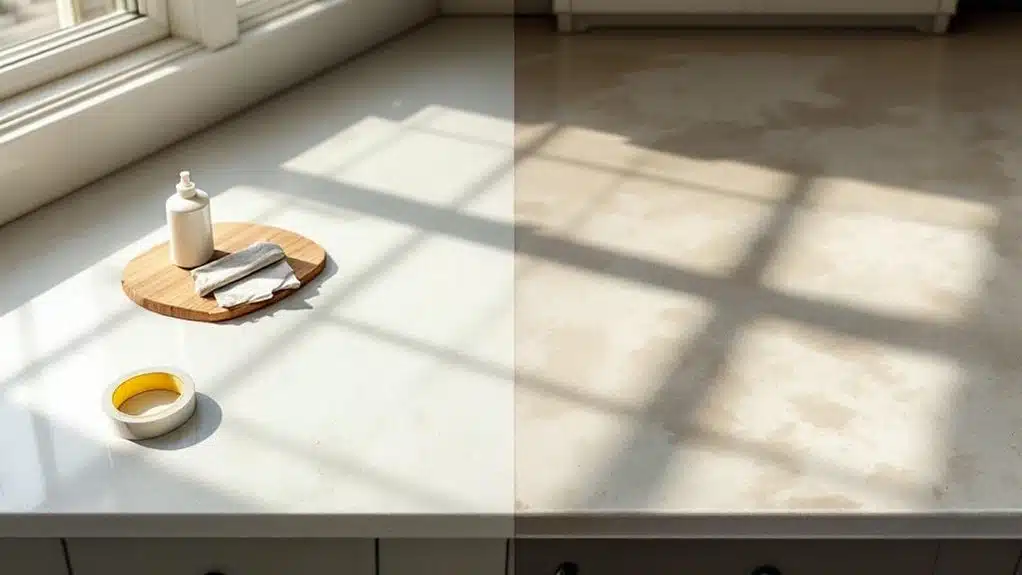
Sealing and protecting your countertops is vital for preserving their beauty and functionality. By using effective sealing techniques and protective coatings, you can extend the life of your surfaces and keep them looking new. Here are some important tips to get you started:
- Choose the right sealant: Different materials require specific sealing products, so make sure you select one that suits your countertop type.
- Apply evenly: Use a foam brush or cloth to apply sealants evenly, ensuring full coverage without streaks.
- Reapply regularly: Depending on wear and tear, plan to reseal your countertops every 6 to 12 months to maintain their protective layer.
Dealing With Stains and Spills
When you spill something on your countertop, quick action is essential to prevent stains and damage. Start by blotting the spill immediately with a clean cloth; avoid rubbing, as this can spread the stain. For stain removal, use a mild soap solution or a specialized cleaner recommended for your countertop material. Apply it gently, then rinse thoroughly with water to avoid residue buildup. If a stain persists, consider a paste of baking soda and water, letting it sit for a few minutes before rinsing. For effective spill management, keep your countertop free from clutter to notice spills quickly. Regularly check for stains and address them promptly to maintain a beautiful and welcoming space for others.
Preventing Scratches and Dents
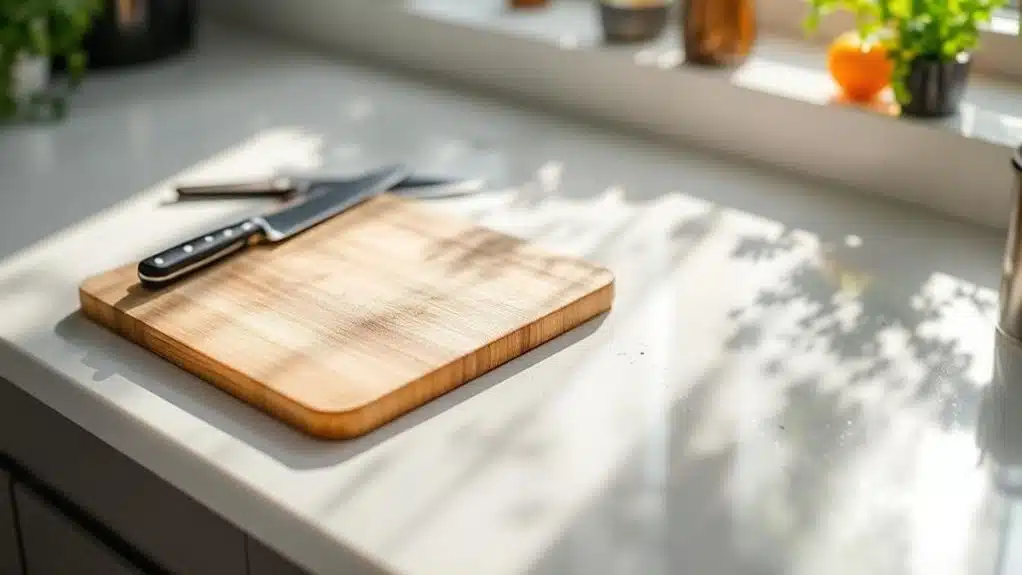
To keep your countertops looking pristine, always use cutting boards when preparing food. Heavy objects can leave unsightly dents, so be mindful of where you place them. By following these simple steps, you’ll extend the life of your surfaces and maintain their beauty.
Use Cutting Boards
Using cutting boards not only protects your countertops but likewise makes food preparation safer and more efficient. By choosing the right cutting board types and practicing proper usage, you can greatly extend the life of your countertops. Here are some critical tips:
- Choose the right material: Opt for wood, bamboo, or plastic, depending on your needs.
- Clean regularly: Sanitize your cutting boards to prevent cross-contamination.
- Avoid using the same board for raw meats and vegetables: This practice helps maintain food safety.
Incorporating cutting boards into your cooking routine isn’t just about protecting surfaces; it furthermore promotes a healthier kitchen environment. By following these guidelines, you can serve others delicious meals while keeping your countertops in top shape.
Avoid Heavy Objects
Protecting your countertops goes beyond just using cutting boards; it also involves being mindful of the items you place on them. Heavy object prevention is vital in maintaining their integrity. Avoid placing excessively heavy items, like cast iron pots or large appliances, directly on your countertops. Instead, use weight distribution techniques to spread the load evenly. For instance, use cutting boards or trays to support heavier items, minimizing pressure on a single point. Moreover, consider using rubber mats or pads underneath to further cushion and protect your surfaces. By taking these simple steps, you can prevent scratches and dents, ensuring your countertops remain beautiful and functional for years to come. Your attention to detail will impress everyone you serve!
Heat Resistance and Hot Items
How can you guarantee your countertops withstand the heat of everyday cooking? Protecting your surfaces from heat damage is vital, especially when handling hot items. Here are some practical tips to keep in mind:
- Always use trivets or hot pads under pots and pans.
- Avoid placing very hot items directly on the surface to prevent thermal shock.
- Be mindful of the materials your countertops are made from; some are more heat resistant than others.
Long-Term Maintenance Tips
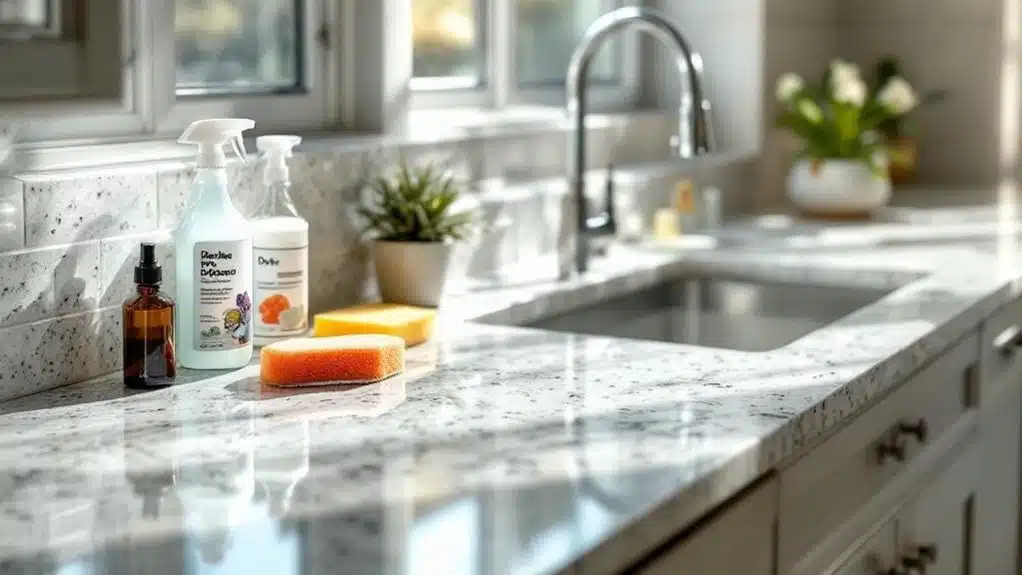
To keep your countertops looking great over time, establish a regular cleaning schedule to prevent buildup. Make sure you know how often to apply sealant based on your countertop material, as this protects against stains and damage. Finally, steer clear of harsh chemicals that can erode the surface and shorten its lifespan.
Regular Cleaning Schedule
Establishing a regular cleaning schedule is essential for maintaining the beauty and longevity of your countertops. By sticking to a consistent cleaning frequency, you can prevent stains and damage, ensuring your surfaces stay pristine. Here’s how to create an effective maintenance routine:
- Daily Wipe Down: Use a soft cloth and mild soap to remove spills and crumbs each day.
- Weekly Deep Clean: Incorporate a gentle cleaner specifically designed for your countertop material to keep it in top shape.
- Monthly Inspection: Check for any signs of wear or damage and address issues promptly.
Sealant Application Frequency
While regular cleaning keeps your countertops looking great, applying sealant at the right intervals is crucial for long-term protection. Depending on the sealant types you choose, your application frequency may vary. Typically, you should reapply every 6 to 12 months. To guarantee effective protection, use proper application techniques, such as a clean cloth for even coverage.
| Sealant Type | Application Frequency | Technique |
|---|---|---|
| Penetrating Sealant | Every 6-12 months | Apply with a cloth |
| Topical Sealant | Every 6 months | Use a foam applicator |
| Epoxy Sealant | Every 1-2 years | Follow manufacturer’s instructions |
Avoiding Harsh Chemicals
After ensuring your countertops are properly sealed, it’s important to contemplate the cleaning products you use for long-term maintenance. Avoiding harsh chemicals not only protects your surfaces but furthermore promotes chemical safety in your home. Consider natural alternatives that are effective and gentle.
Here are some options you can try:
- Vinegar and water: A natural disinfectant that cuts through grease.
- Baking soda: Great for scrubbing without scratching.
- Olive oil and lemon: A perfect combination for polishing and freshening.
When to Seek Professional Help
Knowing when to seek professional help for your countertop maintenance can save you time and prevent further damage. Look for signs needing assistance, such as deep scratches, stains that won’t lift, or persistent odors. If your countertops are greatly chipped or cracked, it’s best to call in the experts. Different types of professionals specialize in countertop repair and restoration—stone masons for natural stone, and laminate specialists for synthetic materials. They have the tools and expertise to handle complex issues safely. Don’t hesitate to reach out if your DIY efforts aren’t yielding results. Investing in professional help not only restores the beauty of your countertops but likewise extends their lifespan, ensuring they continue to serve you well for years to come.
Conclusion
By following these do’s and don’ts for DIY countertop maintenance, you can keep your surfaces looking great for years to come. Did you know that properly maintained countertops can last up to 30 years longer than neglected ones? Regular cleaning, the right products, and preventive measures make all the difference. If you encounter stubborn stains or significant damage, don’t hesitate to call in a professional. Your countertops deserve the best care to maintain their beauty and functionality!