
Does a Bathroom Subfloor Need Reinforcement Before Tile Installation?
Your bathroom subfloor doesn’t always need reinforcement before tile installation—but it hinges on specific structural conditions. You’ll need to check for excessive deflection, moisture damage, soft spots, and adequate thickness. The tile industry requires deflection no greater than L/360, meaning a 10-foot span can’t flex more than ⅓ inch. If your subfloor meets these thresholds, you can tile directly. If not, reinforcement is non-negotiable—and the details ahead will show you exactly what to do.
Key Takeaways
- Reinforcement is unnecessary if the subfloor meets L/360 deflection standards, meaning a 10-foot span flexes no more than 1/3 inch.
- Combined subfloor and underlayment thickness must reach at least 1-1/8 inches to adequately support bathroom tile.
- Soft spots, squeaking, bounce, or visible water damage are clear indicators that subfloor reinforcement is required before tiling.
- Joists spaced greater than 16 inches on-center create unsupported spans that typically require structural reinforcement before tile installation.
- Common reinforcement solutions include adding plywood underlayment, installing cement board overlay, or replacing rot-damaged sections with matching-grade plywood.
How to Tell If Your Subfloor Can Handle Tile

Before committing to a tile installation, you’ll need to assess whether your subfloor can handle the added weight and rigidity that tile demands. Start by identifying your subfloor materials—plywood and OSB are common, but not all thicknesses perform similarly under tile weight.
Walk the floor and note any flex, bounce, or soft spots. Tile requires a deflection standard of L/360, meaning the floor can’t flex more than 1/360th of its span length. Use a level to detect low or high spots exceeding 3/16 inch over 10 feet.
Check subfloor thickness next. A minimum of 1-1/8 inches of combined subfloor and underlayment is typically required. Anything less risks cracked grout, failed adhesive bonds, and broken tiles over time. When in doubt, consulting with professional installation experts can help you determine if reinforcement is necessary before proceeding with your bathroom tile project.
The Deflection Standard Every Bathroom Floor Must Meet
Once you’ve confirmed your subfloor materials and thickness, the next factor driving tile success is deflection—specifically, how much your floor bends under load. The tile industry standard requires L/360 deflection or less, meaning a 10-foot span can’t flex more than 1/3 inch under tile weight. Since ceramic and porcelain tiles have different load-bearing characteristics, understanding your tile type helps determine the reinforcement level needed for your specific bathroom project.
| Span Length | Max Allowable Deflection | Tile-Safe? |
|---|---|---|
| 8 feet | 0.267 inches | Yes, if met |
| 10 feet | 0.333 inches | Yes, if met |
| 12 feet | 0.400 inches | Requires verification |
Exceeding this threshold cracks grout joints and fractures tiles over time. You can test deflection by walking the floor slowly and feeling for bounce. If movement is noticeable, your subfloor materials need reinforcement before any tile installation proceeds.
What Makes a Subfloor Too Weak for Tile?
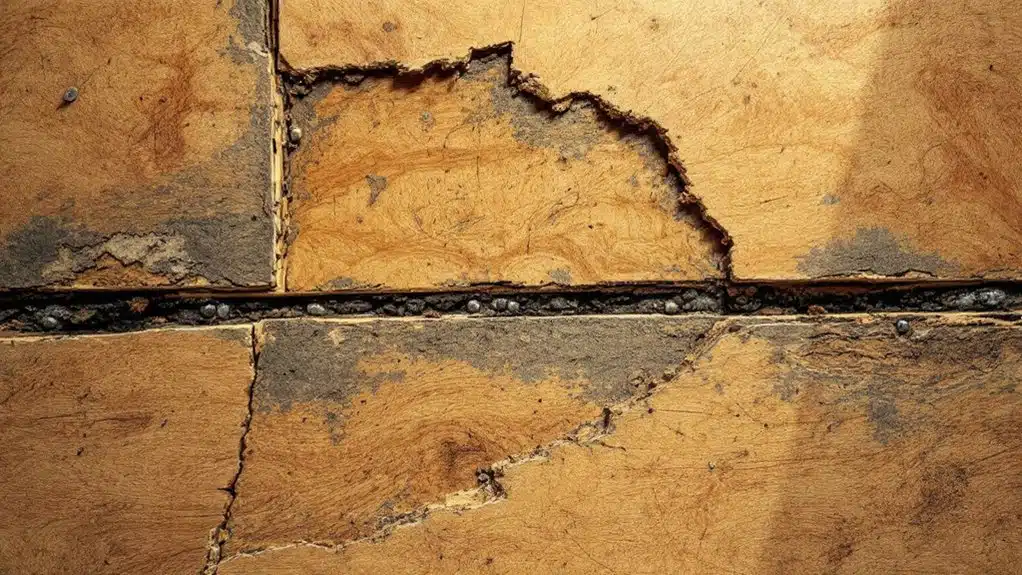
Several conditions can render your subfloor structurally unfit for tile, and identifying them early prevents costly failures. Excessive deflection exceeding L/360 tops the list, but subfloor materials are equally important. Oriented strand board under 3/4-inch thickness lacks the rigidity to distribute tile weight without flexing. Plywood delamination, rot, or water damage compromises structural integrity entirely. Undersized or widely spaced joists—typically exceeding 16 inches on center—create spans that can’t sustain tile weight long-term. Squeaking, soft spots, or visible bounce when you walk across the floor signal dangerous inadequacy. Single-layer subfloors common in older homes rarely meet modern tile installation requirements. Maintaining proper humidity levels between 45% and 65% helps prevent wood shrinkage and expansion that can weaken subfloor materials over time. Each condition transfers stress directly into grout joints and tile bodies, producing cracks that ultimately destroy your installation.
Your Reinforcement Options When the Subfloor Falls Short
Once you’ve diagnosed the specific weaknesses in your subfloor, you can match the right reinforcement strategy to each problem. Each solution targets a distinct failure mode.
| Problem | Solution | Material |
|---|---|---|
| Insufficient thickness | Add underlayment layer | Plywood thickness: ½”–¾” |
| Surface instability | Bond and fasten existing panels | Construction adhesive + screws |
| Structural flex | Install cement board overlay | ½” cement board |
| Localized rot | Replace damaged sections | Matching-grade plywood |
Screw spacing matters as much as material selection—fasten every 6 inches along edges and 8 inches throughout the field. When stacking layers, offset all seams to prevent weak points from aligning. Address deflection first; surface treatments won’t compensate for underlying movement. Your tile installation depends on getting this sequence right.
When You Can Skip Reinforcement and Tile Straight Away
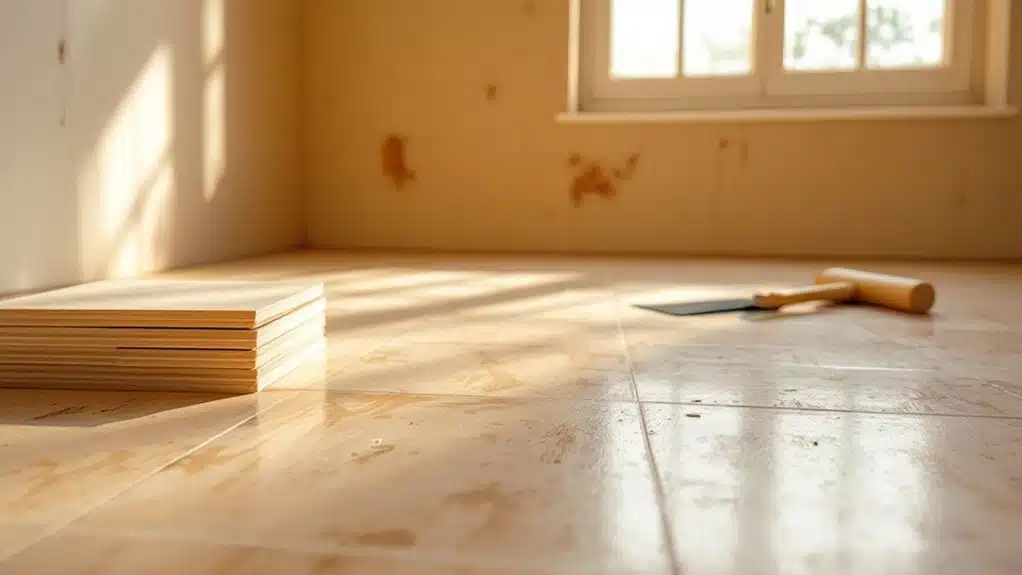
Not every subfloor needs reinforcement before tile goes down. If your existing subfloor materials meet specific structural benchmarks, you can proceed directly with tile installation tips that focus on surface prep rather than structural upgrades.
You’re clear to tile straight away when:
- Deflection is within L/360: The floor doesn’t flex more than the span divided by 360 under load
- Subfloor thickness is adequate: At least 1-1/8″ combined thickness for wood-based systems
- Joists are sound and properly spaced: 16″ on-center maximum for standard tile formats
- No moisture damage or delamination exists: The surface is solid, dry, and structurally intact
Verifying these conditions protects the clients or household members you’re serving and guarantees a tile installation that performs long-term without cracking or failure.
Frequently Asked Questions
How Long Does Bathroom Subfloor Reinforcement Typically Take to Complete?
You’ll typically complete bathroom subfloor reinforcement in one to two days. Your timeline depends on subfloor materials’ condition and reinforcement techniques used, such as adding plywood layers or sistering joists, ensuring a stable tile foundation.
Can I Tile Over a Subfloor With Minor Water Damage?
You’re sitting on a ticking time bomb—don’t tile over water-damaged subfloor. Conduct a thorough subfloor assessment first, replace compromised sections, then install a moisture barrier before tiling to protect your clients’ investment.
Does Tile Size Affect How Strong My Subfloor Needs to Be?
Yes, tile size directly impacts your subfloor strength requirements. Larger tiles carry greater tile weight and demand stiffer, more reinforced subfloors. You’ll need to guarantee minimal deflection, as bigger tiles crack more easily under movement.
Will Reinforcing My Subfloor Increase My Home’s Resale Value?
Reinforcing your subfloor materials won’t directly boost resale potential, but it’ll prevent costly tile failures that deter buyers. You’re protecting your investment by ensuring structural integrity, which savvy buyers and inspectors will definitely appreciate during evaluations.
What Permits Are Required When Reinforcing a Bathroom Subfloor?
Permit particulars vary by location, but you’ll typically need a building permit when reinforcing your subfloor. Check local reinforcement guidelines for specific permit types required, ensuring you’re complying with structural codes before starting your project.
Conclusion
Your subfloor is the foundation everything else depends on, so don’t cut corners here. If it fails the deflection standard or shows signs of weakness, reinforce it before a single tile goes down. You’ve got solid options—sister joists, additional plywood, or cement board overlays—each matched to specific deficiencies. Skip this step, and you’re fundamentally building on sand. Assess accurately, reinforce appropriately, and your tile installation will perform for decades.