
Can You Replace Kitchen Countertops Without Replacing the Cabinets?
You can replace your kitchen countertops without replacing your cabinets — but your cabinets need to be structurally sound first. Check for warping, water damage, or loose joints before committing to heavier materials like granite or quartz, which run 18–25 lbs per square foot. Lighter options like laminate or solid surface work well on older or weakened frames. The sections below break down everything you need to make the right call.
Key Takeaways
- Yes, you can replace kitchen countertops without replacing cabinets, provided the existing cabinet structure is stable, level, and free of water damage.
- Cabinets must be level within 1/8 inch; minor discrepancies can be corrected through shimming before the new countertop is templated.
- Lighter materials like laminate (1–2 lbs/sq ft) or solid surface (3–5 lbs/sq ft) are ideal for older or weakened cabinets.
- Heavier materials like quartz or granite require structurally sound cabinets; weak frames must be reinforced before installation to prevent failure.
- The full replacement process, including utility disconnection, surface removal, and sink reconnection, typically takes one to three days.
Will Your Existing Cabinets Support New Countertops?
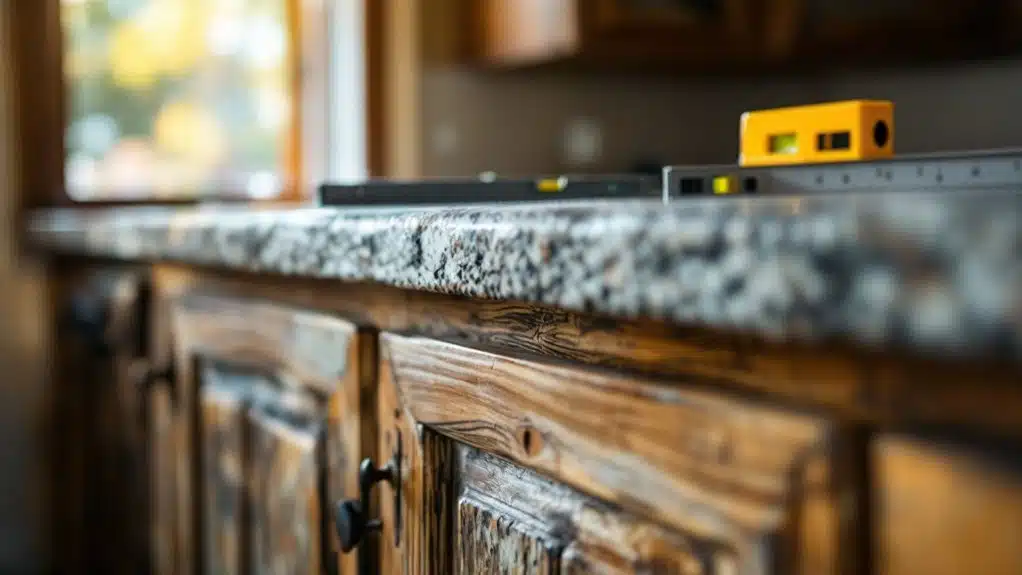
Before committing to new countertops, you’ll need to assess whether your existing cabinets can handle the load. Counter stability depends heavily on the structural integrity of your base cabinets. Older or damaged cabinets may lack the load capacity required for heavier materials like granite or quartz, which can weigh two to four times more than laminate.
Inspect your cabinets for signs of warping, soft wood, or loose joints. Check that the cabinet boxes are level, securely anchored to wall studs, and free from water damage. If you’re upgrading from laminate to stone, reinforce any weak cabinet frames beforehand. Understanding the maintenance requirements of your chosen material will also help you determine if your cabinets need reinforcement to support that specific countertop type long-term.
Skipping this assessment risks countertop failure, cabinet collapse, and costly repairs—outcomes that compromise both safety and the clients you serve.
Which Countertop Materials Work Best for Cabinet-Only Swaps
When swapping countertops without replacing cabinets, material weight becomes your primary constraint. Heavier materials demand structurally sound cabinets, while lighter options give aging cabinetry a second life.
| Material | Weight (lbs/sq ft) |
|---|---|
| Granite options | 18–20 |
| Quartz alternatives | 20–25 |
| Solid surface | 3–5 |
| Laminate choices | 1–2 |
Solid surface and laminate choices work best for weakened or older cabinets, requiring minimal structural reinforcement. They’re additionally easier to cut and install around existing plumbing configurations.
If your cabinets passed the structural assessment from the previous section, granite options and quartz alternatives become viable. Both deliver durability and aesthetic value that’ll serve your household for decades without demanding full cabinet replacement. For homeowners prioritizing eco-friendly benefits alongside durability, recycled concrete offers a modern aesthetic while maintaining structural compatibility with most cabinet systems.
How the Replacement Process Actually Works
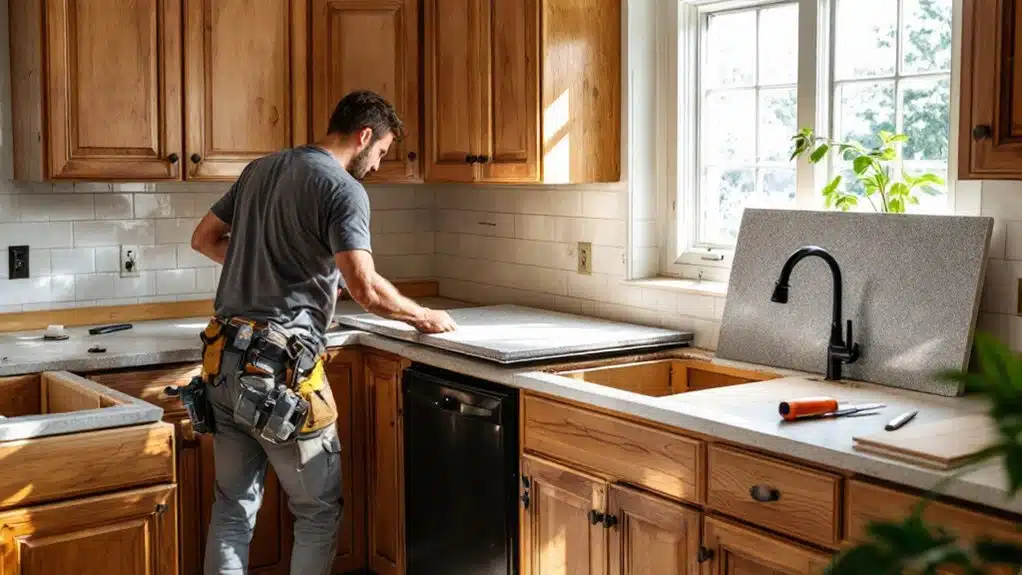
Once you’ve selected your material, the replacement process moves through four distinct phases: disconnecting utilities, removing the old countertop, installing the new surface, and reconnecting plumbing. First, a licensed plumber disconnects the sink and shuts off water lines. Next, technicians cut any caulk seals and lift the existing surface off the cabinets.
During countertop installation, your installer checks cabinet alignment before securing the new surface. Cabinets must sit level within 1/8 inch across their entire span — any variance causes cracking or joint failure over time. Shimming corrects minor discrepancies before templating begins. Popular materials like quartz countertops are engineered for performance and require minimal adjustments during installation due to their consistent manufacturing standards.
Finally, your plumber reconnects the sink, checks for leaks, and seals all perimeter edges. The entire process typically takes one to three days, depending on material fabrication lead times.
What It Costs to Replace Countertops Without Touching Cabinets
Countertop replacement costs fall into three distinct categories: materials, fabrication, and installation labor. Your budget considerations should account for all three before committing to a project.
Typical price ranges per square foot include:
- Laminate: $15–$40 installed, the most budget-friendly option
- Quartz or granite: $75–$150 installed, mid-to-premium range
- Marble or quartzite: $100–$200+ installed, premium tier
Keep these installation tips in mind: edge profiles, cutouts for sinks, and backsplash removal add to your total. Most kitchens run 30–50 square feet of countertop surface, so calculate accordingly. Demolition of old counters typically costs $300–$500 separately. If you’re serving clients on fixed incomes, always get three contractor quotes and clarify whether fabrication and labor are bundled or billed independently.
Signs Your Cabinets Need Attention Before New Countertops Go In
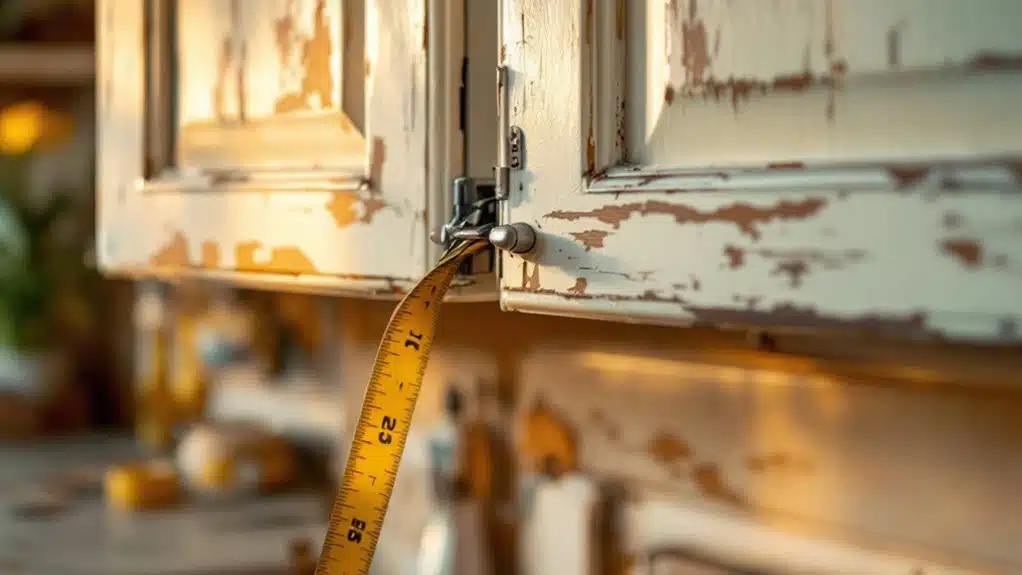
Before committing to new countertops, inspect your cabinets carefully—installing heavy stone over compromised cabinetry is a costly mistake you’ll want to avoid. Check for these warning signs before proceeding:
| Warning Sign | Risk Level | Action Required |
|---|---|---|
| Soft or warped frames | High | Replace before installation |
| Surface damage (peeling, swelling) | Medium | Repair or refinish first |
| Loose hinges or misaligned doors | Medium | Reattach and realign |
Cabinet stability directly determines whether your new countertops will last. If your cabinet boxes flex when you press firmly on them, they can’t support granite or quartz safely. Surface damage indicating water exposure is especially critical—it suggests underlying structural compromise. Address these issues first, and you’ll protect both your investment and the families you serve through safe, lasting kitchen upgrades.
Frequently Asked Questions
Can You Replace Countertops Yourself Without Hiring a Professional Contractor?
Yes, you can replace countertops yourself using DIY tips to cut costs. You’ll need proper tools, precise measurements, and patience. Factor in cost considerations like materials and adhesives before starting your project confidently.
How Long Does a Countertop Replacement Project Typically Take to Complete?
Ready to transform your kitchen? Your countertop replacement installation timeline typically spans one to three days. You’ll move through project phases including measurement, fabrication, and installation, so you can serve your household a beautiful, functional kitchen quickly.
Will New Countertops Increase My Home’s Resale Value Significantly?
Yes, new countertops can boost your home’s resale value. Kitchen upgrades like quality countertops typically yield a 70-80% return on investment, making them one of the most practical improvements you’ll make for future buyers.
Can Countertop Replacements Be Done While the Kitchen Remains Fully Functional?
70% of replacements allow a functional layout throughout. You can maintain a temporary kitchen by relocating necessities. Contractors typically complete sections sequentially, so you’ll retain partial workspace, minimizing disruption while serving your household’s daily needs effectively.
Do Countertop Warranties Remain Valid When Cabinets Are Not Replaced?
Yes, your warranty coverage stays valid when you don’t replace cabinets, as long as you’ve properly installed the countertop materials. Always check your manufacturer’s terms, since improper support or installation can void your warranty.
Conclusion
Replacing your countertops without touching your cabinets is entirely within reach — it’s one of the smartest surgical strikes you can make in a kitchen renovation. You’ll save money, minimize disruption, and still achieve a dramatic transformation. Just make sure your cabinets are structurally sound, choose a compatible material, and work with an experienced installer. Do your research upfront, and your kitchen will look brand new from the waist up.