
COREtec vs. Traditional Hardwood: Which Floor Wins for Georgia Families?
For Georgia families, COREtec outperforms traditional hardwood in humidity resistance and maintenance simplicity, yet hardwood delivers superior resale value. COREtec’s waterproof limestone composite core prevents the expansion, warping, and mold growth that plague hardwood in Georgia’s 70-75% humidity levels. You’ll save 40-60% on installation costs and eliminate refinishing expenses entirely. Nevertheless, properly maintained hardwood returns 70-80% of installation costs versus COREtec’s 50-60%, adding $2,000-$5,000 to home valuations. Your family’s specific needs—from elderly care requirements to pet activity levels—determine which material maximizes both performance and investment returns in your particular situation.
Key Takeaways
- COREtec’s waterproof core outperforms hardwood in Georgia’s humid climate, preventing moisture damage, warping, and mold growth in kitchens and basements.
- Traditional hardwood installation costs 40-60% more than COREtec, with longer installation times requiring acclimation and specialized techniques.
- COREtec requires no refinishing over its 25+ year lifespan, while hardwood needs refinishing every 7-10 years at $3-8 per square foot.
- Traditional hardwood adds $2,000-$5,000 to home valuations with 70-80% cost recovery, outpacing COREtec’s 50-60% resale return in metro Atlanta.
- Active families with children and pets benefit from COREtec’s scratch resistance and easy maintenance, while empty nesters prefer hardwood’s aesthetic appeal.
Understanding COREtec and Traditional Hardwood: The Basics
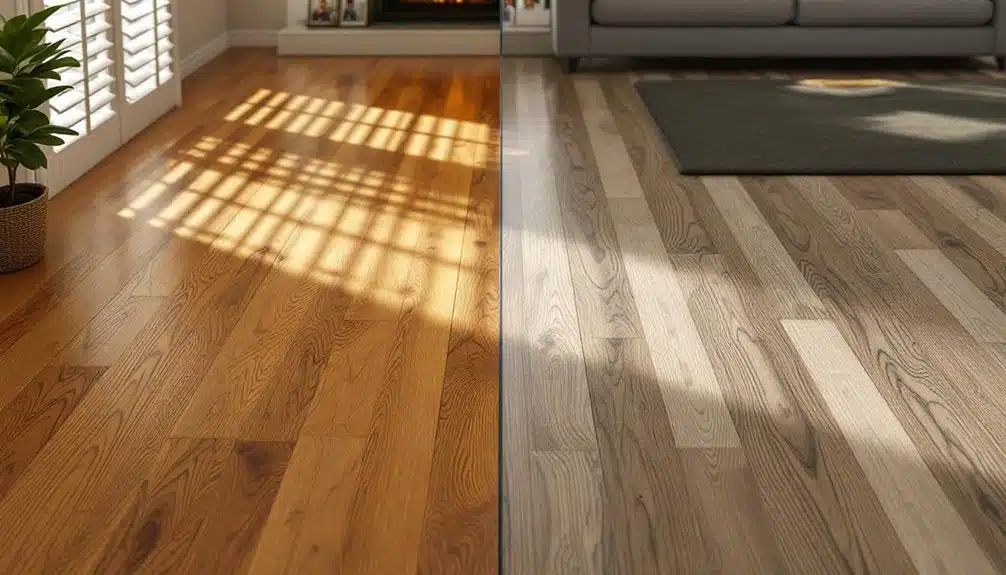
COREtec represents engineered luxury vinyl flooring built with a rigid core construction, while traditional hardwood consists of solid wood planks milled from single timber pieces. You’ll find COREtec technology combines multiple layers—including a limestone composite core—that resist moisture, dents, and temperature fluctuations. This construction makes it waterproof and dimensionally stable for Georgia’s humid climate.
Traditional hardwood offers natural beauty with unique grain patterns that age gracefully over decades. Its solid construction allows for multiple refinishing cycles, extending its lifespan considerably. Nonetheless, hardwood advantages come with limitations: susceptibility to moisture damage, scratching, and warping in humid conditions.
When you’re selecting flooring for clients or families, understanding these fundamental differences helps you match performance characteristics to specific needs and environmental challenges. COREtec’s water-resistant properties make it particularly suitable for moisture-prone areas where traditional hardwood would risk warping or damage.
How Georgia’s Climate Affects Your Flooring Choice
Georgia’s humidity levels fluctuate dramatically throughout the year, creating demanding conditions that expose critical performance gaps between flooring materials. You’ll need flooring that withstands these environmental challenges while maintaining its integrity for the families you serve.
Traditional hardwood responds poorly to moisture concerns and temperature fluctuations, requiring constant environmental controls. COREtec’s waterproof core technology eliminates these vulnerabilities through:
- Dimensional stability – The rigid core construction prevents expansion and contraction during seasonal changes
- Moisture barrier protection – Waterproof layers guard against Georgia’s high humidity damage
- Temperature resistance – Advanced polymers maintain performance across extreme temperature fluctuations
This technical advantage means you’re recommending flooring that performs consistently regardless of climate conditions, protecting your clients’ investment year-round. Unlike traditional materials, waterproof flooring prevents mold growth in humid climates by blocking moisture penetration at the core level.
Installation Costs and Labor: Breaking Down the Numbers
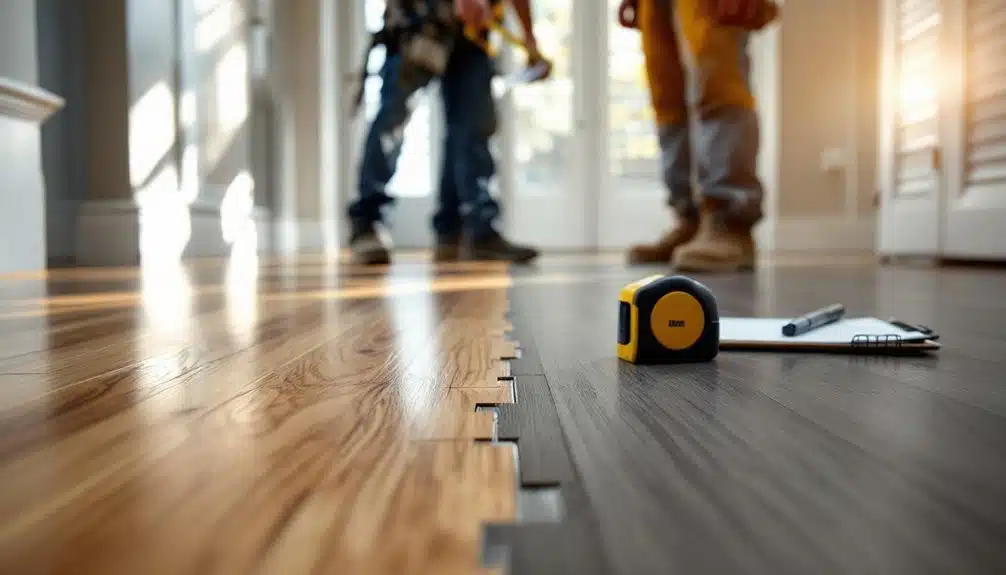
Traditional hardwood installation demands specialized skills that drive labor costs 40-60% higher than COREtec’s click-lock system. You’ll pay $3-8 per square foot for hardwood installation versus $1-3 for COREtec, greatly impacting your total investment when serving families on budget-conscious timelines.
COREtec’s floating floor system requires minimal subfloor preparation and no adhesives or nails, reducing installation pricing dramatically. Your contractor can complete a 1,000-square-foot project in 1-2 days versus hardwood’s 3-5 days.
Traditional hardwood requires acclimation periods, moisture barrier installation, and precise nailing techniques—all adding to labor expenses. You’re additionally facing additional costs for baseboard removal, disposal, and potential subfloor repairs.
For Georgia homeowners managing renovation budgets while maintaining quality, COREtec’s streamlined installation delivers professional results without the premium labor expenses traditional hardwood demands. Professional installation typically results in a faster, higher-quality finish compared to DIY, making it worth the investment for installation labor rates that align with your project budget.
Durability and Lifespan: Which Flooring Goes the Distance?
Beyond upfront costs, long-term performance separates these flooring categories in measurable ways. COREtec’s engineered construction delivers superior scratch resistance through its protective wear layer, which withstands daily traffic from pets, furniture, and foot traffic. Traditional hardwood requires periodic refinishing to maintain appearance.
Performance Comparison:
- Moisture Resistance: COREtec’s waterproof core prevents warping in Georgia’s humid climate, while hardwood swells and contracts with moisture exposure
- Scratch Resistance: COREtec’s wear layer thickness (12-20 mil) provides consistent protection; hardwood’s natural surface scratches more easily
- Lifespan: COREtec maintains its appearance for 25+ years without refinishing; hardwood requires refinishing every 7-10 years but can last generations with proper care
You’ll find COREtec demands minimal maintenance while hardwood needs ongoing investment to preserve its beauty. The multi-layer composition of luxury vinyl plank flooring includes a core layer for stability and a design layer that creates realistic wood-like appearances.
Waterproof Performance and Moisture Resistance

While hardwood flooring fails catastrophically when exposed to standing water, COREtec’s waterproof construction eliminates moisture-related damage entirely. You’ll find hardwood requires immediate cleanup of spills and develops cupping, warping, and mold growth when exposed to Georgia’s humid conditions or basement installations.
COREtec’s waterproof capabilities stem from its rigid core composition and sealed click-lock system, allowing you to install it confidently in bathrooms, kitchens, and laundry rooms where traditional hardwood remains prohibited. The engineered construction prevents moisture absorption from above or below, protecting your clients’ investments in flood-prone areas.
For Georgia families you serve, this superior moisture management means fewer emergency callbacks, reduced replacement costs, and peace of mind during humid summers. You’re delivering flooring that performs reliably regardless of moisture exposure. With over 20 years of professional installation experience, Flooring Specialist ensures your waterproof flooring is installed precisely to maximize these protective benefits.
Aesthetic Appeal: Natural Beauty vs. Realistic Replication
Hardwood flooring delivers unmatched organic variation through its genuine grain patterns, color gradations, and natural imperfections that create truly one-of-a-kind installations. Each plank showcases natural elegance that evolves over time, developing character through wear and patina.
COREtec replicates wood’s appearance through advanced manufacturing techniques that produce realistic textures:
- Embossed-in-Register (EIR) technology synchronizes surface texture with printed grain patterns for dimensional authenticity
- High-definition imaging captures actual wood species at microscopic detail levels
- Multiple visual variations prevent repetitive patterns across installations
You’ll find COREtec offers consistent coloration and predictable aesthetics—beneficial when you’re serving clients who need uniform appearances. Nevertheless, it can’t duplicate hardwood’s depth or authentic aging characteristics. Your choice depends on whether you prioritize genuine wood’s irreplaceable character or prefer reliable, maintenance-friendly replication.
Maintenance Requirements and Long-Term Care
Daily maintenance demands differ substantially between these flooring options, directly impacting your long-term ownership costs and time investment. COREtec requires straightforward cleaning techniques—simple sweeping and damp mopping with pH-neutral cleaners maintain its waterproof surface without special treatments. You’ll avoid refinishing expenses entirely.
Traditional hardwood demands more vigilant long term upkeep. You’ll need immediate spill cleanup to prevent water damage, specialized wood cleaners, and periodic refinishing every 7-10 years at $3-8 per square foot. Humidity control becomes crucial to prevent warping and gapping.
For Georgia families serving elderly parents or children with special needs, COREtec’s maintenance simplicity proves invaluable. You’ll spend less time protecting floors and more time focusing on those you care for, while hardwood requires constant vigilance and professional restoration investments.
Resale Value and Return on Investment for Georgia Homes
Your flooring choice directly influences your home’s market value in Georgia’s competitive real estate environment. Understanding resale trends helps you make knowledgeable choices that benefit future homeowners.
Investment potential comparison:
- Traditional hardwood typically returns 70-80% of installation costs, with properly maintained oak or maple floors adding $2,000-$5,000 to home valuations in metro Atlanta markets.
- COREtec flooring recovers 50-60% of costs initially, though its waterproof properties increasingly appeal to buyers concerned about Georgia’s humidity and flooding risks.
- Market positioning matters—hardwood still commands premium pricing in established neighborhoods, while COREtec performs competitively in family-oriented communities where durability outweighs traditional aesthetics.
Your choice should align with serving prospective buyers’ practical needs while maximizing your property’s marketability within specific Georgia submarkets.
Best Applications: Matching Flooring to Your Lifestyle Needs
Before selecting between COREtec and hardwood, evaluate your household’s specific usage patterns, traffic levels, and environmental exposures. Lifestyle compatibility determines long-term satisfaction with your flooring investment.
| Household Profile | Recommended Flooring |
|---|---|
| Active families with pets and children requiring spill resistance | COREtec (waterproof core protects against accidents) |
| Empty nesters prioritizing authentic aesthetics and long-term appreciation | Traditional hardwood (timeless elegance, refinishing capability) |
| Multi-generational homes needing slip resistance and easy maintenance | COREtec (textured surfaces, no refinishing downtime) |
Activity considerations should guide your selection process. COREtec excels in high-moisture areas like kitchens, basements, and bathrooms. Hardwood performs best in climate-controlled living spaces, bedrooms, and formal dining rooms. Match the product’s performance characteristics to your family’s daily routines for maximum durability and satisfaction.
Conclusion
You’ve studied the specs, compared the performance metrics, and analyzed the data points. Now you’re paralyzed by analysis. Here’s the truth: your neighbor will still track in Georgia red clay on either surface. Traditional hardwood lets you feel superior at dinner parties while you frantically wipe up wine spills. COREtec laughs at your toddler’s juice box catastrophes. Choose based on whether you prefer authentic warping or engineered invincibility. Both manufacturers thank you for overthinking this decision.