
Engineered vs. Solid Hardwood: Which Works Over a Concrete Slab?
When choosing hardwood over a concrete slab, engineered hardwood is your best option. Its cross-ply construction resists moisture vapor and dimensional movement that would cause solid hardwood to cup, buckle, or warp. Concrete constantly releases moisture, and solid hardwood simply can’t handle that instability long-term. You’ll likewise get flexible installation methods — glue-down or floating — that work directly on slabs. Keep going to find out exactly which product and method fits your specific situation.
Key Takeaways
- Engineered hardwood is the superior choice over concrete slabs due to its cross-ply construction that resists moisture and dimensional changes.
- Solid hardwood performs poorly over concrete, as trapped moisture causes planks to cup, buckle, or warp over time.
- Concrete continuously emits moisture vapor, making it nearly impossible to maintain the stability required for solid hardwood installation.
- Engineered hardwood offers flexible installation methods over concrete, including glue-down and floating, unlike solid hardwood’s limited options.
- Solid hardwood requires a plywood subfloor system over concrete, adding cost and complexity to the installation process.
Why Concrete Slabs Are Tough on Hardwood Floors
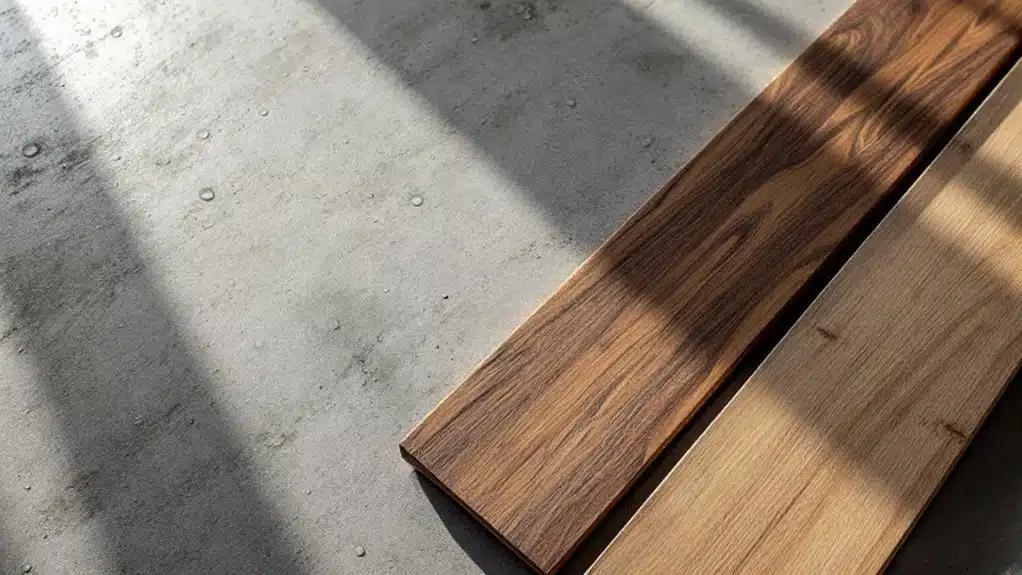
Concrete slabs create a uniquely hostile environment for hardwood floors, primarily owing to the fact that they trap and emit moisture. Unlike wood subfloors, concrete is porous and continuously releases moisture vapor upward. These moisture issues cause wood to swell, warp, and eventually buckle, compromising the floors you’re installing for your clients.
Temperature fluctuations compound the problem further. Concrete slabs sit directly on the ground, making them susceptible to dramatic thermal shifts between seasons. As temperatures change, concrete contracts and expands, creating movement that hardwood struggles to accommodate. Solid hardwood, being dimensionally unstable, absorbs these stresses poorly. Engineered hardwood’s multi-layered construction provides superior stability against these environmental challenges. Understanding these challenges helps you select the right flooring system and installation method before your project begins.
How Solid Hardwood Holds Up Over Concrete
In spite of its timeless appeal, solid hardwood performs poorly over concrete slabs in most installation scenarios. Concrete’s natural moisture and temperature fluctuations create conditions that solid hardwood simply can’t tolerate long-term. Here’s why it struggles:
- Moisture control is nearly impossible—concrete continuously releases vapor, causing solid planks to swell, cup, or buckle.
- Temperature fluctuations force solid wood to expand and contract repeatedly, weakening adhesive bonds and structural integrity.
- Installation restrictions limit your options—solid hardwood can’t be glued or floated directly over concrete, leaving nail-down as the only method, which requires a wood subfloor first.
If you’re helping clients select flooring over concrete, steering them away from solid hardwood protects their investment and prevents costly, frustrating failures down the road. Consider recommending water-resistant flooring options like LVP as a more reliable alternative that eliminates moisture concerns altogether.
Why Engineered Hardwood Performs Better on Slabs
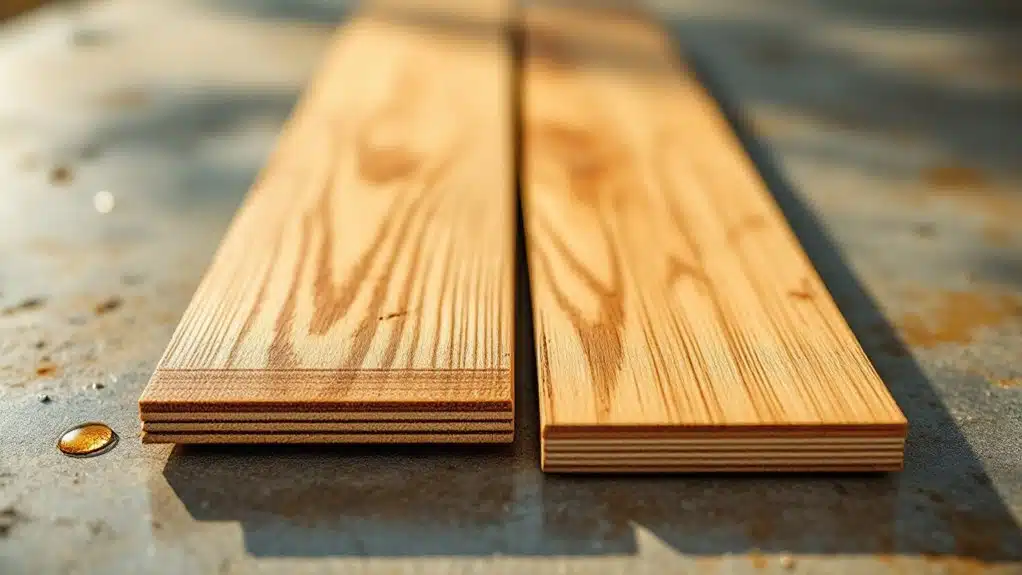
Engineered hardwood solves the problems solid wood can’t. Its cross-ply construction—multiple wood layers bonded in alternating grain directions—resists the expansion and contraction that destroys solid planks over concrete. You get genuine hardwood beauty with structural integrity built for demanding conditions.
Moisture resistance is where engineered hardwood earns its place on slabs. The layered core deflects moisture vapor rather than absorbing it, protecting both the floor and the clients you’re serving. Temperature stability follows the same logic—engineered planks hold their shape through seasonal shifts that would cause solid wood to gap or buckle.
You can glue, float, or staple engineered hardwood directly over concrete, giving you flexible installation options. That adaptability makes it the dependable choice for below-grade and on-grade slab installations. Unlike solid hardwood, engineered options can be easily refinished to restore their appearance if needed, extending their lifespan even in challenging environments.
The Best Installation Methods for Each Floor Type
Choosing the right installation method starts with knowing what each floor type demands. Floor leveling is non-negotiable for both options, but installation techniques branch out considerably after that step.
Engineered Hardwood Over Concrete:
- Glue-down – Apply urethane adhesive directly to the slab for maximum stability and noise reduction.
- Floating – Click or glue edges together without fastening to the subfloor, allowing natural movement.
- Staple/nail-down – Only viable over a wood subfloor installed above the slab.
Solid Hardwood Over Concrete:
Solid hardwood isn’t recommended directly on slabs. If you’re serving clients who insist on it, you’ll need to install a plywood subfloor system first, then nail or staple the solid boards down conventionally.
Which Hardwood Should You Actually Choose?
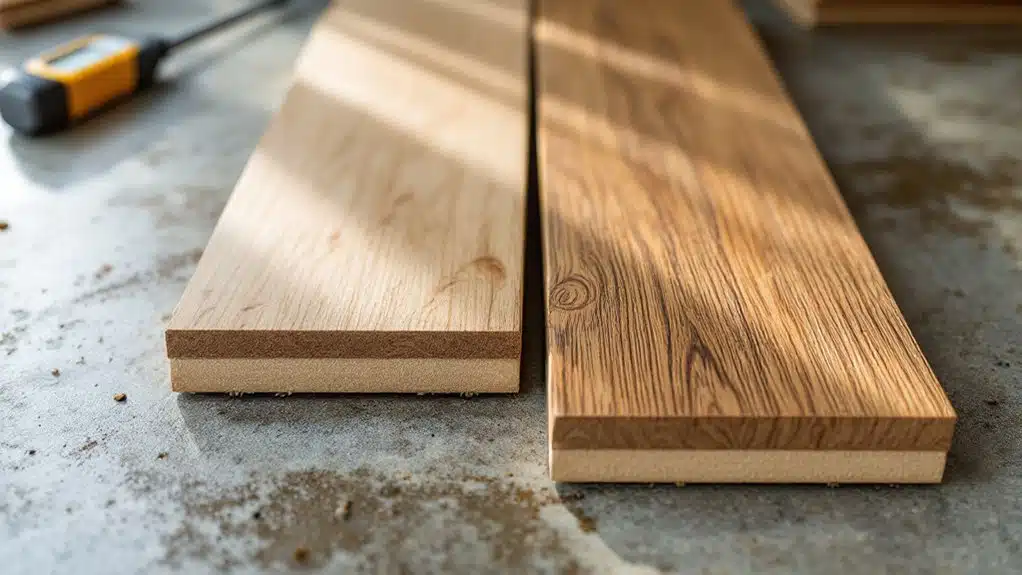
Now that you’ve covered installation methods, the real question is which product actually fits your project’s demands. Evaluate your environment before committing.
| Factor | Best Choice |
|---|---|
| High moisture exposure | Engineered hardwood |
| Climate considerations with humidity swings | Engineered hardwood |
| Hardwood aesthetics, long-term refinishing | Solid hardwood |
If you’re installing over a concrete slab, engineered hardwood wins consistently. Its cross-ply construction resists moisture movement that concrete naturally emits. Solid hardwood risks warping, cupping, and voiding warranties in below-grade or slab-on-grade applications.
However, if you’re serving clients in stable, above-grade environments who prioritize authentic hardwood aesthetics and multi-decade refinishing cycles, solid hardwood delivers superior long-term value. Match the product to the subfloor, the climate, and the client’s realistic expectations.
Frequently Asked Questions
Can I Install Hardwood Flooring Myself Over a Concrete Slab?
You can tackle DIY installation over concrete, but you’ll need to address key concrete considerations first. Test for moisture, guarantee a level surface, and choose engineered hardwood, as it handles concrete’s humidity better than solid hardwood.
How Long Does Hardwood Flooring Typically Last Over Concrete?
With proper installation and moisture management, you’ll get 25–80 years from engineered hardwood over concrete. You must address installation challenges and moisture concerns diligently, as neglecting vapor barriers greatly shortens your floor’s lifespan and compromises structural integrity.
Does Hardwood Flooring Over Concrete Affect Home Resale Value?
Yes, hardwood flooring over concrete can boost your home’s resale value. You’ll align with positive resale trends, as buyers respond well to flooring perceptions tied to warmth and durability, making your investment work harder for future homeowners.
Are There Eco-Friendly Hardwood Options Suitable for Concrete Slabs?
Though eco-options seem limited, you’ll find excellent choices for concrete slabs. Select engineered hardwood with sustainable sourcing certifications like FSC, or investigate bamboo alternatives—both offer durability, moisture resistance, and environmental responsibility while serving your home’s long-term needs.
What Warranties Typically Cover Hardwood Flooring Installed Over Concrete?
You’ll find most warranties cover 15–25 years for engineered hardwood over concrete, but you must meet moisture protection requirements. Manufacturers typically void coverage if you don’t follow specified moisture barrier installation protocols precisely.
Conclusion
Think of solid hardwood over concrete like parking a luxury car in a flood zone—technically possible, but you’re gambling with something expensive. Engineered hardwood’s cross-ply construction tolerates moisture fluctuation that concrete naturally emits, making it the technically sound default for slab installations. If you’re committed to solid hardwood, you’ll need a fully adhered subfloor system and verified moisture readings below 3 lbs. per 1,000 sq. ft. Otherwise, choose engineered.