
How to Keep Your Hardwood Floors Gorgeous for Decades
To keep hardwood floors gorgeous for decades, you’ll need to vacuum daily with soft-bristle attachments, use pH-neutral cleaners formulated specifically for your finish type, and maintain 35-55% relative humidity year-round. Install felt pads under furniture legs, place dense-pile entrance mats to capture 80% of tracked debris, and address spills immediately by blotting from the perimeter inward. Recognize when screen-and-recoat or full refinishing becomes necessary, and monitor conditions with floor-level hygrometers to prevent warping—professional-grade maintenance protocols extend refinishing intervals from 7 to 15+ years while preserving your investment’s structural integrity.
Key Takeaways
- Daily vacuuming with soft-bristle attachments removes abrasive particles that degrade finishes and scratch surfaces over time.
- Use pH-neutral cleaners formulated for hardwood to protect finishes without causing residue buildup or damage.
- Place felt pads under furniture legs and dense-pile entrance mats to prevent scratches, dents, and tracked debris.
- Maintain indoor humidity between 35-55% and temperatures between 60-80°F to prevent warping and dimensional changes.
- Address spills immediately by blotting with microfiber cloths and schedule professional refinishing when deep scratches appear.
Establish a Daily and Weekly Cleaning Routine That Protects Your Investment
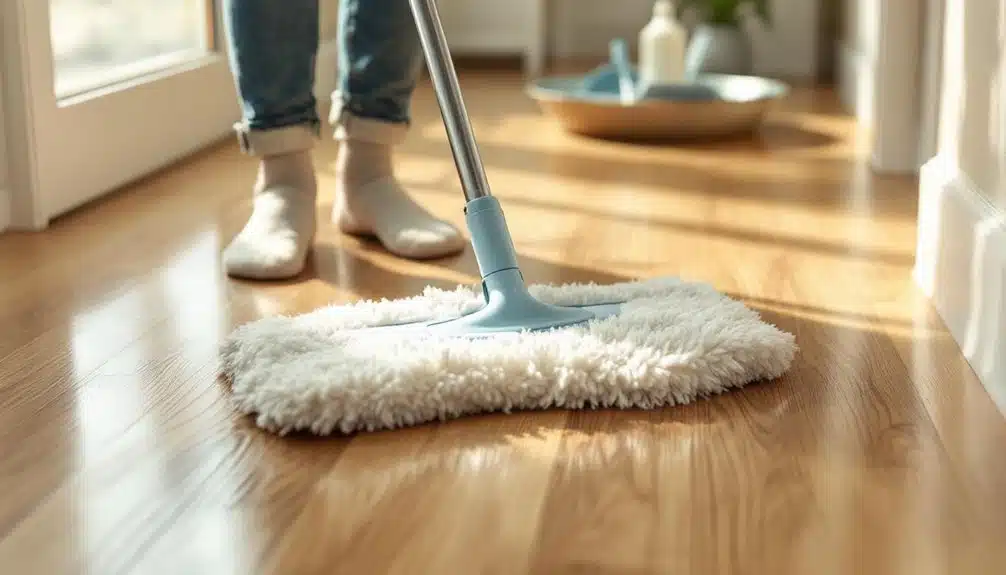
While many homeowners underestimate the impact of routine maintenance, establishing a consistent cleaning schedule is the most critical factor in extending your hardwood floor’s lifespan. Daily vacuuming removes abrasive particles that act like sandpaper beneath foot traffic, degrading the finish prematurely. Use a soft-bristle attachment or microfiber dust mop to prevent surface scratching.
Weekly dusting with a professional-grade microfiber pad captures finer particulates that daily maintenance misses. This two-tier approach prevents grit accumulation in wood grain crevices and finish micro-abrasions.
For clients with high-traffic areas, increase vacuuming frequency to twice daily. This proactive strategy greatly reduces refinishing intervals, protecting their flooring investment while maintaining ideal appearance. When deeper cleaning becomes necessary, use a well-wrung-out mop with a hardwood-specific cleaner to avoid excess moisture that can damage the wood. Consistency in these fundamental practices delivers measurable results that homeowners appreciate for decades.
Choose the Right Cleaning Products and Tools for Your Floor Type
Before you clean, determine whether your floors have polyurethane, oil-based, or wax finishes—each requires specific products to prevent damage. You’ll need pH-neutral cleaners formulated for hardwood, as alkaline or acidic solutions strip protective coatings and dull the wood’s appearance over time. Professional flooring installers consistently recommend microfiber mops over traditional string mops since they trap particles without scratching and require minimal moisture that won’t warp planks. Quality hardwood floor cleaners like Bona effectively clean without leaving residue that attracts dirt or complicates future refinishing.
Identify Your Wood Finish
Determining your floor’s finish type—polyurethane, oil-based, wax, or penetrating sealer—dictates which cleaning products won’t damage the protective layer. Different wood varieties require specific finish types, and identifying yours prevents costly mistakes. Test an inconspicuous area: rub your finger across the surface. If no smudge appears, you’ve got polyurethane or penetrating sealer. A smudge indicates wax finish. Avoid oil soap on most finishes, as it attracts dirt and creates dangerously slippery surfaces that compromise both cleanliness and safety.
| Finish Type | Identification Method | Compatible Cleaners |
|---|---|---|
| Polyurethane | Hard, glossy surface; water beads up | pH-neutral hardwood cleaner |
| Oil-Based | Slight sheen; amber tone develops over time | Specialized oil soap |
| Wax | Finger rub creates smudge; matte appearance | Solvent-based wax cleaners |
| Penetrating Sealer | Absorbed into wood; natural look | Mild detergent solution |
| Unfinished | Raw wood texture; absorbs water quickly | Dry cleaning only |
This knowledge empowers you to serve your clients’ flooring needs effectively.
Ph-Neutral Cleaners Matter
Once you’ve identified your floor finish, selecting the appropriate cleaner becomes straightforward—and pH-neutral formulations protect polyurethane and oil-based finishes better than any alternative. Acidic or alkaline solutions compromise finish integrity, causing cloudiness and premature wear. Through decades of floor care, I’ve witnessed pH balance directly impact cleaning effectiveness and longevity.
You’ll want cleaners between 6.5-7.5 on the pH scale. These formulations remove soil without stripping protective layers or dulling surface sheen. Avoid ammonia-based products, vinegar, and abrasive detergents—they’re incompatible with most finishes.
Professional-grade pH-neutral cleaners contain surfactants that lift dirt while preserving finish chemistry. When you’re serving homeowners or maintaining commercial spaces, this knowledge guarantees floors remain beautiful for decades. Always dilute concentrated cleaners according to manufacturer specifications for best results. For minor imperfections like scratches or gouges that appear over time, you can address them quickly with a touch-up kit before they require more extensive refinishing.
Microfiber Mops Work Best
Microfiber mops outperform traditional cotton alternatives by capturing 99% more dirt particles while using considerably less water—a critical advantage for hardwood floors vulnerable to moisture damage. When you’re serving clients’ flooring needs, understanding microfiber benefits guarantees ideal results. The electrostatically charged fibers attract and trap dust, eliminating the need for harsh chemicals that compromise finish integrity.
| Mop Type | Water Absorption | Particle Capture | Finish Safety | Longevity |
|---|---|---|---|---|
| Microfiber | Low-moderate | 99% efficiency | Excellent | 500+ washes |
| Cotton | High | Poor | Moderate | 100 washes |
Professional cleaning techniques require flat-head microfiber mops with removable, machine-washable pads. You’ll achieve superior coverage using figure-eight patterns, maintaining consistent pressure throughout each pass. Replace saturated pads immediately to prevent moisture pooling and potential cupping damage. Pair your microfiber mop with a pH-balanced cleaner specifically formulated for hardwood to ensure deeper dirt removal without damaging the wood’s protective finish.
Prevent Scratches and Dents Before They Happen
Protecting your hardwood from physical damage requires a proactive approach focused on two critical zones: furniture contact points and high-traffic corridors. You’ll need felt pads or floor protectors under every furniture leg—chairs, tables, and heavy appliances—because even minor shifts during daily use create micro-abrasions that compound over time. In walkways and entryways, deploy area rugs with non-slip backing or runner mats to shield the finish from repetitive foot traffic, grit accumulation, and the concentrated wear patterns that lead to premature refinishing.
Strategic Furniture Pad Placement
Heavy furniture creates concentrated pressure points that can permanently indent or scratch hardwood surfaces within weeks of placement. You’ll need to install felt pads beneath every furniture leg, replacing them quarterly as compression reduces their effectiveness. For pieces exceeding 200 pounds, specify dual-layer pads with rubber backing to distribute load across a wider surface area.
Your furniture arrangement strategy should prioritize spacing high-traffic pathways away from pad locations. Install caster cups under rolling chairs and wheeled items—standard pads won’t withstand lateral forces. When selecting pad materials, choose 100% wool felt for stationary pieces and thermoplastic polyurethane for items requiring occasional repositioning. Verify pad diameter matches leg size; undersized protection concentrates pressure while oversized pads create tripping hazards. This systematic approach safeguards your clients’ floors effectively.
High-Traffic Area Protection
While furniture pads address static damage risks, entryways and hallways demand thorough wear-prevention systems that account for foot traffic volumes exceeding 500 passes daily. Deploy commercial-grade entrance mats with rubber backing at exterior thresholds to capture 80% of tracked debris within the first three steps. Layer area rugs strategically along primary pathways where grit accumulation accelerates finish degradation.
Your protection strategy should include:
- Dense-pile entrance mats that trap moisture and particulates before they migrate onto unprotected surfaces
- Runner-style area rugs positioned in hallway passage zones where directional flow concentrates abrasive particles
- Vinyl chair mats under workspace seating to prevent repetitive scuff patterns from caster wheels
Experience-driven implementation of these barriers extends refinishing intervals from 7 years to 15+ years in residential applications.
Address Spills, Stains, and Water Damage Immediately
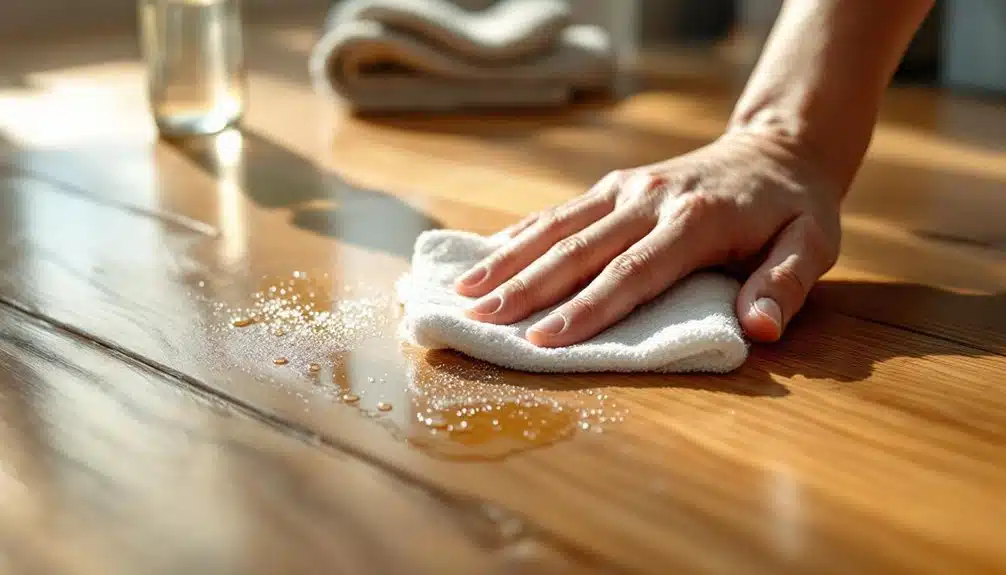
Hardwood’s greatest enemy isn’t foot traffic—it’s moisture left unaddressed. Effective spill management requires immediate action: blot liquids with microfiber cloths, working from the perimeter inward to prevent spreading. Don’t wipe—this drives moisture into seams and grain patterns.
For stain removal, identify the source first. Water-based spills need dry cloths; oil-based stains require pH-neutral hardwood cleaner. Tannin stains from wine or coffee demand enzymatic cleaners specifically formulated for wood surfaces. You’re protecting families’ investments when you respond quickly.
Water damage manifests within hours. Check for cupping, crowning, or discoloration—these signal moisture penetration beneath the finish. Use fans and dehumidifiers immediately. Document damage patterns for insurance purposes. Your swift response prevents costly refinishing or replacement, ensuring the floors you maintain continue serving households beautifully for generations.
Know When and How to Refinish Your Hardwood Floors
Even well-maintained floors eventually show wear patterns that cleaning can’t address—and that’s when refinishing becomes necessary. You’ll recognize it’s time when you notice deep scratches penetrating the finish, gray discoloration from water damage, or worn traffic patterns exposing bare wood.
Professional refinishing techniques involve careful assessment before execution:
- Drum sanding removes damaged layers while preserving your floor’s longevity
- Screen-and-recoat refreshes surface finish without full sanding for minor wear
- Stain matching restores uniform appearance across repaired sections
Modern sanding methods utilize progressively finer grits, typically 36-60-80-100, ensuring smooth substrate preparation. You’re investing in your clients’ spaces, so partnering with certified professionals guarantees proper moisture testing, dust containment systems, and polyurethane application that’ll protect these surfaces for another decade.
Control Humidity and Temperature to Prevent Warping and Gaps
Since wood is a hygroscopic material, it continuously absorbs and releases moisture in response to environmental conditions—expanding during humid periods and contracting when air turns dry. To protect your clients’ floors from cupping, crowning, and seasonal gapping, maintain indoor relative humidity between 35-55% year-round. Install a whole-house humidification system for winter months and utilize dehumidifiers during summer. Temperature regulation proves similarly critical—keep indoor temperatures between 60-80°F to minimize dimensional changes in the flooring. Strategic humidity control prevents the moisture-related failures that compromise installation integrity. Monitor conditions using hygrometers placed at floor level, where microclimates differ from wall-mounted thermostats. This proactive approach preserves the structural stability and aesthetic appeal homeowners expect from their hardwood investment.
Conclusion
You’ve invested a fortune in your hardwood floors—now protect that investment with these proven maintenance protocols. By implementing proper cleaning regimens, controlling environmental factors, and addressing damage promptly, you’ll extend your floor’s lifespan exponentially. Remember: prevention costs pennies compared to restoration. Monitor your subfloor moisture levels, maintain ideal humidity between 35-55%, and don’t skip seasonal inspections. When you follow these industry-standard practices consistently, your hardwood will retain its structural integrity and aesthetic appeal for generations.