
Quartz vs. Granite Countertops in 2026: Which One’s Actually Worth It in Middle Georgia?
If you’re weighing quartz vs. granite countertops for your Middle Georgia home in 2026, quartz wins on low maintenance and moisture resistance, which matters in Georgia’s humid climate. Granite holds its own with superior heat tolerance and timeless natural beauty. Quartz typically runs $50–$120 per square foot installed, while granite ranges from $40–$100. Your best choice depends on your lifestyle, budget, and how long you plan to stay — and there’s a lot more to contemplate before you decide.
Key Takeaways
- Quartz ($50–$120/sq ft) costs slightly more than granite ($40–$100/sq ft) installed, but lower maintenance expenses make it more affordable long-term.
- Granite handles heat better and won’t discolor in sunlit areas, giving it an edge in Middle Georgia’s sunny climate.
- Quartz requires no sealing and resists moisture, making it practical for Middle Georgia’s humid conditions with minimal upkeep.
- Granite demands resealing every 1–2 years to prevent staining and bacteria buildup, adding recurring maintenance costs over time.
- Both materials boost resale value, but quartz suits mid-range markets while granite appeals to higher-end homebuyers seeking natural stone.
Engineered vs. Natural Stone: How Quartz and Granite Are Made
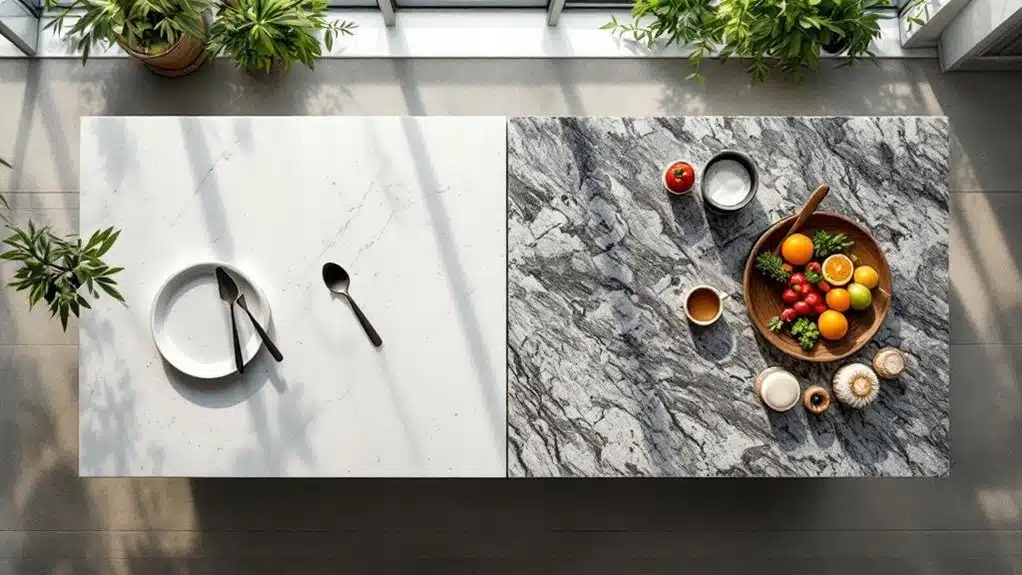
When choosing between quartz and granite countertops, understanding how each material is made helps you make a smarter buying decision. Granite comes directly from natural resources — quarried from the earth, cut into slabs, and finished with minimal processing. What you see is exactly what nature produced.
Quartz countertops, on the other hand, are engineered materials. Manufacturers combine roughly 90–95% ground quartz with resins, pigments, and binders to create a consistent, controlled surface. Nothing about quartz happens accidentally. This engineering process allows quartz to be non-porous, making it naturally resistant to stains and spills without requiring periodic sealing.
For Middle Georgia homeowners serving busy households, this distinction matters. Granite offers one-of-a-kind character but requires sealing. Quartz delivers uniformity and lower maintenance. Knowing the origin of each material helps you match your countertop choice to your household’s actual daily demands rather than trends or assumptions.
How Much Do Quartz and Granite Cost in Middle Georgia?
When shopping for countertops in Middle Georgia, you’ll find that quartz typically runs between $50 and $120 per square foot installed, while granite commonly falls in the $40 to $100 range, though local suppliers in Macon and Warner Robins can offer competitive pricing that shifts these figures. Your final cost depends on several installation factors, including slab thickness, edge profiles, cutouts for sinks and cooktops, and the complexity of your kitchen’s layout. Understanding these variables upfront helps you set a realistic budget before you ever walk into a showroom. Both materials offer unique benefits and aesthetic appeal that extend beyond their initial purchase price, with granite providing natural durability and quartz delivering engineered performance for different homeowner preferences.
Typical Price Ranges
Both quartz and granite countertops in Middle Georgia usually fall within a broad price range, depending on the material grade, edge profiles, and complexity of the installation. You’ll typically find quartz running between $60 and $150 per square foot installed, while granite tends to range from $50 to $130 per square foot installed. Current price trends show quartz climbing slightly higher because of increased manufacturing demands, while granite pricing fluctuates based on slab availability and quarry sourcing. Granite’s premium pricing is also attributed to its limited supply and extraction costs, which can impact your overall investment. Your budget considerations should include fabrication, removal of existing countertops, and plumbing disconnects if applicable. Local Middle Georgia suppliers often offer competitive pricing compared to big-box retailers, so getting multiple quotes helps you stretch your investment further while still delivering quality results for the families you serve.
Installation Cost Factors
Beyond the base material price, several installation cost factors will shape your final investment in Middle Georgia. Your labor expenses depend heavily on contractor experience—seasoned local installers command higher rates but deliver superior results. Surface preparation adds costs if your existing countertops require significant leveling or structural reinforcement.
Design complexity drives pricing upward when you’re incorporating curved edges, custom cutouts, or intricate patterns. Installation materials like adhesives, sealants, and support brackets are also considerations in your total. Don’t overlook warranty options, since extensive coverage often increases upfront costs but protects your long-term investment.
Installation time varies based on kitchen size and local regulations governing residential renovations in Middle Georgia counties. Choosing experienced contractors familiar with regional code requirements guarantees your project stays compliant and on schedule. Remember to allow for contingencies by setting aside an extra 10-15% of your budget for unexpected expenses that may arise during the installation process.
Which Countertop Holds Up Better in Middle Georgia Kitchens?
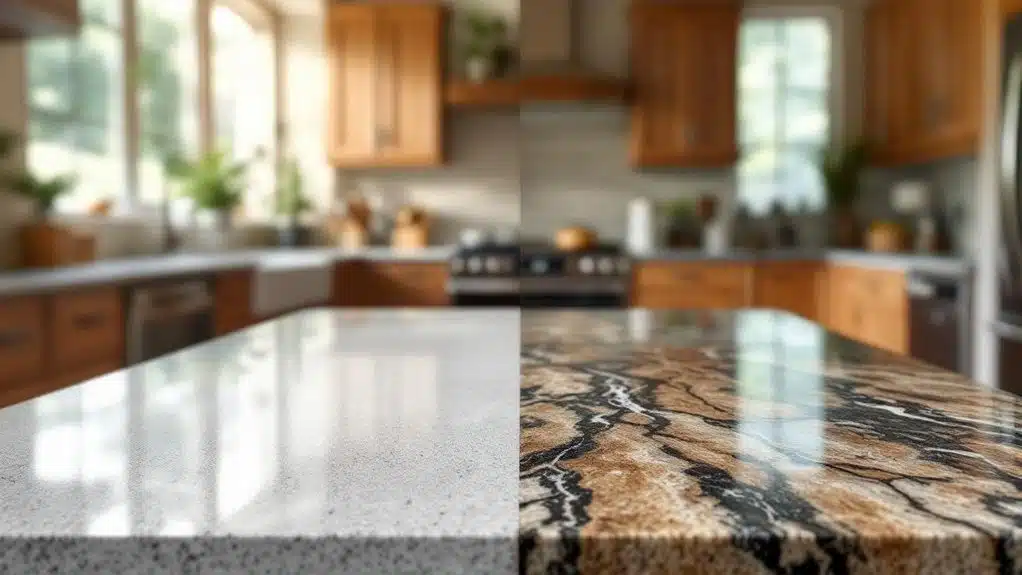
When you’re cooking in a Middle Georgia kitchen, you’re dealing with hot summers, high humidity, and the everyday wear that comes with a busy household—so durability matters. Granite handles heat directly from pots and pans better than quartz, which can crack or discolor under extreme temperatures, but quartz resists stains more effectively since it’s non-porous and doesn’t require sealing. Over the long haul, both surfaces hold up well with proper care, but your lifestyle and kitchen habits should drive which one earns a place in your home. Quartz also requires specific cleaners to maintain its appearance, while granite’s maintenance demands are different, so consider what cleaning routine fits your household best.
Heat and Humidity Resistance
Living in Middle Georgia means your kitchen countertops face a relentless combination of scorching summers, high humidity, and the everyday heat of Southern cooking. When you’re preparing large family meals or hosting gatherings, heat absorption becomes a real concern. Granite handles direct heat better than quartz since it’s a natural stone that won’t warp or discolor under hot cookware. Quartz, on the other hand, contains resins that can crack or discolor when exposed to high temperatures. For moisture resistance, quartz wins—its non-porous surface repels humidity and prevents bacterial growth without annual sealing. Granite requires consistent sealing to maintain moisture resistance in Georgia’s damp climate. If you cook frequently and prioritize low maintenance, quartz protects better against humidity. If heat tolerance matters most, granite’s your stronger choice. Both materials complement various cabinetry styles and can enhance your kitchen’s overall aesthetic appeal.
Scratch and Stain Performance
Heat tolerance and humidity resistance matter, but daily wear tells the real story of a countertop’s durability. When you’re hosting family gatherings or prepping meals for your community, you need surfaces that perform under pressure.
Quartz wins on stain resistance. Its non-porous surface repels juice, coffee, and grease without sealing. Granite requires annual sealing to maintain comparable protection, and unsealed granite absorbs spills quickly in humid Middle Georgia conditions.
For scratch prevention, granite holds an advantage. Its natural hardness resists knife marks better than quartz, which can show surface scuffs over time. However, quartz countertops are engineered for performance with exceptional scratch resistance that makes them suitable for busy kitchens despite their susceptibility to surface-level marks.
Your choice depends on your priorities: effortless stain resistance or superior scratch durability. Both perform well when properly maintained.
Long-Term Durability Comparison
Both quartz and granite hold up well in Middle Georgia kitchens, but each material ages differently under the region’s conditions. For long term performance, granite develops a natural patina over decades, growing more distinctive with age when properly sealed. Quartz maintains its original appearance longer but can fade or discolor from prolonged UV exposure near sun-facing windows—a real concern in Georgia’s intense summers.
A lifespan analysis of both materials shows granite lasting 50-plus years with minimal upkeep, while quartz typically performs reliably for 25 to 30 years before showing wear. If you’re outfitting a kitchen meant to serve your family for generations, granite edges out quartz in raw longevity. If consistency and lower maintenance are your priorities, quartz still delivers strong, dependable results. Both materials offer exceptional resistance to scratches and stains when properly maintained, ensuring your investment protects your kitchen surfaces through years of daily use.
How Georgia’s Heat and Humidity Affect Your Countertops
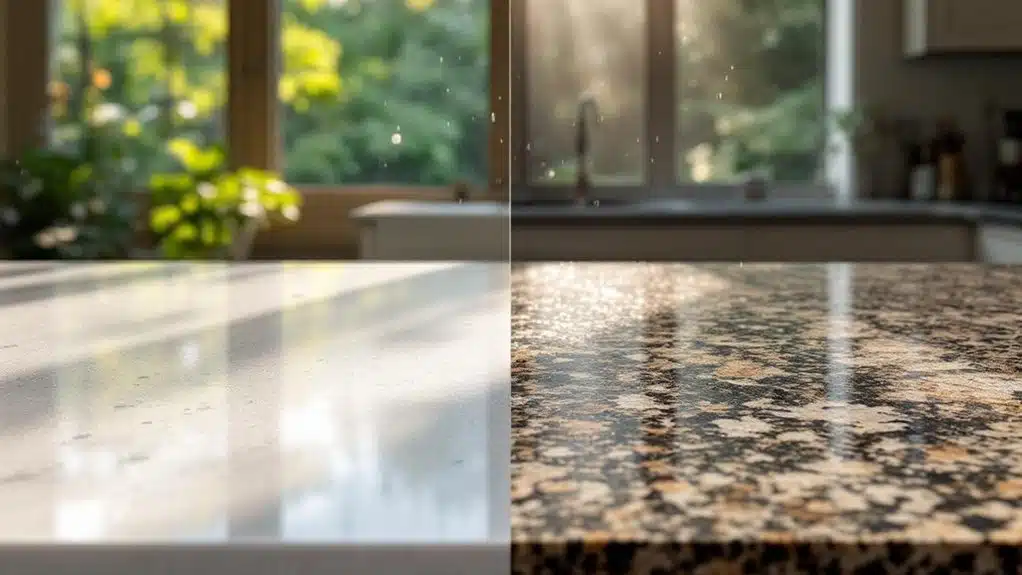
Georgia’s climate puts countertops through a real workout — hot summers, high humidity, and the occasional stretch of brutal heat can all take a toll on your kitchen or bathroom surfaces. Understanding how each material responds helps you serve your household better.
Here’s what Middle Georgia’s climate actually does:
- Heat absorption — Granite absorbs and retains heat longer, which can feel uncomfortable during summer cooking sessions.
- Humidity effects — Granite’s porous surface can trap moisture without proper sealing, potentially harboring bacteria that affects the families you’re feeding. Non-porous materials like quartz prevent this moisture absorption entirely, reducing the risk of warping and staining that plague porous stone.
- Expansion and contraction — Repeated temperature swings can stress both materials, though quartz’s engineered consistency handles fluctuations more predictably.
Quartz typically handles Georgia’s humidity better out of the box, while granite demands consistent maintenance to stay protective and reliable.
How Much Maintenance Do Quartz and Granite Actually Require?
When it comes to keeping your countertops in top shape, quartz and granite couldn’t be more different. Quartz requires minimal effort — your cleaning methods stay simple with mild soap and warm water. No sealing needed, ever.
Granite demands more commitment. You’ll need to reseal it every one to two years, especially given Middle Georgia’s humidity, which accelerates wear. Without proper maintenance tips, granite becomes vulnerable to staining and bacterial buildup in its porous surface. For stubborn mineral deposits common in Georgia’s hard water, use a soft cloth with equal parts white vinegar and water, gently scrubbing affected areas and rinsing thoroughly.
If you’re running a busy household or operating a caregiving space, quartz saves you time and mental energy. Granite rewards those willing to invest in routine upkeep. Both surfaces clean easily day-to-day, but granite’s long-term demands are real — and in Georgia’s climate, skipping that sealing schedule isn’t an option.
Which Material Gives You More Design Options?
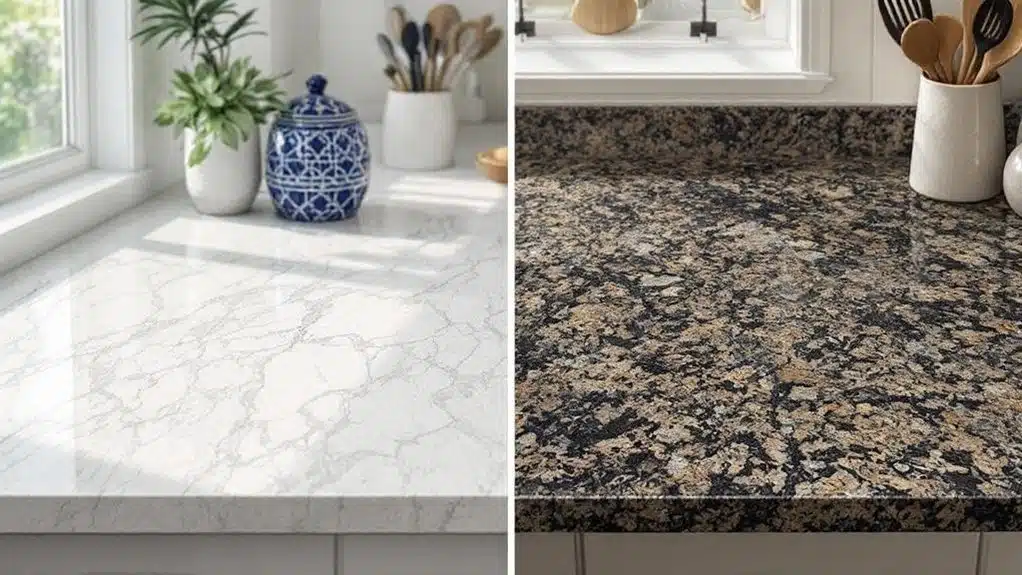
Maintenance requirements matter, but so does how a countertop looks in your home. When you’re designing a kitchen or bathroom in Middle Georgia, both materials offer real design flexibility, but in different ways.
- Quartz delivers consistent color variety, making it easier to match specific cabinetry or flooring throughout your home.
- Granite offers unique, natural patterning — no two slabs are identical, giving your space a one-of-a-kind character.
- Quartz now mimics natural stone convincingly, expanding your options without sacrificing uniformity.
If you’re helping a family create a welcoming, functional home, quartz gives you predictable results. If you want something distinctive that reflects natural beauty, granite delivers. Your choice depends on what serves your household’s style and long-term vision best.
Which Countertop Adds More Resale Value in Middle Georgia?
Both quartz and granite can boost your home’s resale value, but Middle Georgia buyers tend to respond differently to each material depending on the neighborhood and price point. In higher-end Macon or Warner Robins communities, granite’s natural appeal aligns strongly with regional preferences, often drawing buyers who associate it with quality craftsmanship. Quartz, on the other hand, performs well in mid-range markets where buyers prioritize low-maintenance living. When weighing resale factors, consider your neighborhood’s comparable sales and what competing listings feature. Installing a material that feels out of place for your price range won’t maximize your return. Talk to a local real estate agent before committing—they’ll give you honest insight into what Middle Georgia buyers are actually paying a premium for right now.
How to Use Contractor Advice to Make the Final Call
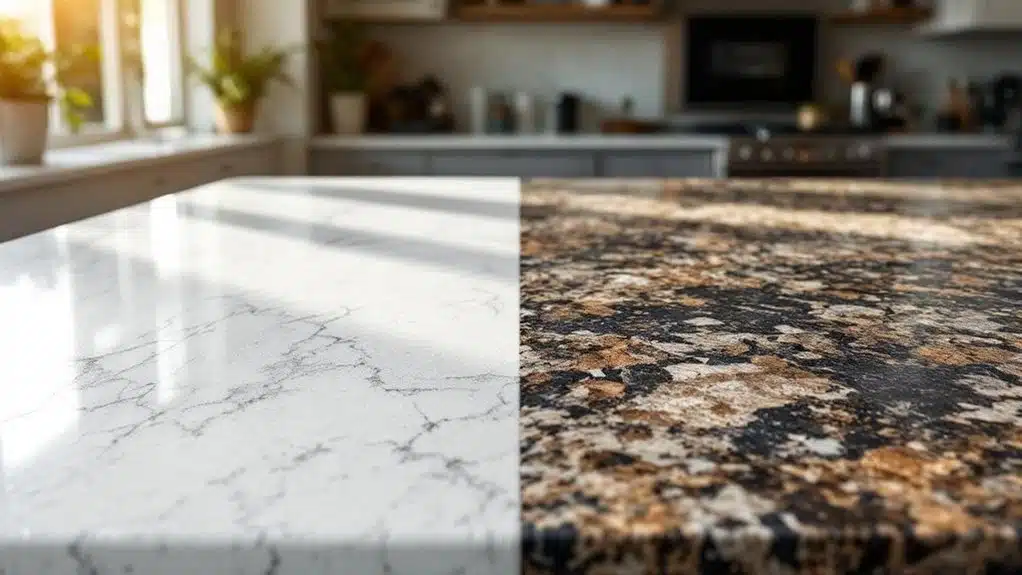
Once you’ve narrowed your options down to quartz or granite, a few conversations with experienced Middle Georgia contractors can make the final call much easier. Their contractor recommendations reflect real project outcomes from homes just like yours.
Ask these three questions to gather the expert insights you need:
- Which material performs better in our humid climate? Local contractors understand how Middle Georgia’s heat and moisture affect each surface long-term.
- What are clients in my neighborhood choosing? Regional trends reveal what buyers actually value.
- Which option fits my renovation budget without cutting corners? Contractors help you balance quality with cost responsibly.
Their hands-on experience cuts through the noise, helping you confidently choose the countertop that serves your household and your community well.
Where to Buy Quartz and Granite Countertops Locally
Where you buy your countertops matters just as much as what you buy. In Middle Georgia, local suppliers and countertop showrooms give you hands-on access to slabs before you commit.
| Resource Type | What You Gain |
|---|---|
| Local suppliers | Competitive pricing, faster delivery |
| Countertop showrooms | In-person slab selection, design guidance |
| Big-box retailers | Convenience, limited customization |
Visiting showrooms lets you see true color variation in natural granite and compare quartz patterns under real lighting. Local suppliers often build relationships with installers, which helps when you’re coordinating a kitchen renovation for a client or family. Ask showrooms about lead times, warranty terms, and whether they offer templating services. Choosing locally keeps your project moving and supports the Middle Georgia community you’re serving.
Quartz or Granite: A Side-by-Side Verdict for Middle Georgia Homes
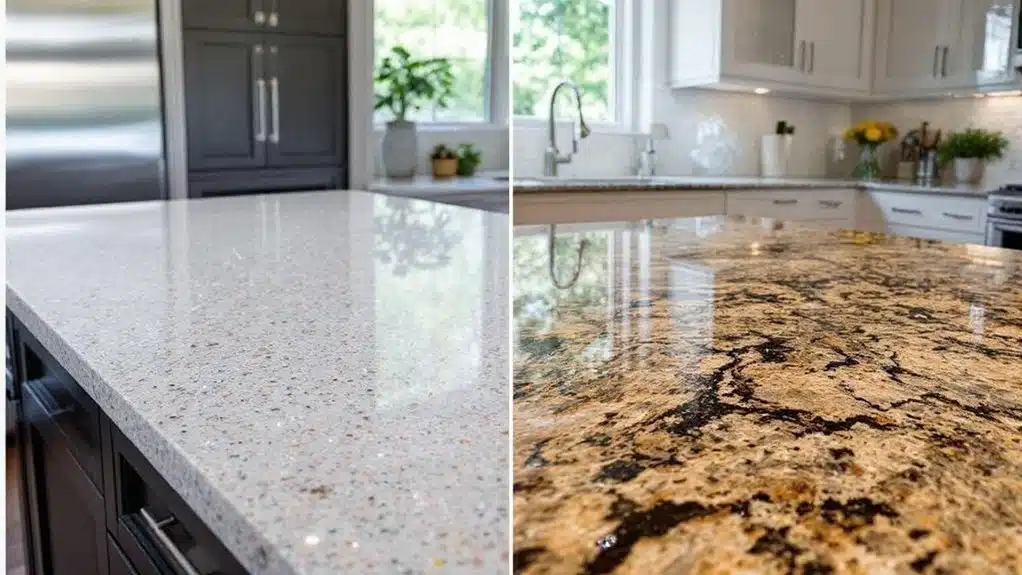
When choosing between quartz and granite for your Middle Georgia home, cost and durability are the two factors that’ll shape your final decision. Granite typically runs $40–$100 per square foot installed, while quartz ranges from $50–$120, though regional suppliers in Macon and Warner Robins can offer competitive pricing on both. Georgia’s humid summers and occasional hard freezes put real stress on countertop materials, so understanding how each stone holds up under those conditions is just as important as the price tag.
Cost Comparison Breakdown
Three factors typically drive countertop costs in Middle Georgia: material price, installation labor, and long-term maintenance. Understanding each helps you serve your household wisely and invest where it counts most.
Here’s what you’ll typically spend:
- Material costs: Granite runs $40–$60 per square foot; quartz ranges $50–$90, reflecting sustainability factors like engineered consistency.
- Installation techniques: Granite’s natural variation demands more precise cutting, slightly increasing labor costs compared to quartz’s uniform slabs.
- Maintenance: Granite requires annual sealing ($50–$100), while quartz needs virtually none.
Over ten years, quartz often costs less in spite of a higher upfront price. If you’re outfitting a home where durability serves a busy family, quartz frequently delivers stronger long-term value in Middle Georgia’s climate.
Durability Under Georgia Conditions
Georgia’s heat, humidity, and occasional temperature swings put every countertop material through its paces, so choosing the right one for your Middle Georgia home means understanding how each holds up under real conditions. Quartz offers strong weather resistance against humidity, resisting moisture absorption that causes warping or staining. On the other hand, it’s vulnerable to prolonged UV exposure, which can cause fading near sunlit windows. Granite naturally handles heat better and won’t discolor from sunlight, making it a favorite among regional preferences across Macon and Warner Robins households. It does require periodic sealing to prevent moisture penetration in high-humidity environments. Both materials perform well here, but if your kitchen gets significant sun exposure, granite typically delivers longer-lasting results with proper maintenance.
Frequently Asked Questions
Can I Install Quartz or Granite Countertops Over Existing Surfaces?
You can install over existing surfaces, but it’s not ideal. Proper surface preparation guarantees lasting countertop installation. Consider design considerations and cost implications—Middle Georgia contractors recommend starting fresh for the best, most durable results you’ll truly love.
Are Quartz or Granite Countertops Safe Around Young Children?
Both countertop options offer strong child safety benefits. Quartz’s non-porous surface resists bacteria, while granite’s material durability withstands active Middle Georgia households. You’ll want to secure sharp edges and seal granite regularly to protect your little ones.
How Long Does Countertop Installation Typically Take in Middle Georgia?
Like a swift Georgia sunrise, your installation timeline moves quickly — most local contractors in Middle Georgia’ll complete your countertop project in one to three days, so you can start serving your family around a beautiful new surface fast.
Can Quartz or Granite Countertops Be Repaired if Cracked?
Yes, you can repair both! For granite, a local Middle Georgia pro can handle crack repair with epoxy filler. Quartz needs manufacturer-approved kits. Follow these maintenance tips: seal granite annually and avoid harsh cleaners on quartz.
Do Quartz or Granite Countertops Affect Indoor Air Quality?
Both countertops won’t greatly harm your indoor air quality. Granite’s emission levels are naturally low, while quartz’s material safety depends on its resin binders. Choose certified, low-VOC quartz to protect your Middle Georgia clients’ families effectively.
Conclusion
Both quartz and granite bring real value to Middle Georgia homes—it just depends on your priorities. If you want low maintenance and consistency, quartz is your best bet. If you crave natural character and timeless beauty, granite delivers. Either way, you’re investing in your home’s future. Consult a local contractor, compare quotes, and trust your gut. Like a good old telegraph message: keep it simple and make it count.