
Real Wood, Real Beauty: Is Hardwood Flooring Right for Your Warner Robins Home?
Hardwood flooring offers your Warner Robins home lasting value through its refined aesthetics and unique grain patterns that synthetic products can’t replicate. You’ll benefit from climate-resistant species like white oak and hickory, which handle Georgia’s humidity while maintaining their beauty for decades. With proper maintenance, your floors can last over a century and greatly increase resale value. Whether you choose engineered or solid hardwood depends on your specific rooms and moisture concerns, but both options deliver timeless elegance that improves your interior design while providing exceptional return on investment that extends well beyond initial installation costs.
Key Takeaways
- Hardwood flooring provides lasting value, can be refinished multiple times, and often lasts over a century with proper maintenance.
- Climate-resistant species like white oak, hickory, and Brazilian cherry perform well in Georgia’s humid subtropical conditions.
- Engineered hardwood offers superior moisture resistance for below-grade spaces, while solid hardwood allows complete refinishing capabilities.
- Harder species like maple or hickory suit high-traffic areas, while moisture-prone rooms may require engineered alternatives with sealed finishes.
- Hardwood floors enhance resale value and provide timeless elegance, with buyers often paying premium prices for quality installations.
The Undeniable Advantages of Hardwood Flooring in Georgia Homes

While synthetic alternatives continue to flood the market, hardwood flooring remains the quintessential choice for Georgia homeowners who prioritize both lasting value and refined aesthetics. You’ll uncover that authentic wood delivers unmatched aesthetic appeal through distinctive grain patterns and organic warmth that manufactured products simply can’t replicate.
Hardwood sustainability has evolved considerably—responsible forestry practices guarantee you’re investing in renewable materials that actually improve with age. Your floors develop character over decades, offering refinishing capabilities that extend their lifespan well beyond synthetic counterparts.
When you’re creating welcoming spaces for family and guests, hardwood’s timeless elegance raises every room. The easy maintenance requirements—simple sweeping and mopping without the need for professional cleaning services—make hardwood particularly practical for busy Warner Robins households. It’s an investment in enduring beauty that boosts your home’s value while providing the authentic foundation your interior design deserves.
Understanding Wood Species: Which Options Perform Best in Warner Robins?
When selecting hardwood flooring for your Warner Robins home, you’ll need to evaluate how Georgia’s humid subtropical climate affects different wood species’ structural integrity and visual appeal. Climate-resistant options like white oak, hickory, and Brazilian cherry offer superior dimensional stability while maintaining their refined aesthetic through seasonal humidity fluctuations. Understanding each species’ durability characteristics guarantees your flooring investment delivers both timeless beauty and long-term performance in Central Georgia’s demanding environmental conditions. Australian hardwoods like Spotted Gum, Blackbutt, and Ironbark provide exceptional durability and can be resanded and repolished up to 10 times, ensuring decades of performance in humid climates.
Climate-Resistant Hardwood Choices
Warner Robins’ humid subtropical climate demands deliberate hardwood selection, as excessive moisture fluctuations and temperature variations can compromise dimensional stability in less resilient species. You’ll find peak performance through climate adaptation strategies that prioritize dense hardwoods like white oak, hickory, and Brazilian cherry. These species naturally resist moisture-induced expansion and contraction while maintaining their aesthetic integrity.
Implementing moisture resistance techniques becomes crucial for longevity. Consider engineered hardwood, which offers superior dimensional stability through its cross-laminated construction. You’re investing in your clients’ comfort when you select quarter-sawn or rift-sawn cuts that minimize warping tendencies. Pre-finished options provide factory-applied protective coatings that shield against humidity penetration. Your specification choices directly impact occupant satisfaction, making climate-appropriate selections a service-oriented priority that delivers lasting beauty and structural reliability. Beyond climate performance, hardwood’s stain-resistant properties simplify maintenance routines, requiring only weekly vacuuming to preserve the floor’s natural beauty in demanding Southern Georgia environments.
Popular Species for Durability
Janka hardness ratings serve as your primary metric when evaluating species performance, quantifying each wood’s resistance to denting and wear through standardized force measurements. When selecting flooring that’ll serve your family’s needs beautifully, consider these top-performing options:
- Red Oak – Classic oak appeal meets practical durability with a 1290 Janka rating, offering versatile grain patterns that complement traditional and contemporary interiors
- Hard Maple – Superior maple strength delivers exceptional wear resistance at 1450 Janka, featuring clean, refined aesthetics perfect for high-traffic family spaces
- Hickory – Premium performance at 1820 Janka provides maximum protection while showcasing distinctive character variations that create visual interest
Each species brings unique aesthetic qualities alongside measurable durability, ensuring your investment improves both your home’s beauty and your family’s daily comfort. These durable hardwoods can be recoated and refinished multiple times throughout their lifespan, extending their beauty and performance for generations.
Navigating Middle Georgia’s Climate Challenges With Hardwood

Middle Georgia’s subtropical humidity and temperature fluctuations present distinct considerations for hardwood flooring installations. You’ll need to account for seasonal expansion and contraction cycles that affect wood stability throughout the year. Engineered hardwood often outperforms solid wood in these conditions, offering dimensional stability through its layered construction.
Your flooring investment demands proper acclimation before installation—allowing materials to adjust to your home’s specific humidity levels guarantees ideal performance. Consider species like white oak or hickory that naturally resist moisture-related movement. Professional installation with appropriate expansion gaps prevents buckling during humid summers.
Climate-controlled environments protect your floors’ longevity and aesthetic appeal. Maintaining consistent indoor conditions between 35-55% relative humidity preserves the wood’s integrity while serving your household’s comfort needs. Strategic product selection and installation techniques assure your hardwood floors remain beautiful in spite of regional climate challenges. If moisture concerns persist in areas like kitchens or bathrooms, water-resistant LVP flooring offers wood-like aesthetics without the warping and swelling risks associated with traditional hardwood.
Hardwood Flooring Costs: Breaking Down Your Investment
Understanding the financial scope of hardwood flooring requires examining both immediate expenditures and enduring returns on your investment. Material selections and installation complexity constitute your upfront costs, while factors like durability, maintenance requirements, and property value improvement shape the long-term economic equation. You’ll find that premium hardwood flooring transcends mere functional necessity—it’s an architectural asset that appreciates alongside your home’s aesthetic and market value.
Installation vs. Material Costs
When budgeting for hardwood floors, you’ll find that material and installation costs typically split near evenly, though this ratio shifts dramatically based on species selection and installation complexity. Premium exotic woods command higher material expenses, while intricate installation techniques like herringbone patterns enhance labor costs substantially.
Understanding this balance helps you serve your family’s needs more effectively:
- Material sourcing impacts 40-60% of total investment, varying with species rarity and sustainability certifications
- Installation techniques determine labor efficiency, with nail-down methods costing less than floating or glue-down applications
- Subfloor preparation requirements can unexpectedly shift your cost ratio when existing surfaces need extensive remediation
Strategic planning around these factors guarantees your investment delivers lasting beauty while respecting your household’s financial stewardship.
Long-Term Value Considerations
Beyond initial expenditures, hardwood flooring’s return on investment extends decades when you evaluate appreciation potential and lifecycle economics. You’ll uncover that investment longevity becomes evident through proper maintenance—these floors can last over a century, unlike alternatives requiring replacement every 10-15 years. The resale value impact proves substantial; real estate professionals confirm hardwood floors consistently attract astute buyers willing to pay premium prices for homes featuring authentic wood surfaces.
Your commitment to quality materials serves future homeowners while reducing environmental waste from repeated replacements. Consider refinishing costs versus total replacement expenses—hardwood’s ability to restore original beauty through simple sanding creates exceptional value. This durability positions your Warner Robins property advantageously in competitive markets, offering prospective buyers timeless elegance they’re actively seeking.
Engineered vs. Solid Hardwood: Making the Right Choice for Your Home
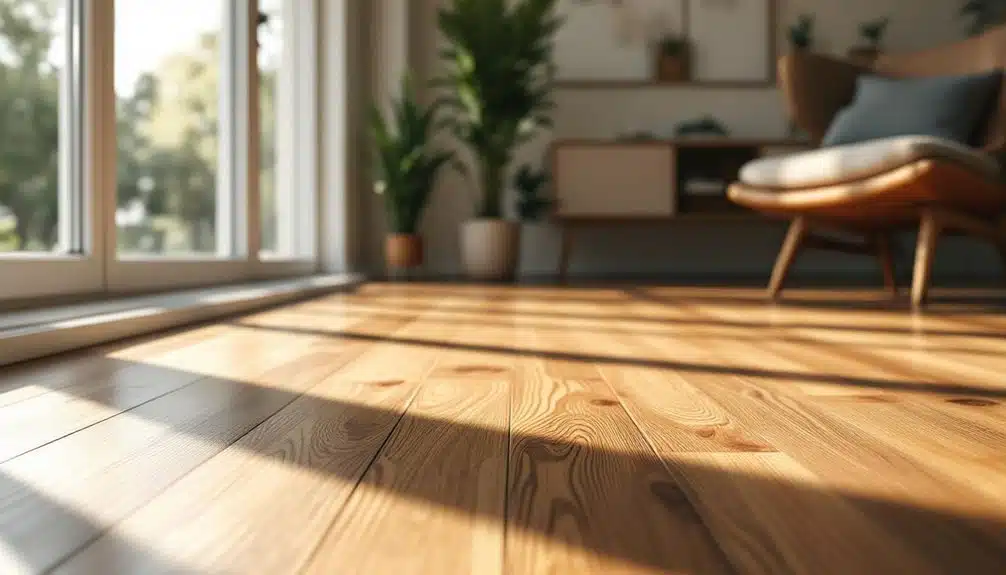
Which hardwood flooring will transform your space into the refined interior you envision? Understanding engineered advantages helps you create welcoming environments that serve your family and guests beautifully.
Key distinctions to reflect on:
- Engineered planks feature layered construction that resists moisture fluctuations, making them ideal for below-grade installations and climate-controlled spaces
- Solid drawbacks include susceptibility to humidity changes and installation limitations that restrict placement options
- Your design goals determine which option delivers the sophisticated aesthetic your home deserves
Engineered flooring offers dimensional stability while maintaining authentic wood character across its wear layer. You’ll find it adapts to various subfloors and locations throughout your residence. Solid hardwood provides traditional appeal with complete refinishing capabilities. Both options deliver the timeless elegance that enhances your interior design and creates memorable experiences for everyone who enters.
Maintenance Requirements and Long-Term Care Considerations
Your flooring selection establishes the foundation for years of design integrity, and proper maintenance preserves that investment. Understanding protective coatings and cleaning techniques guarantees your hardwood remains beautiful for decades.
| Maintenance Task | Frequency | Purpose |
|---|---|---|
| Dust mopping | Daily | Prevents surface scratching |
| Deep cleaning | Weekly | Removes embedded debris |
| Protective coatings refresh | 3-5 years | Restores surface luster |
| Professional refinishing | 10-15 years | Renews wood appearance |
| Humidity monitoring | Ongoing | Prevents expansion/contraction |
Professional-grade polyurethane or oil-based finishes create durable barriers against wear. You’ll want to establish consistent cleaning routines that safeguard your clients’ investments while maintaining design aesthetics. Avoid excessive water exposure and harsh chemicals. Strategic placement of area rugs in high-traffic zones extends floor longevity while enhancing spatial definition and visual interest throughout your Warner Robins projects.
Room-by-Room Guide: Where Hardwood Works Best in Your Warner Robins Property
When evaluating hardwood applications throughout your Warner Robins property, spatial function dictates material performance requirements and aesthetic outcomes. Understanding room functionality helps you maximize hardwood aesthetics while serving your household’s practical needs.
Optimal hardwood installations include:
- Living areas and dining rooms – High-traffic zones benefit from harder species like oak or maple, creating welcoming gathering spaces
- Bedrooms – Controlled environments showcase intricate grain patterns and softer species beautifully
- Home offices – Professional appearance combines with durability for wheeled furniture
Consider moisture-prone bathrooms and basements carefully—engineered alternatives often serve better there. Your kitchen presents unique challenges requiring sealed finishes and diligent maintenance. Each room’s specific demands shape your material selection, ensuring both visual appeal and lasting performance that improves your family’s daily experience.
Conclusion
Choosing hardwood flooring isn’t merely selecting a surface—you’re curating an architectural statement that’ll define your home’s aesthetic narrative for decades. As the adage goes, “you get what you pay for,” and hardwood’s timeless elegance, intrinsic textural richness, and design versatility justify the investment. You’ll find that authentic wood grain patterns create an organic warmth that synthetic alternatives simply can’t replicate. Your Warner Robins home deserves flooring that harmonizes functionality with enduring visual appeal.