
What to Expect When Replacing Kitchen or Bathroom Countertops
When replacing your kitchen or bathroom countertops, expect to assess your current surfaces for wear and functionality. You’ll need to choose the right material that fits your budget and lifestyle, whether it’s granite, quartz, or laminate. Understand the installation process, and decide if you’ll hire a professional or tackle it yourself. Be prepared to care for your new countertops with proper maintenance. To guarantee a smooth experience, you might want to investigate more details on each step.
Key Takeaways
- Assess your current countertops for wear and tear, and set a realistic budget including installation and unexpected costs.
- Choose the right material based on durability, maintenance, and cost, considering options like granite, quartz, or laminate.
- Measure existing countertop dimensions accurately and prepare for the installation process by removing old countertops carefully.
- Implement protective measures during installation and establish a maintenance routine to preserve the appearance and integrity of your new countertops.
- Prioritize safety by using proper lifting techniques and keeping countertops organized to create a welcoming and functional space.
Assessing Your Current Countertops
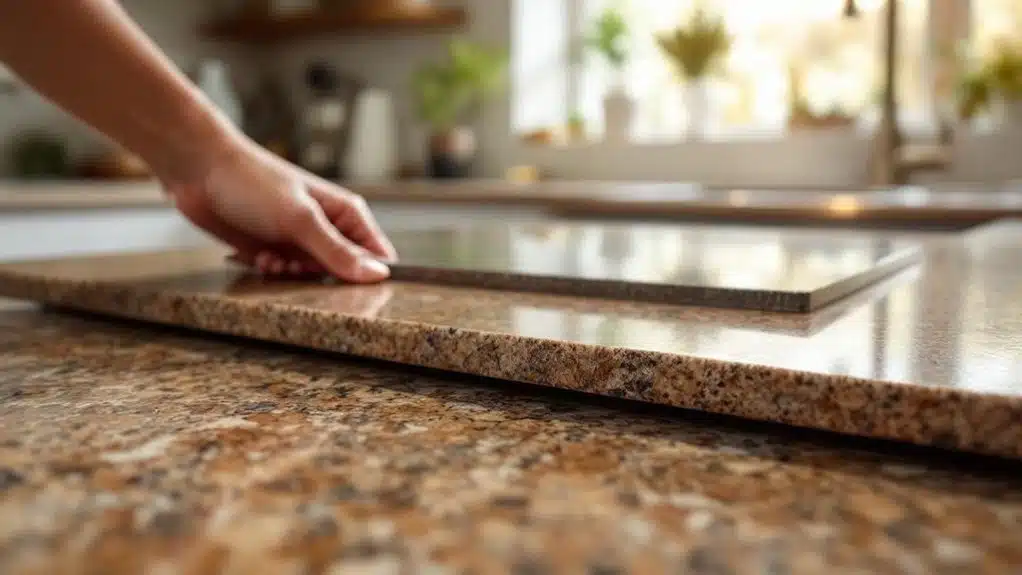
Have you ever stopped to really evaluate your current countertops? A thorough countertop assessment is crucial before making any changes. Start by checking for signs of wear and tear, such as scratches, stains, or chips. These imperfections can affect both the functionality and appearance of your space. Next, consider the material evaluation; different materials have unique properties and maintenance requirements. For instance, granite is durable but may require sealing, while laminate is budget-friendly but less resistant to heat. Think about how your countertops serve your daily needs, from meal prep to entertaining guests. By taking the time to assess and evaluate, you’ll make a knowledgeable choice that improves your home and serves your lifestyle best. Additionally, understanding the unique benefits of each countertop material can help guide your decision-making process.
Choosing the Right Material
When selecting a countertop material, you’ll want to evaluate both popular options and how they measure up regarding cost and durability. Materials like granite and quartz offer long-lasting benefits, while laminate may be easier on your wallet but less durable. Understanding these factors will help you make an informed choice that fits your lifestyle and budget. Additionally, consider the durability of quartz as it provides resistance to scratches, stains, and heat, making it ideal for busy kitchens and bathrooms.
Popular Countertop Materials
Choosing the right countertop material can greatly impact both the functionality and aesthetic appeal of your kitchen or bathroom. Here are some popular options to examine:
- Granite: Known for its durability and unique patterns, granite benefits include resistance to heat and scratching, making it ideal for heavy use.
- Quartz: With its non-porous surface, quartz advantages include easy maintenance and a wide range of colors, catering to diverse design preferences.
- Marble: Luxurious and elegant, marble adds a classic touch, perfect for those who entertain often.
- Laminate: Budget-friendly and versatile, laminate offers a variety of designs while being easy to clean. Additionally, opting for premium selection of materials like granite, quartz, or marble can significantly elevate your home’s design.
Cost vs. Durability
While considering a new countertop, understanding the balance between cost and durability is essential for making a wise investment. Begin with a cost analysis of various materials—laminate is budget-friendly but may not last as long as granite or quartz. In a durability comparison, granite offers exceptional resistance to heat and scratches, while quartz provides a non-porous surface that’s easy to maintain. If you’re serving others, think about how often the countertop will be used. For high-traffic areas, investing in a more durable material can save money in the long run. Consider your lifestyle and the level of care you’re willing to provide. Ultimately, weighing these factors will help you choose the right countertop that meets both your budget and durability needs.
Setting a Budget
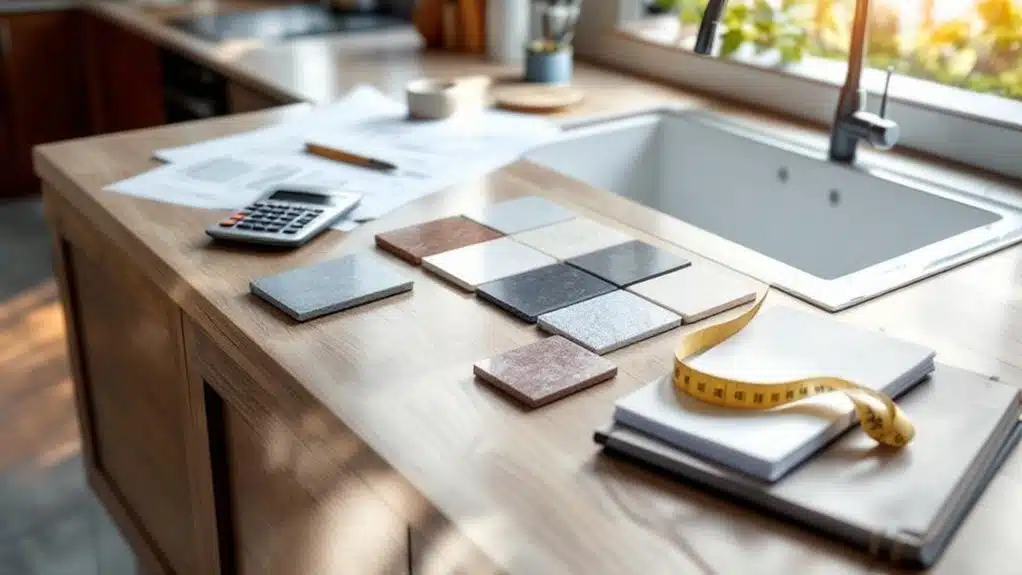
Setting a budget is crucial for a successful countertop replacement project, as it helps you prioritize your needs and manage costs effectively. Begin by researching countertop pricing to understand options available within your range. Here are four key steps for budget planning:
- Determine Your Total Budget: Decide how much you can realistically spend.
- List Your Must-Haves: Identify features or materials that are non-negotiable for you.
- Consider Installation Costs: Factor in labor costs if you’re hiring professionals.
- Allow for Contingencies: Set aside an extra 10-15% for unexpected expenses.
Hiring a Professional vs. DIY
When you’re considering replacing your kitchen or bathroom countertops, the decision between hiring a professional and tackling the project yourself can greatly impact both the outcome and your budget. Hiring a contractor with solid credentials guarantees quality workmanship and adherence to safety standards. They’ll manage the project timeline effectively, helping you avoid costly delays. On the other hand, if you choose the DIY route, you’ll save money but might face challenges like improper measurements or installation mishaps. Assess your skills honestly—are you comfortable with tools and heavy materials? Consider the time you can commit, too. Ultimately, whether you hire a pro or go DIY, focusing on quality will serve you—and your home—best in the long run.
Understanding the Installation Process

Before diving into the installation process for your new countertops, it’s crucial to understand the steps involved to guarantee a smooth experience. Proper preparation guarantees you serve your home and loved ones well. Here’s what you need to focus on:
- Measuring Dimensions: Accurately measure your existing countertop space to avoid any costly mistakes.
- Understanding Tools: Familiarize yourself with the tools you’ll need, such as a saw, level, and adhesive.
- Removing Old Countertops: Carefully take out the old countertops, making sure you don’t damage the cabinetry.
- Dry-Fitting: Before securing the new countertops, do a dry fit to check for any adjustments needed.
These steps set the foundation for a successful installation, making sure you create a beautiful and functional space.
Preparing Your Space for Installation
To guarantee a seamless installation of your new countertops, it’s essential to prepare your space meticulously. Start by measuring dimensions accurately; this confirms that your new countertops fit perfectly and reduces potential installation delays. Once you’ve verified the measurements, clear clutter from the area. Remove all items from countertops and cabinets, including appliances, utensils, and decor. This not only provides installers with ample space to work but additionally protects your belongings from damage. If possible, create a designated area for the removed items, keeping them organized and out of the way. Finally, verify the workspace is well-lit and accessible, allowing the installation team to perform their tasks efficiently. By taking these steps, you’ll help promote a smooth countertop installation.
Caring for Your New Countertops
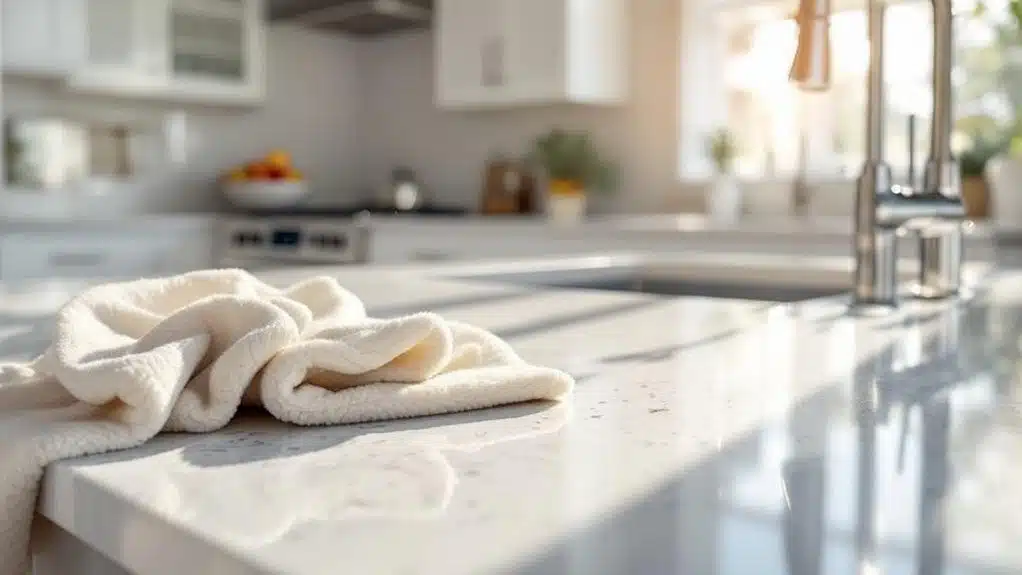
Caring for your new countertops is crucial to keep them looking great and lasting longer. Start with daily cleaning using a gentle soap and water solution to remove spills and stains without causing damage. Additionally, be mindful of avoiding harsh chemicals and hot items directly on the surface to prevent any unwanted wear and tear.
Daily Cleaning Tips
While maintaining the beauty and longevity of your new countertops might seem challenging, daily cleaning can be straightforward and efficient. Establishing effective cleaning routines is key, and following these maintenance tips will assist you in keeping your surfaces pristine:
- Wipe down countertops daily with a soft cloth and mild soap to remove spills and crumbs.
- Rinse with warm water to guarantee no soap residue remains, which can dull the surface.
- Avoid abrasive cleaners; they can scratch and damage your new countertops.
- Use cutting boards when preparing food to prevent scratches and stains.
Avoiding Damage Techniques
Protecting your new countertops from damage is essential for maintaining their beauty and functionality for years to come. Start with preventive measures, like using cutting boards for food preparation and coasters for hot pots. Always wear protective gear, such as gloves, when cleaning with harsh chemicals to avoid scratches or discoloration. Be mindful of heavy objects; avoid dropping or dragging them across the surface. For stone countertops, consider periodic sealing to prevent stains and moisture damage. If you have kids or pets, establish rules about climbing or playing on the counters. By being proactive and caring for your surfaces, you’ll not only preserve their appearance but additionally create a welcoming and functional space for those you serve.
Conclusion
Replacing your kitchen or bathroom countertops can feel overwhelming, but the transformation it brings is worth it. You might worry about the cost, but think of it as an investment in your home’s value and your daily enjoyment. With the right material and preparation, you’ll create a space that reflects your style and meets your needs. Welcome the change—your new countertops will not only raise your home’s aesthetics but likewise improve your cooking and relaxation experiences.