Why LVP Is Taking Over Middle Georgia – And Your Neighbors Already Know It
LVP’s dominance in Middle Georgia stems from its engineered five-layer construction that withstands the region’s subtropical humidity while traditional hardwood warps and carpet harbors mold. You’ll save $7,500-$10,500 on a 1,500-square-foot installation compared to hardwood, with zero refinishing costs over the floor’s lifetime. The waterproof core prevents moisture damage that plagues conventional flooring, and installation takes just one to two days versus hardwood’s five-plus days. Your neighbors throughout Warner Robins and Macon have already uncovered how this flooring handles Georgia’s climate challenges with minimal maintenance requirements.
Key Takeaways
- LVP’s waterproof core withstands Middle Georgia’s humidity without warping, unlike hardwood that buckles under subtropical moisture conditions.
- Installation costs $3-8 per square foot compared to hardwood’s $8-15, saving homeowners $7,500-10,500 on average 1,500-square-foot projects.
- Zero refinishing requirements and simple damp mopping eliminate ongoing maintenance expenses that hardwood and tile demand over time.
- Wide design variety replicates authentic wood grain patterns, from oak to barn wood, at accessible prices without aesthetic compromise.
- Local homeowners report stress-free maintenance, pet-scratch resistance, and reduced cooling costs from LVP’s insulating properties in humid climates.
The Middle Georgia Climate Challenge: Why Traditional Flooring Falls Short
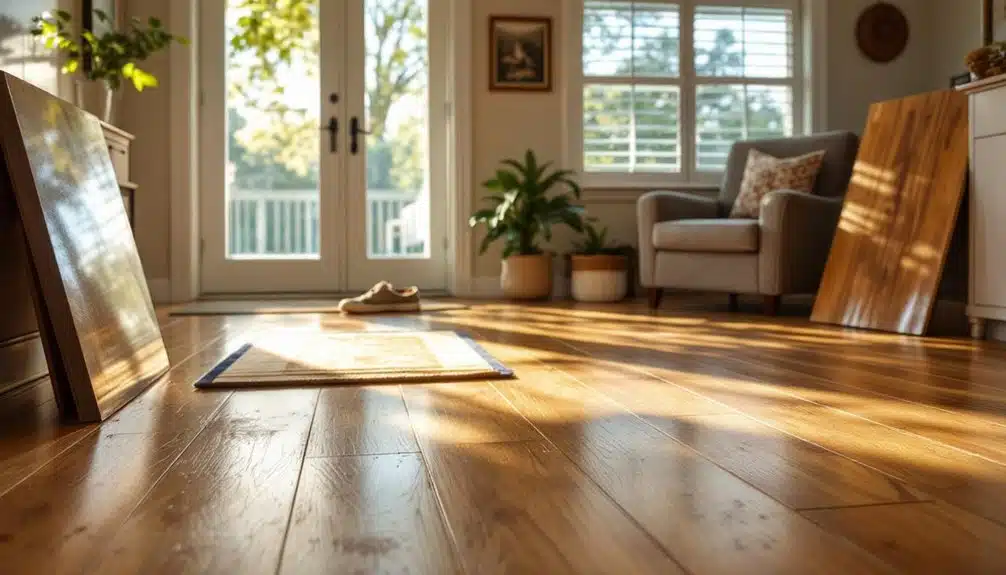
Middle Georgia’s subtropical climate creates a perfect storm of flooring challenges that traditional materials struggle to withstand. You’re dealing with humidity levels that cause hardwood to warp and buckle, while temperature swings expand and contract your floors throughout the year. Carpet harbors moisture, breeding mold that affects your family’s health. Tile grout cracks under pressure, creating maintenance headaches for homeowners you serve.
Climate adaptation requires flooring that performs consistently regardless of environmental stress. LVP’s engineered construction resists moisture penetration and dimensional changes that destroy conventional options. Its flooring durability comes from a multi-layer design that handles humidity without compromising structural integrity. When you’re selecting materials for clients, you need solutions that won’t fail when Georgia’s weather tests them relentlessly. Beyond its waterproof protection, LVP’s scratchproof surface withstands the daily wear and tear that busy Georgia households demand.
What Makes LVP Different From Other Flooring Options
Unlike traditional flooring materials that rely on single-component construction, LVP employs a five-layer engineered system that delivers superior performance across multiple metrics. Each layer serves a specific purpose: the UV coating resists fading, the wear layer prevents scratches, the design layer provides authentic aesthetics, the core layer guarantees stability, and the backing layer adds cushioning. This LVP advantages structure outperforms hardwood’s moisture sensitivity and carpet’s stain retention. When conducting a durability comparison, you’ll find LVP withstands high-traffic areas without showing wear patterns that plague laminate flooring. It’s waterproof throughout—not just water-resistant—making it ideal for serving families, elderly homeowners, and commercial spaces where reliability matters. The water-resistant properties also prevent mold growth in moisture-prone areas, protecting your investment from hidden damage that can develop beneath the surface. You’re choosing engineered resilience over conventional compromise.
The Real Cost Breakdown: LVP vs. Hardwood in Central Georgia
When you’re choosing between LVP and hardwood flooring in Central Georgia, understanding the complete financial picture requires examining three critical cost factors. You’ll need to compare not just the upfront material and installation expenses, but additionally factor in how maintenance costs accumulate over the lifespan of each flooring type. The difference between what you’ll pay a contractor to install LVP versus hardwood can greatly impact your project budget and timeline. LVP’s click-lock system makes it DIY-friendly, potentially eliminating labor costs entirely if you’re comfortable with basic tools like a utility knife and tapping block.
Initial Investment Comparison
Before you commit to any flooring project in Central Georgia, you’ll need to understand what you’re actually paying upfront. LVP typically costs $3-$8 per square foot installed, while hardwood ranges from $8-$15 per square foot. For a standard 1,500-square-foot home, that’s $4,500-$12,000 for LVP versus $12,000-$22,500 for hardwood.
Smart initial investment strategies start with accurate measurements and material selection that fits your clients’ needs. When developing flooring budget considerations, factor in subfloor preparation—LVP’s flexible nature often requires less substrate work than hardwood’s rigid planks. You’ll additionally save on specialized tools; LVP installation needs basic cutting equipment, while hardwood demands nailers, moisture meters, and acclimation time. These differences directly impact what homeowners pay before enjoying their new floors. Professional installers with over 18 years of flooring experience can provide free estimates to help you determine the most accurate costs for your specific project.
Long-Term Maintenance Expenses
Your upfront savings with LVP look attractive, but maintenance costs over 10-20 years tell a different story for Central Georgia homeowners. Understanding long term savings requires examining what you’ll actually spend maintaining each flooring type.
LVP maintenance tips include:
- Simple damp mopping with pH-neutral cleaners (no special products needed)
- Zero refinishing costs throughout the floor’s lifetime
- Scratch resistance eliminating repair expenses from pet claws or furniture movement
- Water damage prevention reducing replacement costs in humid Georgia climates
- Individual plank replacement capability instead of full floor restoration
Hardwood demands professional refinishing every 7-10 years at $3-8 per square foot, humidity control systems, and specialized cleaning products. For a 1,500 square foot home, you’ll save $4,500-12,000 over twenty years with LVP while serving your family’s budget more effectively. For Warner Robins pet owners specifically, luxury vinyl plank flooring withstands heavy foot traffic and resists scratches from active pets without requiring the specialized maintenance hardwood demands.
Installation Labor Cost Differences
Installation labor creates one of the most significant cost divides between LVP and hardwood flooring in Central Georgia. You’ll find LVP installation costs $2-5 per square foot, while hardwood demands $8-12 per square foot. The installation techniques differ dramatically—LVP’s click-lock or floating floor methods allow faster completion, often within one to two days for typical homes. Hardwood requires specialized skills: substrate preparation, precise nailing, sanding, and finishing that extends projects to five or more days. Labor availability strongly favors LVP in Middle Georgia. You’ll uncover numerous contractors comfortable with LVP installation techniques, creating competitive pricing. Conversely, skilled hardwood installers remain scarcer, driving up costs. This labor differential means you’re serving your clients better budgets while maintaining quality results.
How LVP Handles Humidity, Spills, and Everything In Between

Middle Georgia’s humid climate and unpredictable weather patterns demand flooring that can withstand moisture without warping or degrading. LVP’s engineered waterproof core provides a structural barrier against water penetration, while its dimensional stability prevents expansion and contraction during seasonal humidity fluctuations. You’ll find that spills wipe clean in seconds, and the material maintains its integrity even in consistently damp environments like bathrooms and basements.
Waterproof Core Technology Explained
Waterproof core technology represents the fundamental engineering that separates modern LVP from traditional flooring materials in Middle Georgia’s challenging climate. This core structure creates an impermeable barrier that protects your investment while serving your family’s daily needs.
The waterproof technology functions through multiple protective layers:
- Rigid polymer core blocks moisture penetration from any direction
- Sealed click-lock system prevents water from seeping between planks
- Dense composition withstands humidity fluctuations without warping
- Non-porous surface allows immediate cleanup of spills and accidents
- Integrated underlayment adds secondary moisture protection
You’ll appreciate how this engineering eliminates the anxiety of water damage. Whether you’re managing a busy household or maintaining rental properties, the waterproof core delivers reliable performance that traditional materials simply can’t match.
Humidity Resistance Built In
Middle Georgia’s year-round humidity levels create persistent challenges that go beyond surface water exposure. Your flooring must withstand moisture that penetrates from below and saturates the air above. LVP’s humidity resistance addresses both threats through its engineered construction. The waterproof core prevents moisture absorption that causes warping, cupping, and mold growth in traditional materials. This built durability means you’re installing flooring that protects your clients’ investments year after year.
Unlike hardwood that expands and contracts with humidity changes, LVP maintains dimensional stability. You won’t face callbacks for gaps, buckling, or finish deterioration. The non-porous surface resists spills and everyday moisture exposure while the core layer blocks subfloor moisture transmission. When you’re serving families in humid climates, this extensive moisture protection delivers the reliability they need.
Quick Cleanup After Spills
When spills happen—and they will—LVP’s waterproof surface transforms a potential disaster into a quick wipe-down. Your clients’ busy families need hassle free maintenance that won’t derail their schedules or drain their budgets.
LVP delivers practical solutions for real-world messes:
- Pet accidents disappear with simple mopping—no staining or odor absorption
- Coffee spills wipe clean before guests arrive
- Muddy footprints require only damp cloths, not specialized cleaners
- Wine and juice spills won’t penetrate the protective wear layer
- Kitchen splatters remove instantly without scrubbing
This quick cleanup capability means you’re recommending flooring that serves families’ actual needs. No emergency calls about warped boards or permanent stains. Just reliable performance that keeps households running smoothly, allowing families to focus on what matters most—serving and caring for each other.
Installation Speed That Won’t Disrupt Your Life
Unlike traditional hardwood installations that can consume several days of your schedule, LVP flooring typically requires just one to two days for a standard residential space in Middle Georgia. This efficiency means you’ll minimize disruption to your family’s routine while upgrading your home.
| Installation Type | Timeline | Disruption Level |
|---|---|---|
| LVP Flooring | 1-2 days | Minimal |
| Traditional Hardwood | 5-7 days | Significant |
| Tile Installation | 3-5 days | Moderate |
| Carpet | 1 day | Low |
| Laminate | 2-3 days | Low-Moderate |
The installation process features seamless integration with existing subfloors, requiring minimal preparation. You won’t need extensive demolition or complex underlayment systems. Most installers complete rooms quickly, allowing you to resume normal activities almost immediately—perfect for busy households serving families and guests.
The Aesthetic Game-Changer: Styles That Fool Even the Experts
Modern LVP technology delivers photographic imaging so sophisticated that it replicates authentic wood grain patterns, knot formations, and mineral streaks with remarkable precision. You’ll find options that align perfectly with current style trends while serving your clients’ diverse aesthetic preferences.
Expert opinions consistently highlight LVP’s versatility:
- Wide-plank oak designs that mirror high-end hardwood installations
- Distressed barn wood finishes creating authentic rustic character
- Contemporary gray-washed patterns for modern farmhouse aesthetics
- Hand-scraped textures providing dimensional depth
- Exotic wood replicas like Brazilian walnut at accessible price points
Your perceptive eye won’t detect the difference between premium LVP and genuine hardwood from standard viewing distances. This authenticity allows you to deliver exceptional visual results while maintaining budget-conscious solutions for families and businesses throughout Middle Georgia.
What Warner Robins and Macon Homeowners Are Saying About Their LVP
Local testimonials from Warner Robins and Macon residents reveal consistent satisfaction patterns that validate LVP’s performance claims in Middle Georgia’s climate conditions. You’ll find homeowner testimonials highlighting waterproof cores that withstand humidity fluctuations without warping—a critical LVP advantage in our region. Families report stress-free maintenance during peak humidity months, while pet owners note scratch resistance that preserves appearance in spite of active households. Installation professionals you’ll work with cite subfloor forgiveness that reduces preparation costs compared to traditional materials. Warner Robins homeowners specifically mention cooling cost reductions from LVP’s insulating properties. Macon residents emphasize durability through temperature swings between seasons. These verified experiences demonstrate practical LVP advantages that directly address Middle Georgia’s environmental challenges, helping you make informed flooring decisions that’ll serve your household’s long-term needs effectively.
Choosing the Right LVP for Your Middle Georgia Home
How do you select LVP specifications that’ll actually perform in Middle Georgia’s 60-90°F temperature range and 55-75% humidity levels? Start by prioritizing these technical factors:
- Wear layer thickness: Choose 12-20 mil for high-traffic areas where families gather
- Core composition: WPC (wood-plastic composite) handles humidity fluctuations better than standard SPC
- AC rating: Target AC4 or higher for durability in active households
- Locking system: Unilin or Valinge systems maintain stability through seasonal temperature shifts
- Texture depth: Embossed-in-register (EIR) provides slip resistance for safety-conscious homeowners
LVP styles range from rustic barn wood to contemporary concrete looks. Focus on LVP durability metrics rather than aesthetics alone—your neighbors who’ve installed quality products understand that proper specifications prevent callbacks and guarantee long-term client satisfaction.
Conclusion
You’ve seen the technical breakdown—now consider the Jackson family in Bonaire. After replacing 1,200 sq ft of water-damaged oak with commercial-grade LVP, they handled last spring’s humidity spike and a dishwasher leak without a single plank warping. That’s the difference between theory and performance in Middle Georgia’s climate. Your flooring decision isn’t just about aesthetics; it’s about matching material properties to regional environmental demands. LVP delivers both.