
Best Flooring for Home Offices When You’re On Your Feet All Day
If you’re standing six or more hours daily, your flooring choice directly impacts your musculoskeletal health. Cork, luxury vinyl plank, and rubber flooring are your best options, each offering cushioning, durability, and slip resistance — the three non-negotiable performance criteria. Avoid concrete, ceramic tile, and bare hardwood, as they lack shock absorption and accelerate fatigue. The right thickness and subfloor compatibility matter more than most people realize, and the details ahead will sharpen your decision considerably.
Key Takeaways
- Cork, luxury vinyl plank, and rubber flooring provide superior cushioning and shock absorption, reducing fatigue during extended standing periods in home offices.
- Hard surfaces like concrete and ceramic tile offer no shock absorption, increasing joint stress and fatigue for those standing all day.
- Ideal flooring should have above 50% resilience, a friction coefficient above 0.6, and durability to withstand daily standing pressure.
- Anti-fatigue mats reduce musculoskeletal strain but cannot fully compensate for poor flooring choices; they work best alongside quality ergonomic flooring.
- Flooring thickness matters: cork performs best at 6–12mm, luxury vinyl plank at 4–8mm, and rubber at 8–12mm for optimal impact cushioning.
Why the Floor You Stand on All Day Is Hurting Your Body
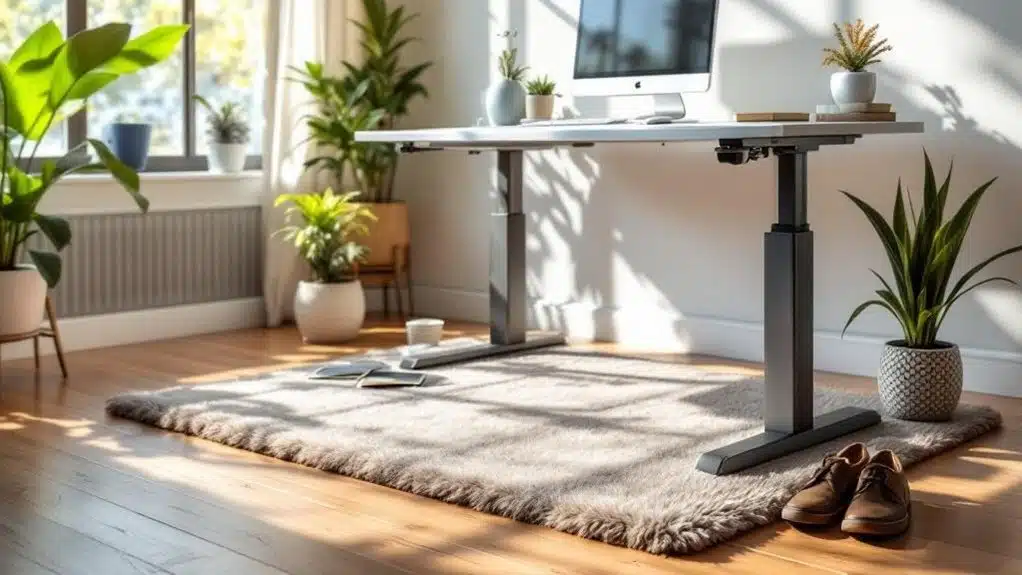
If you work from home, the surface beneath your feet is doing more damage than you might realize. Hard, unforgiving floors like concrete and tile offer zero shock absorption, forcing your joints to compensate with every step. Over hours of standing, this mechanical stress travels up through your ankles, knees, hips, and lower back, compounding fatigue and accelerating musculoskeletal strain.
Research consistently links prolonged standing on rigid surfaces to plantar fasciitis, varicose veins, and chronic lumbar pain. Without adequate ergonomic support, your body absorbs impact it wasn’t designed to handle repeatedly. LVP flooring provides water resistance and durability that maintains its structural integrity throughout the day, creating a more forgiving surface than traditional hard flooring options.
For caregivers, healthcare workers, and educators running home-based practices, prioritizing foot health isn’t optional — it’s foundational to sustaining the physical endurance your work demands. The floor you choose directly determines how long your body holds up.
Cushioning, Durability, and Grip: The Criteria That Actually Matter
Knowing the floor causes harm is only half the equation — selecting the right replacement requires a clear framework. Three criteria determine performance: cushioning, durability, and grip.
Cushioning materials absorb compressive force before it reaches your joints. Look for flooring with a resilience rating above 50% — cork and rubber consistently meet this threshold.
Durability determines long-term value. A floor degrading under daily standing pressure loses its cushioning properties and becomes a liability, not an asset. Luxury vinyl planks offer excellent durability for home offices, maintaining their structural integrity and comfort underfoot even with prolonged daily use.
Grip textures prevent micro-adjustments your stabilizing muscles make when surfaces feel uncertain — adjustments that accumulate into fatigue by midday. Textured surfaces with a static coefficient of friction above 0.6 keep you stable without demanding constant muscular compensation.
Prioritize all three criteria uniformly; compromising one undermines the others.
Cork Flooring: The Best Home Office Option You’re Ignoring
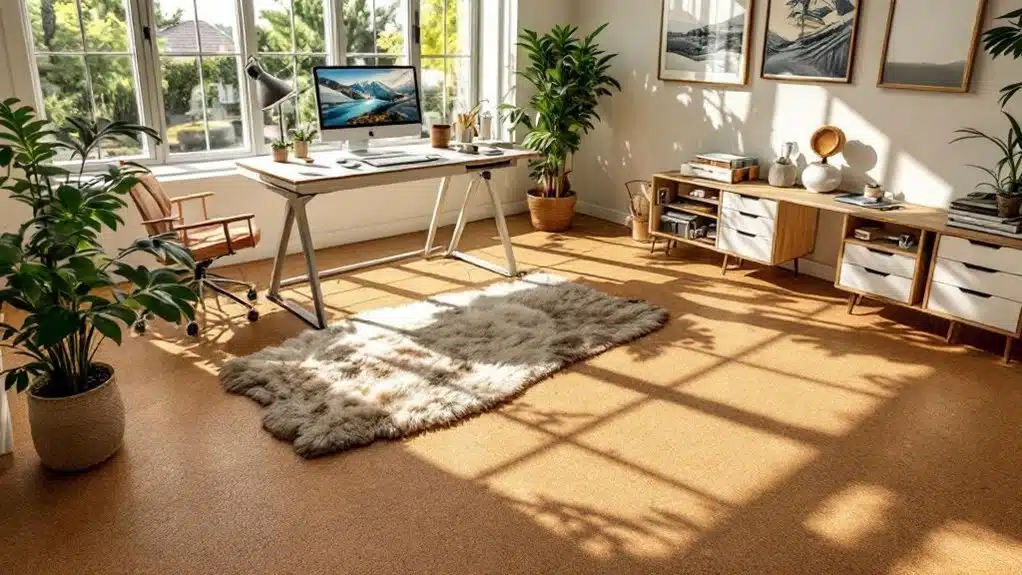
Cork flooring meets all three performance criteria — cushioning, durability, and grip — yet it’s consistently overlooked in home office design. Its cellular structure compresses under load, reducing joint fatigue during extended standing. Sealed cork resists moisture and maintains surface integrity for years. Cork can be harvested every 3 years from cork oak trees, making it one of the most sustainable flooring materials available.
| Cork Benefits | Performance Metric | Standing Benefit |
|---|---|---|
| Natural resilience | 50% compression recovery | Reduces fatigue |
| Textured surface | 0.6+ friction coefficient | Prevents slipping |
| Eco friendly options | Renewable harvest cycle | Sustainable choice |
You’re getting measurable biomechanical support without sacrificing sustainability. Cork absorbs impact forces that harder surfaces transfer directly into your feet and knees — critical when you’re serving clients or students from a standing desk throughout the day.
Luxury Vinyl Plank: Cushioned, Durable, and Budget-Friendly
If you’re looking for a flooring option that balances comfort, durability, and cost, luxury vinyl plank (LVP) delivers on all three fronts. Its multi-layer construction—typically featuring a foam or cork underlayment—provides measurable cushioning that reduces fatigue during long work sessions, while its wear layer resists scratches, dents, and moisture from heavy daily use. At $2–$7 per square foot on average, LVP gives you a hardwood-like aesthetic and solid performance without the premium price tag. LVP’s water-resistant properties make it particularly suitable for home offices in humid climates where moisture control is essential.
Built-In Comfort Underfoot
Luxury vinyl plank (LVP) earns its reputation as a top-tier home office flooring choice largely because of its built-in comfort layer. Unlike hardwood or tile, LVP incorporates a cushioned underlayer that delivers genuine ergonomic support during extended standing periods. This construction reduces joint compression in your ankles, knees, and lower back — critical factors when you’re serving clients or patients on your feet for hours. The foam or cork backing absorbs impact energy, promoting measurable stress reduction compared to rigid flooring surfaces. You’ll notice less fatigue during long workdays, allowing you to maintain focus and productivity. Many LVP products feature attached underlayment rated between 4mm and 12mm thick, with higher thickness correlating directly to greater cushioning performance — a specification worth prioritizing when selecting your flooring. Beyond comfort, LVP’s waterproof construction makes it an ideal choice for home offices in humid climates like Georgia, where moisture protection ensures your flooring investment remains protected against spills and environmental humidity.
Withstands Heavy Daily Use
Beyond comfort, LVP’s wear layer — a transparent, high-density polyurethane or aluminum oxide coating — is engineered to resist scratching, scuffing, and indentation under repeated mechanical stress. When you’re rolling a standing desk chair across your floor daily, lesser flooring materials deteriorate quickly. LVP’s structural core — typically a rigid stone-plastic composite (SPC) or wood-plastic composite (WPC) — distributes concentrated loads efficiently, preventing the dimpling and cracking that afflicts softer surfaces. Most commercial-grade LVP products carry AC3 to AC5 abrasion ratings, meaning they’re tested to withstand thousands of impact cycles. You’ll likewise find that LVP’s dimensional stability resists warping under fluctuating humidity — a critical factor in home offices where HVAC systems cycle frequently throughout your workday. Unlike carpet options that require frequent vacuuming and specialized cleaning products, LVP simplifies your maintenance routine with easy cleanup capabilities that keep your workspace hygienic and presentable.
Affordable Without Sacrificing Quality
Notwithstanding its premium name, luxury vinyl plank typically costs $2–$7 per square foot for materials, with installed prices ranging from $4–$12 per square foot — a fraction of hardwood’s $8–$25 installed range. These affordable options don’t compromise performance. Quality materials in LVP construction include a rigid SPC or WPC core, a photographic design layer, and a wear layer measuring 12–20 mils for professional-grade durability. You’ll additionally find most LVP products carry warranties spanning 15–25 years, confirming their long-term value. LVP’s water-resistant properties make it particularly suitable for home offices in high-moisture environments, protecting your investment from damage. When you’re budgeting a home office serving clients or patients daily, LVP lets you allocate remaining funds toward ergonomic equipment or accessibility upgrades. Its cost efficiency makes professional-grade flooring achievable without financial strain.
Rubber Flooring for Home Offices That See Heavy Use
Rubber flooring holds up exceptionally well in home offices that endure rolling chair traffic, heavy equipment loads, or frequent foot movement. Its dense composition absorbs impact, reduces fatigue, and resists moisture — rubber benefits that directly support sustained productivity. You’ll find it handles daily wear without cracking, warping, or compressing under repeated stress.
For installation tips, start by measuring your space accurately and allowing rubber tiles or rolls to acclimate at room temperature for 24 hours before laying them down. Clean the subfloor thoroughly, removing debris and moisture. Use pressure-sensitive adhesive for permanent installations or interlocking tiles for flexibility. Seams should align tightly to prevent shifting. Whether you’re managing a standing desk setup or heavy workstation equipment, rubber flooring delivers reliable, long-term performance. The textured surfaces of rubber also provide slip-resistant features that enhance safety in busy home office environments.
Is Hardwood Flooring Actually Good for a Standing Desk Office?
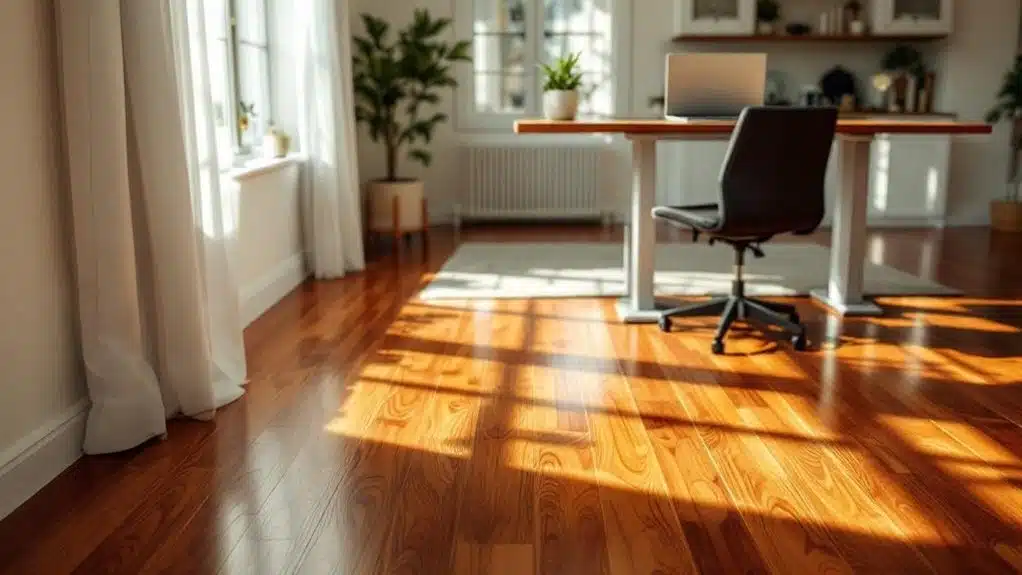
While rubber flooring suits high-impact, heavy-use setups well, hardwood takes a different approach to office performance — one that raises a fair question for standing desk users.
Hardwood benefits include exceptional durability, easy cleaning, and a professional aesthetic that supports client-facing video calls. That said, hardwood’s density works against you during long standing desk sessions. Unlike cushioned surfaces, hardwood returns ground reaction force directly into your joints, accelerating fatigue in your feet, knees, and lower back.
You can offset this by pairing hardwood with an anti-fatigue mat at your standing desk station. This combination preserves hardwood’s structural and visual advantages while reducing musculoskeletal stress. To maintain your hardwood floors in an office environment, use a vinegar and water mixture rather than wax or oil-based cleaners, which can create slippery surfaces that pose additional safety concerns during long standing work sessions. If you’re serving others through long focused work sessions, protecting your physical endurance matters — and hardwood alone won’t do that reliably.
The Worst Flooring for Standing Desks and Why You Should Avoid Them
Choosing the wrong flooring for a standing desk setup doesn’t just affect comfort — it accelerates physical fatigue and increases long-term injury risk. Concrete and ceramic tile rank among the worst options. Both surfaces offer zero shock absorption, forcing your joints to absorb every impact during prolonged standing. Their poor insulation properties also create cold underfoot conditions, which restricts circulation and compounds muscle stiffness. Bare hardwood, while aesthetically appealing, delivers similarly unforgiving rigidity without cushioning support. Thin laminate generates noise issues, transmitting sound easily through its surface and subfloor — a genuine productivity disruptor in shared living spaces. Unlike LVP’s superior scratch and dent resistance, hardwood requires regular maintenance and refinishing to maintain its appearance over time. Each of these materials demands costly anti-fatigue mat interventions just to become tolerable. You’re better served selecting flooring that fundamentally supports your body rather than compensating for inadequate material choices afterward.
Do Anti-Fatigue Mats Make Up for Poor Flooring Choices?
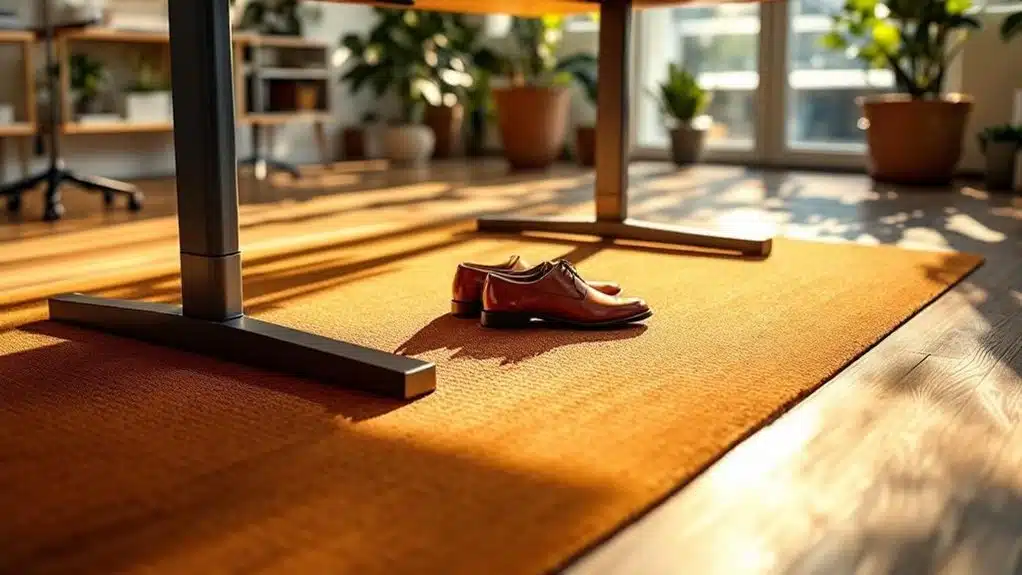
Anti-fatigue mats reduce musculoskeletal strain by promoting subtle micro-movements that improve circulation and reduce pressure on joints, making them a valuable addition to any standing desk setup. Nevertheless, they can’t fully compensate for fundamentally poor flooring choices—an unstable, excessively hard, or acoustically deficient subfloor will still create compounding problems that a mat simply won’t resolve. You’ll get the best ergonomic outcome by treating anti-fatigue mats as a complement to quality flooring, not a substitute for it.
Mat Benefits and Limitations
Many home office workers rely on anti-fatigue mats as a quick fix for uncomfortable flooring, but the research tells a more nuanced story. Anti-fatigue mats do reduce lower limb discomfort by encouraging subtle muscle contractions that improve circulation. Nevertheless, different mat types offer varying levels of support—foam mats compress over time, while gel and rubber options maintain their structural integrity longer.
Mat maintenance likewise affects performance. Worn or flattened mats lose their ergonomic benefits entirely, leaving you with false confidence in inadequate support. Studies indicate mats work best when paired with quality flooring, not substituted for it. If you’re serving clients from a standing desk, investing in both proper flooring and a high-quality mat delivers measurably better long-term outcomes for your physical health.
Flooring Still Matters Most
While anti-fatigue mats deliver measurable ergonomic benefits, they can’t compensate for fundamentally poor flooring choices. Your foundation determines long-term comfort, acoustic performance, and aesthetic appeal throughout your workspace.
| Flooring Issue | Mat’s Ability to Compensate |
|---|---|
| Excessive hardness | Partial relief only |
| Noise transmission | None |
| Thermal discomfort | Minimal improvement |
| Uneven surfaces | None |
| Poor aesthetic appeal | Cosmetic masking only |
Ergonomic considerations demand that you evaluate your flooring systematically before adding supplemental solutions. Mats address localized standing zones, but clients and colleagues you serve virtually will notice your broader environment. Prioritizing quality flooring first creates a workspace that supports your physical wellbeing, professional presentation, and sustained productivity—establishing a foundation where anti-fatigue mats then function as targeted improvements rather than necessary fixes.
Does Your Subfloor Type Limit Which Flooring You Can Use?
Your subfloor type directly determines which flooring installations are structurally viable and which aren’t. Subfloor compatibility affects every flooring option you’ll consider, so you need to assess your foundation before purchasing materials.
Concrete subfloors support tile, luxury vinyl, and engineered hardwood but resist moisture-sensitive solid hardwood. Wood subfloors accommodate nearly all flooring options, including solid hardwood and laminate, provided they’re structurally sound and level. Uneven wood subfloors require leveling compounds before installation.
Check for moisture levels in concrete using a calcium chloride test before committing to any flooring. Increased moisture readings eliminate several flooring options immediately. For wood subfloors, inspect for squeaks, soft spots, and deflection—all indicators that remediation is necessary before installation. Addressing subfloor issues upfront prevents costly failures and protects your long-term investment.
Best Flooring for Home Offices on a Tight Budget
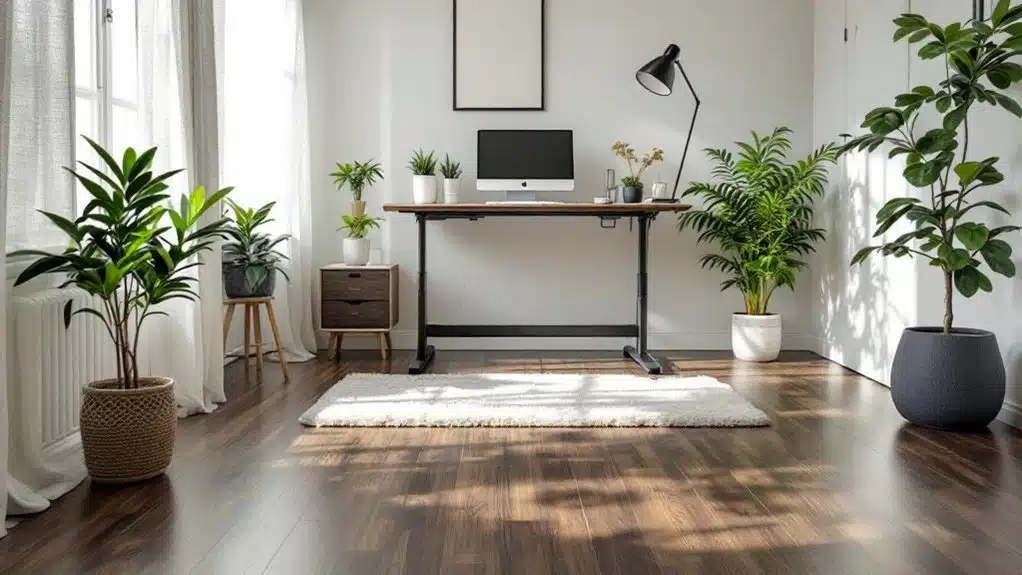
Budget constraints don’t eliminate quality flooring options for home offices—they just require smarter prioritization. When selecting budget-friendly options, vinyl plank and laminate rank as the most cost-effective flooring materials, typically running $1–$4 per square foot. Both withstand heavy chair traffic and resist moisture effectively.
Luxury vinyl plank (LVP) offers remarkable durability at roughly $2–$5 per square foot installed, making it an exceptional value for high-use workspaces. Laminate delivers similar durability but requires underlayment for sound absorption.
If you’re standing for extended periods, consider adding anti-fatigue mats over your chosen flooring material rather than upgrading to premium flooring. This approach maximizes comfort without exceeding your budget. Prioritize click-lock installation systems—they’ll reduce your labor costs considerably while maintaining structural integrity.
Which Home Office Flooring Has the Best Long-Term Durability?
When durability determines your long-term flooring investment, solid hardwood and porcelain tile consistently outperform competing materials. Both deliver exceptional long-term performance, withstanding decades of daily use in demanding environments.
Solid hardwood tolerates repeated refinishing cycles, effectively resetting surface wear without full replacement. Porcelain tile resists moisture, scratching, and heavy furniture pressure with minimal structural degradation over time.
Your maintenance considerations differ greatly between these options. Hardwood requires periodic sealing and refinishing every seven to ten years. Porcelain demands only routine cleaning and occasional grout resealing.
Luxury vinyl plank offers a mid-tier durability alternative, lasting fifteen to twenty-five years under moderate conditions. Nevertheless, it cannot be refinished once surface wear develops, making eventual replacement unavoidable. Prioritize your workspace demands when selecting between these options.
How Thick Should Your Home Office Flooring Actually Be?
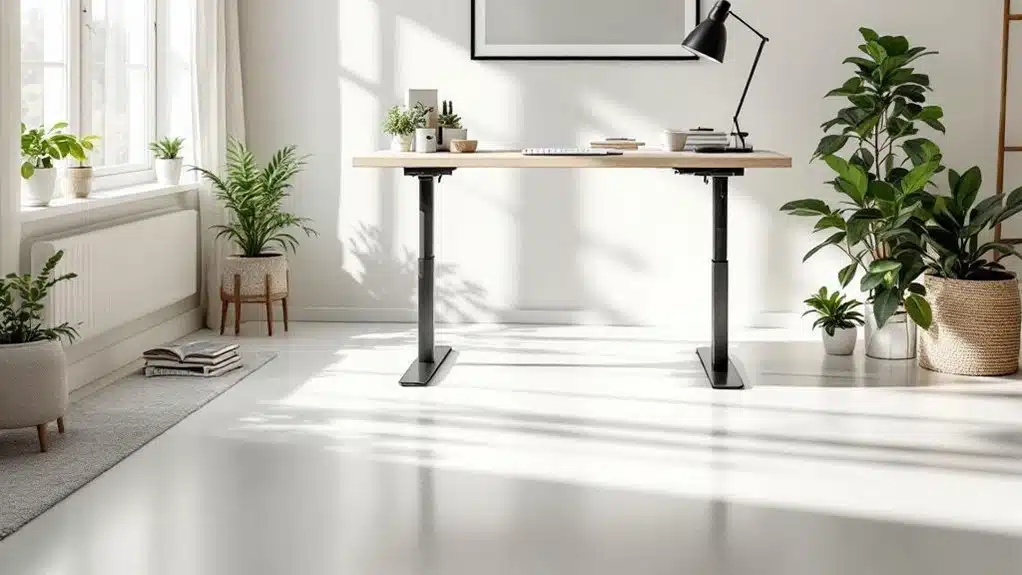
When selecting home office flooring, thickness directly impacts how your feet and joints feel after long hours at your desk, making it a critical specification to evaluate. Hardwood and laminate floors typically perform best at 3/8 to 3/4 inches thick, while luxury vinyl planks should measure at least 4mm to 8mm for adequate stability and comfort. If you’re installing over concrete or an uneven subfloor, you’ll want to prioritize thicker options at the higher end of these ranges to compensate for structural irregularities.
Thickness Affects Daily Comfort
Flooring thickness directly influences how your feet, joints, and lower back feel after hours at a standing desk or rolling chair. Thicker flooring materials absorb impact more effectively, reducing cumulative stress on your musculoskeletal system. When evaluating flooring types, you’ll find that engineered hardwood at 12mm–20mm provides meaningful compression resistance, while luxury vinyl planks between 6mm–8mm offer practical ergonomic considerations for prolonged standing.
Cork and rubber flooring, typically ranging 6mm–12mm, deliver superior shock absorption compared to thinner laminates. If you’re advising clients or designing shared workspaces, prioritizing adequate thickness prevents fatigue-related productivity losses. Underlayment adds another 2mm–3mm of cushioning beneath rigid surfaces, notably improving comfort outcomes. Match thickness to your specific daily usage patterns for measurable, lasting relief.
Recommended Flooring Depth Ranges
Knowing that thickness matters is only half the equation—you additionally need concrete depth targets to make informed purchasing decisions. Use this reference table to match flooring materials with their ergonomic benefits:
| Flooring Material | Recommended Depth | Primary Ergonomic Benefit |
|---|---|---|
| Cork | 6–12mm | Shock absorption, joint relief |
| Luxury Vinyl Plank | 4–8mm | Fatigue reduction, stability |
| Rubber | 8–12mm | Impact cushioning, anti-fatigue |
Stay within these ranges when evaluating products. Going below the minimum sacrifices cushioning; exceeding the maximum can create tripping hazards or door clearance conflicts. Always verify subfloor compatibility before finalizing your selection, since an incompatible base undermines even the best-specified flooring depth and negates the ergonomic benefits you’re working to provide.
Frequently Asked Questions
Can Flooring Choice Affect Noise Levels During Video Calls or Meetings?
Yes, your flooring greatly impacts video call clarity. Soft materials like carpet provide superior sound absorption and acoustic insulation, reducing echo and background noise, helping you deliver clearer, more professional communication to those you’re serving remotely.
Which Home Office Flooring Options Are Best for Allergy Sufferers?
Like a refreshing change, hardwood benefits you most—it doesn’t trap allergens. Avoid carpet’s drawbacks: it harbors dust mites and pet dander. You’ll similarly find tile and vinyl effective for maintaining allergen-free environments.
How Does Flooring Affect the Rolling Ease of Office Chair Wheels?
Your flooring directly impacts rolling resistance and chair stability. Hard surfaces like hardwood or vinyl let wheels glide effortlessly, while carpet increases rolling resistance, straining your movements and potentially compromising chair stability during prolonged seated work sessions.
Can Certain Flooring Types Negatively Impact Indoor Air Quality?
Yes, certain flooring materials can release indoor pollutants like VOCs through off-gassing. You’ll want to choose low-emission options, such as hardwood or cork, that carry GREENGUARD certification, ensuring you’re protecting everyone’s respiratory health effectively.
Does Home Office Flooring Choice Affect Your Property Resale Value?
Yes, your flooring materials directly influence resale trends. Buyers favor hardwood and luxury vinyl, boosting property value. You’ll attract higher offers by choosing durable, aesthetically appealing options that align with current market demands and buyer expectations.
Conclusion
Your feet carry the burden of every hour you stand, and the floor beneath them either compounds or corrects that stress. Cork and rubber deliver measurable fatigue reduction; luxury vinyl balances budget with biomechanical performance. Don’t let your home office become your body’s worst enemy — even medieval craftsmen knew a proper standing surface mattered. Choose flooring with adequate thickness, compression resistance, and grip, and you’ll protect your joints for years ahead.