Flooring Solutions for Homes With Crawl Spaces in Middle Georgia
You’re likely aware that Georgia’s humidity wreaks havoc on traditional crawl space flooring. Moisture infiltration causes warping, mold, and structural decay—problems you can’t ignore. But here’s what most homeowners don’t realize: your flooring choice directly impacts your home’s foundation integrity. The right solution combines moisture resistance with durability and budget considerations. What works best for your crawl space depends on several critical factors.
Key Takeaways
- Install vapor barriers and dehumidifiers to combat Middle Georgia’s high humidity and prevent moisture damage to flooring structures.
- Engineered hardwood resists cupping and crowning by 50-70% compared to solid wood in humid crawl space environments.
- Luxury Vinyl Plank offers waterproof protection with 95% moisture resistance ratings and cost-effective click-lock installation systems.
- Ceramic and porcelain tiles provide non-porous, water-resistant surfaces ideal for high-traffic areas in moisture-prone crawl spaces.
- Sealed concrete and epoxy coatings create durable, low-maintenance moisture barriers suitable for Middle Georgia’s climate conditions.
Moisture: The Primary Threat to Crawl Space Flooring

Since crawl spaces sit below grade level, they’re naturally susceptible to moisture infiltration from groundwater, surface runoff, and humidity. You’ll find that excess moisture compromises flooring integrity, promotes mold growth, and attracts wood-destroying pests. In Middle Georgia’s climate, you’re facing particularly heightened humidity levels that demand proactive management.
You should prioritize crawl space ventilation and humidity control as foundational protection strategies. Install vapor barriers over exposed soil to minimize ground moisture transmission. You’ll likewise benefit from strategic crawl space ventilation systems that promote air circulation and reduce condensation. Consider dehumidifiers for additional moisture regulation during humid seasons.
You can further protect your investment by ensuring proper grading around your foundation and maintaining gutters. Selecting waterproof flooring options becomes essential when dealing with these moisture challenges, as they provide an additional layer of defense against the humid conditions prevalent in Georgia homes. These evidence-based approaches directly address moisture sources, safeguarding your flooring investment and structural integrity.
Engineered Hardwood: Durability Without Warping in Georgia Humidity
While solid hardwood remains a classic choice, engineered hardwood offers superior stability in Georgia’s humid environment by utilizing a plywood or high-density fiberboard core topped with a genuine hardwood veneer. You’ll benefit from engineered hardwood’s resistance to humidity challenges through these key advantages:
- Cross-grain construction reduces cupping and crowning by 50-70% compared to solid wood
- Dimensional stability maintains consistent performance across seasonal moisture fluctuations
- Installation flexibility allows floating or glued applications in crawl spaces
- Cost-effectiveness delivers authentic aesthetics without premium pricing
You’re selecting a practical solution that withstands Georgia’s moisture-laden air while preserving real wood beauty. The engineered hardwood benefits include extended lifespan and minimal maintenance in problematic crawl space conditions. The multi-layered construction features strong protective coatings that enhance water resistance, making it particularly suitable for moisture-prone areas beneath your home. This choice serves homeowners seeking durability without compromise.
Luxury Vinyl Plank: The Moisture-Resistant Budget Winner

You’ll benefit from luxury vinyl plank’s fundamental moisture barrier protection, which prevents water absorption and swelling that damages traditional materials in humid climates. The cost-effective installation process—featuring click-lock systems that don’t require professional application—reduces your labor expenses considerably while maintaining proper moisture resistance. You can expect consistent durability against humidity damage across your home, as LVP’s rigid core construction resists warping and maintains dimensional stability even when moisture levels fluctuate. The wear layer provides additional protection against scratches and daily wear while maintaining the water-resistant properties essential for crawl space homes.
Moisture Barrier Protection Benefits
Luxury vinyl plank (LVP) flooring excels at moisture protection since it’s constructed with a rigid core and waterproof layers that prevent water penetration—a critical advantage in kitchens, bathrooms, and basements where traditional hardwood and laminate fail.
When you install LVP in crawl spaces, you’ll benefit from these moisture barrier advantages:
- Humidity control—The waterproof construction stabilizes indoor moisture levels, protecting your home’s structural integrity.
- Mold prevention—Impermeable surfaces eliminate conditions where mold and mildew thrive.
- Insulation options—Underlayment choices improve thermal performance while maintaining moisture resistance.
- Air circulation—Proper installation allows ventilation without compromising the moisture barrier.
Beyond moisture protection, LVP’s scratch and dent resistance makes it ideal for high-traffic areas and homes with pets or heavy furniture. You’re investing in a solution that protects both your flooring investment and your family’s health while serving the unique demands of Middle Georgia’s humid climate.
Cost-Effective Installation Process
Since LVP flooring doesn’t require specialized underlayment or complex subfloor preparation, installation costs drop greatly compared to hardwood and tile alternatives. You’ll benefit from streamlined installation techniques that reduce labor hours and associated expenses. The affordable materials themselves cost considerably less per square foot than premium alternatives, allowing you to stretch your budget further while maintaining quality.
Professional installers can complete LVP installation efficiently using straightforward click-lock or glue-down methods. You won’t need extensive surface preparation, which means faster project completion and lower service fees. This affordability doesn’t compromise durability or performance in crawl space environments where moisture resistance matters most.
Your investment yields substantial returns through reduced material costs, minimal preparation requirements, and expedited installation timelines. You’re making a financially sound choice without sacrificing the moisture protection your home needs.
Durability Against Humidity Damage
While installation affordability matters, what truly protects your investment is LVP’s resistance to moisture damage that plagues traditional flooring in humid environments. You’ll benefit from LVP’s water-resistant core, which doesn’t swell or warp when exposed to humidity common in Middle Georgia crawl spaces.
Consider these durability advantages:
- Rigid core construction prevents moisture penetration and dimensional instability
- Effective humidity control measures reduce mold growth beneath your floors
- Improved crawl space ventilation works synergistically with LVP’s moisture barrier
- Long-term performance data shows 95% moisture resistance ratings
Your crawl space’s natural moisture fluctuations won’t compromise LVP’s structural integrity. Unlike hardwood or laminate, you’re eliminating costly repairs from humidity-related damage. This durability directly extends your flooring’s lifespan, delivering genuine value protection for your home’s foundation and living spaces.
Ceramic and Porcelain Tile: Waterproof Performance for High-Traffic Areas
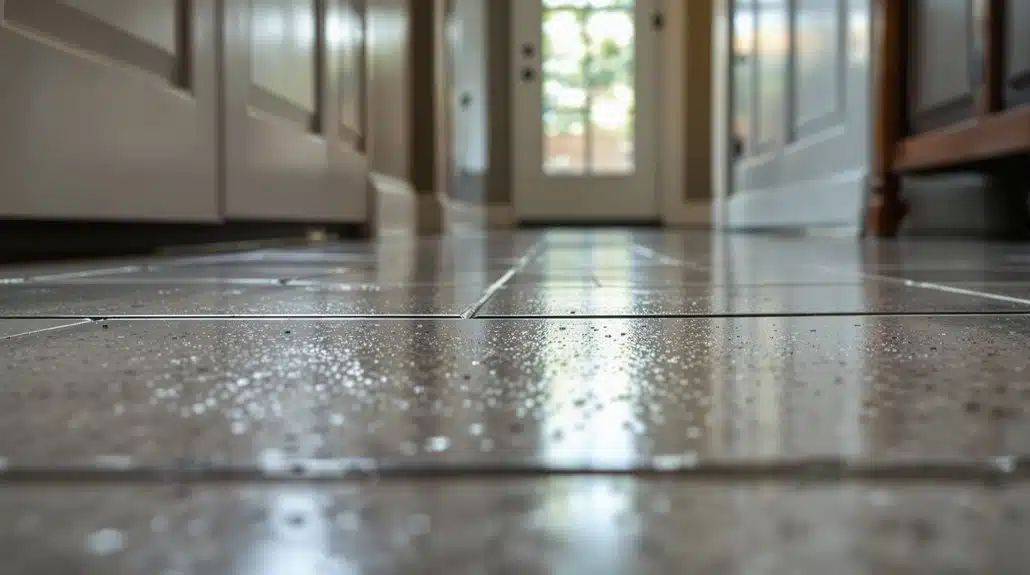
You’ll find that ceramic and porcelain tiles excel in moisture-resistant environments since they’re fired at high temperatures, creating a non-porous surface that won’t absorb water or support mold growth. Their exceptional durability in high-traffic areas stems from their hardness rating of 8-10 on the Mohs scale, which resists scratching and chipping from foot traffic and furniture movement. You can install these tiles directly over crawl spaces with minimal concerns about moisture damage, provided you’ve installed proper vapor barriers beneath them.
Moisture Resistance Benefits
When you’re selecting flooring for kitchens, bathrooms, or laundry rooms, ceramic and porcelain tiles deliver superior waterproof performance that protects your home’s structural integrity. You’ll benefit from moisture resistance that complements crawl space ventilation efforts, reducing humidity-related damage in Middle Georgia homes.
- Non-porous surfaces prevent water absorption, eliminating conditions that encourage mold growth
- Glazed finishes create impermeable barriers that protect subfloors from moisture penetration
- Proper grout sealing extends waterproofing capabilities across tile joints and seams
- Moisture control improves when you combine tile installation with adequate crawl space ventilation systems
You’re investing in long-term protection when you choose these materials. Their moisture resistance directly reduces structural strain and extends your home’s longevity, particularly in humid climates where moisture management proves critical.
Durability In High Traffic
Ceramic and porcelain tiles won’t deteriorate under the constant foot traffic that typical high-traffic areas demand. You’ll find these sustainable materials ideal for serving homeowners seeking long-lasting flooring solutions. Their glazed surfaces resist scratching and wear, maintaining appearance for years without degradation.
You can implement straightforward maintenance tips to maximize durability. Regular sweeping removes abrasive particles that cause surface damage. Prompt spill cleanup prevents staining and moisture penetration. Periodic resealing of grout lines protects against water infiltration in crawl space environments.
Porcelain tiles outperform ceramic in high-traffic applications because of their denser composition and lower water absorption rates. You’ll appreciate their superior load-bearing capacity and resistance to chipping. These characteristics make them exceptionally reliable for kitchens, entryways, and bathrooms where foot traffic concentrates, ensuring your clients receive dependable performance.
Installation Over Crawl Spaces
While durability under foot traffic remains paramount, the subsurface environment where you install ceramic and porcelain tiles demands similarly rigorous attention. Crawl spaces present unique challenges requiring strategic planning to protect your investment.
You’ll need to address several critical factors:
- Ascertain adequate crawl space ventilation to prevent moisture accumulation beneath tiles
- Install moisture barriers before laying your substrate to block vapor transmission
- Apply flooring insulation rated for below-grade applications to regulate temperature fluctuations
- Verify proper grading and drainage around your foundation to minimize water intrusion
These measures work synergistically to create a stable installation environment. Inadequate ventilation or missing insulation compromises tile longevity and promotes mold growth. You’re establishing conditions where ceramic and porcelain tiles can perform reliably for decades, serving your household’s practical needs effectively.
Sealed Concrete and Epoxy: Affordable Crawl Space Protection
As crawl spaces are particularly vulnerable to moisture intrusion, humidity fluctuations, and structural degradation, you’ll find that sealed concrete and epoxy coatings offer cost-effective protection for these critical areas. Sealed concrete advantages include vapor barrier creation and reduced moisture transmission that protects foundation integrity. You’re investing in preventative maintenance that extends structural longevity while minimizing mold proliferation.
Epoxy flooring benefits deliver exceptional durability and chemical resistance in your crawl space environment. You’ll appreciate the seamless application process that creates a protective membrane against groundwater infiltration and humidity. The coating’s resilience withstands temperature variations common in Middle Georgia climates, ensuring consistent performance across seasons.
You’re choosing an economical solution that requires minimal maintenance while delivering maximum protection for your home’s foundation and overall structural health.
Prepare Your Crawl Space: Vapor Barriers and Subfloor Installation
Once you’ve applied sealed concrete and epoxy coatings, you’ll need to establish an all-encompassing moisture management system that goes beyond surface protection. Proper crawl space maintenance requires strategic layering of protective elements.
Consider these crucial installation steps:
- Install 6-mil polyethylene vapor barriers across the entire floor, overlapping seams by 12 inches and extending 6 inches up foundation walls.
- Seal all barrier penetrations around piers and mechanical systems with compatible tape and sealant.
- Add rigid foam or spray foam insulation options to rim joists and band boards, achieving R-15 minimum ratings.
- Install dehumidification systems and guarantee adequate ventilation pathways for moisture control.
You’ll want to verify proper grading and drainage directing water away from your foundation. These coordinated measures protect your home’s structural integrity while reducing energy costs and preventing wood deterioration.
Choose Your Crawl Space Flooring by Budget and Climate
After you’ve established your moisture management foundation, selecting appropriate crawl space flooring materials becomes the next critical decision that’ll directly impact both your budget and long-term performance. Middle Georgia’s humid subtropical climate demands materials resistant to moisture and temperature fluctuations. You’ll find concrete slabs offer durability and cost-effectiveness for most applications. Engineered wood products provide moderate pricing with adequate performance when paired with proper crawl space ventilation. For premium protection, consider closed-cell foam insulation options that simultaneously address moisture control and thermal resistance. Your budget constraints’ll guide material selection, but don’t overlook long-term maintenance costs. Homes requiring superior energy efficiency benefit from insulation options combined with sealed crawl spaces. Evaluate moisture levels, local humidity patterns, and your property’s specific drainage conditions before finalizing your material choice.
Conclusion
You’ll find that selecting moisture-conscious flooring transforms your crawl space into a resilient foundation. By implementing vapor barriers and choosing engineered hardwood, LVP, or sealed concrete, you’re investing in your home’s longevity. These evidence-based solutions work synergistically to manage Middle Georgia’s humidity challenges effectively. You’re not just installing flooring—you’re establishing a protective envelope that safeguards structural integrity while maintaining durability for decades ahead.