
Go Green at Home: Eco-Friendly Flooring Options You’ll Actually Love
You’ll love knowing that eco-friendly flooring no longer means compromising on style or durability. Bamboo regenerates in just 3-5 years, while cork offers natural insulation and antimicrobial properties. Reclaimed wood brings unique character with minimal environmental impact, and linoleum—completely reinvented—lasts up to 40 years. Recycled glass tiles add vibrant sparkle, engineered hardwood maximizes every tree, and natural stone provides timeless beauty. Each option delivers exceptional performance while supporting your commitment to sustainable living, and understanding the specific benefits of each material will help you make the perfect choice for your home.
Key Takeaways
- Bamboo flooring regenerates in 3-5 years, offering a sustainable alternative to hardwood with easy installation and diverse grain patterns.
- Cork flooring provides natural insulation, antimicrobial properties, and warmth underfoot while being harvested without harming trees.
- Reclaimed wood transforms salvaged timber into durable floors with unique character, reducing waste and supporting sustainable practices.
- Linoleum, made from natural materials, lasts 25-40 years and offers vibrant patterns for modern, eco-conscious homes.
- Recycled glass tiles reduce landfill waste, resist stains and moisture, and create stunning focal points lasting over 50 years.
Bamboo: The Fast-Growing Favorite for Modern Homes

Bamboo flooring has transformed from a niche alternative into a mainstream choice that rivals traditional hardwoods in both durability and visual appeal. You’ll uncover numerous bamboo varieties, from strand-woven options that withstand heavy foot traffic to vertical and horizontal grain patterns that complement any design aesthetic.
The bamboo benefits extend beyond style. You’re choosing a material that regenerates in just three to five years, compared to hardwoods requiring decades. This rapid growth means you’re supporting sustainable forestry while creating beautiful spaces for others to enjoy.
When selecting bamboo, you’ll want to prioritize products with low-VOC finishes and formaldehyde-free adhesives. These choices protect indoor air quality, ensuring healthier environments for families and communities you serve through your design decisions. Installation is straightforward and easy to install, making it an accessible option for both professional contractors and DIY enthusiasts looking to upgrade their homes sustainably.
Cork Flooring: Soft, Warm, and Surprisingly Durable
While cork might remind you of wine bottles and bulletin boards, this renewable material delivers exceptional performance as flooring that cushions every step. Harvested from bark without harming trees, cork regenerates naturally, making it perfect for environmentally conscious households.
Cork benefits extend beyond sustainability. Its cellular structure provides natural insulation, reducing heating costs while creating quieter spaces—ideal for families and shared living areas. The antimicrobial properties resist mold and allergens, promoting healthier indoor environments for everyone.
Cork maintenance remains straightforward. Regular sweeping and occasional damp mopping preserve its beauty. Apply protective sealant every few years to maintain water resistance. You’ll appreciate how this forgiving surface withstands daily wear while offering warmth underfoot. Cork’s natural resilience supports active households while honoring your commitment to sustainable living. For homeowners seeking modern alternatives with similar durability, luxury vinyl planks offer scratchproof and waterproof features that make them both child-proof and pet-friendly.
Reclaimed Wood: Character and Sustainability in Every Plank
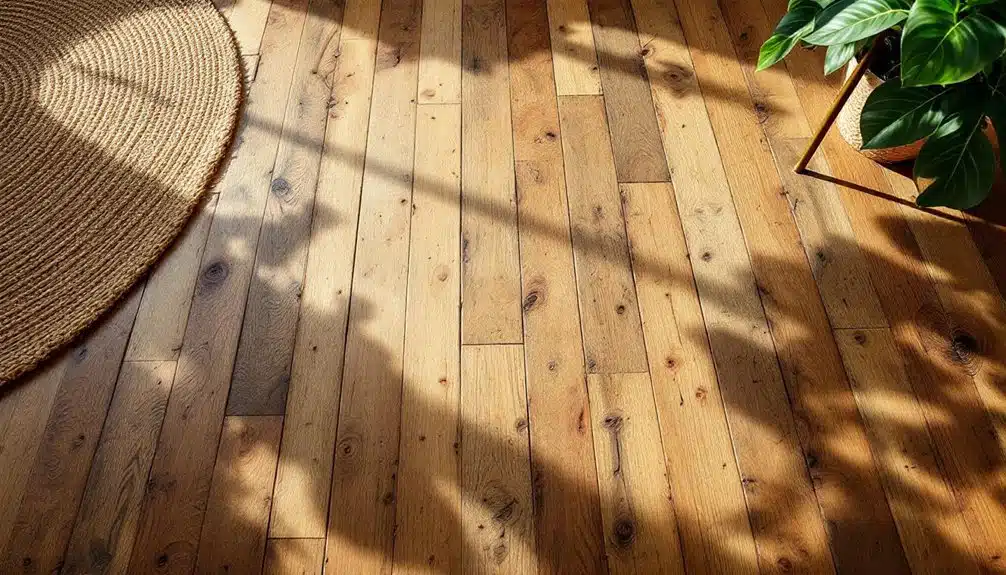
Reclaimed wood flooring transforms salvaged timber from old barns, factories, and buildings into stunning floors with authentic character you can’t replicate. By choosing these weathered planks, you’ll prevent quality wood from ending up in landfills while considerably reducing the carbon footprint associated with harvesting new timber. These pre-aged boards offer exceptional durability—they’ve already proven they can withstand decades of use—and their rich patinas, nail holes, and saw marks tell stories that add warmth and distinction to your space. The longevity of wood floors can span several years, making reclaimed hardwood a cost-effective choice that pays for itself over time.
Unique Visual Appeal
Each plank of reclaimed wood tells its own story through distinctive grain patterns, weathered textures, and natural patina that can’t be replicated in new materials. You’ll uncover nail holes, saw marks, and color variations that create authentic character your guests will admire while you reduce environmental impact.
These eco friendly aesthetics transform your space into a conversation starter about sustainable design choices. The varied tones—from honey ambers to rich chocolates—mean you won’t need additional décor to create visual interest. You’re fundamentally curating a unique floor that’s both beautiful and purposeful.
When you choose reclaimed wood, you’re offering visitors an inspiring example of how environmental responsibility improves rather than compromises style. Each distinctive board becomes an illustration of your commitment to preserving resources while creating welcoming, beautiful spaces. Many engineered hardwood products incorporate recycled or reclaimed wood, combining the authentic character you love with modern moisture-resistant technology for lasting durability.
Environmental Impact Reduction
By choosing reclaimed wood, you’ll plunge thousands of board feet from landfills while eliminating the carbon emissions associated with harvesting, processing, and transporting new lumber. Every rescued plank represents a tangible reduction in your home’s carbon footprint, transforming what would’ve been waste into functional beauty.
Your decision supports sustainable practices that preserve forests and protect biodiversity. You’re not just installing floors—you’re actively participating in resource conservation that benefits entire communities. Reclaimed wood requires minimal processing, further reducing environmental impact while creating meaningful employment in salvage operations.
This choice demonstrates how personal decisions ripple outward, inspiring neighbors and family members to adopt eco-conscious living. You’re proving that sustainable design doesn’t require sacrifice—it improves both your space and our shared planet. The rustic, timeless aesthetic of reclaimed wood flooring works beautifully in both modern and traditional interiors, offering versatility alongside environmental responsibility.
Durability and Longevity
When you select reclaimed wood, you’re investing in flooring that’s already proven its resilience over decades—sometimes centuries. These sustainable materials have withstood time’s tests, offering your home durability that new lumber can’t match.
| Aspect | Reclaimed Wood | New Hardwood |
|---|---|---|
| Lifespan | 100+ years proven | 25-50 years estimated |
| Stability | Minimal expansion/contraction | Higher movement potential |
| Density | Naturally hardened | Varies by species |
Your maintenance requirements remain straightforward: regular sweeping and occasional refinishing, just like conventional hardwood. You’ll appreciate how these planks resist warping better than freshly-milled alternatives. By choosing reclaimed wood, you’re providing lasting value to future homeowners while reducing environmental impact—a truly service-minded decision that delivers both beauty and longevity.
Linoleum: Not Your Grandmother’s Floor Covering
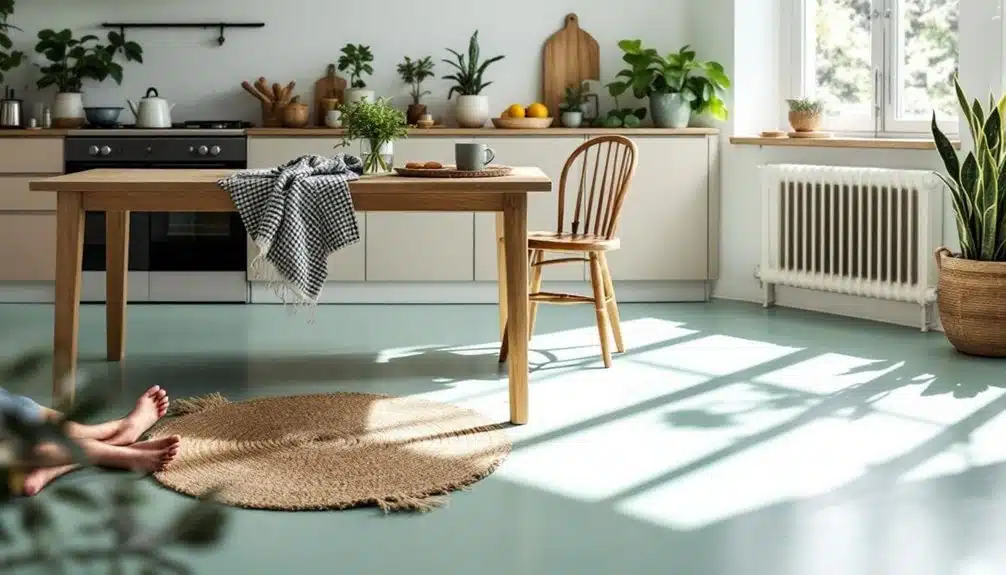
Although linoleum disappeared from design conversations for decades, this naturally-derived flooring has staged an impressive comeback in eco-conscious homes. Made from linseed oil, cork dust, wood flour, and natural resins, it’s biodegradable and renewable—perfect for those who prioritize sustainable living.
Today’s linoleum design trends showcase vibrant patterns and sophisticated marbling that’ll enhance any space while serving your environmental values. You’ll find options that complement modern, traditional, and eclectic aesthetics.
Essential linoleum maintenance tips:
- Sweep daily with a soft-bristle broom
- Damp-mop weekly using pH-neutral cleaners
- Apply protective wax coating annually
- Wipe spills immediately to prevent staining
This durable flooring lasts 25-40 years, making it a smart investment for households committed to reducing waste while creating beautiful, functional spaces.
Recycled Glass Tiles: Sparkle With a Clear Conscience
You’ll find recycled glass tiles transform post-consumer bottles and windows into stunning floors that shimmer with purpose. These eco-friendly surfaces deliver the durability you need for high-traffic areas while offering a kaleidoscope of colors and patterns that rival traditional materials. By choosing recycled glass, you’re investing in a long-lasting flooring solution that reduces landfill waste without compromising your design vision.
Vibrant Colors and Patterns
Recycled glass tiles transform discarded bottles and windows into stunning mosaic surfaces that rival traditional ceramic in both durability and visual impact. You’ll uncover colorful designs ranging from ocean blues to earth tones, each piece reflecting light beautifully throughout your space. These patterned options create focal points that inspire conversations about sustainability.
Consider these design applications:
- Kitchen backsplashes featuring gradient color schemes that shift from deep emerald to soft seafoam
- Bathroom accent walls with geometric patterns combining amber, cobalt, and clear glass
- Entryway floors showcasing custom mosaics that welcome guests with purposeful beauty
- Outdoor pathways incorporating slip-resistant textured tiles in earth-inspired palettes
Each installation reduces landfill waste while adding distinctive character to spaces where you serve family and community.
Durability Meets Sustainability
Beyond their stunning appearance, recycled glass tiles deliver exceptional performance that matches or exceeds conventional flooring materials. You’ll appreciate how these eco friendly materials withstand heavy foot traffic while maintaining their brilliant shimmer for decades.
| Performance Factor | Recycled Glass Tiles | Traditional Options |
|---|---|---|
| Lifespan | 50+ years | 10-25 years |
| Water Resistance | Excellent | Varies |
| Maintenance | Minimal | Moderate-High |
| Scratch Resistance | Superior | Good |
| Stain Resistance | Outstanding | Fair-Good |
When you choose recycled glass, you’re embracing sustainable practices that reduce landfill waste while creating beautiful spaces. These tiles require no harsh chemicals for cleaning—just warm water and mild soap. You’re investing in flooring that serves your household’s practical needs while demonstrating environmental stewardship that inspires others.
Natural Stone: Timeless Beauty That Lasts Generations
Quarried from the earth itself, natural stone flooring brings millennia-old beauty into your home while offering unmatched durability that outlasts synthetic alternatives by generations. Natural stone aesthetics enhance any space with unique patterns that synthetic materials can’t replicate, making your home both welcoming and distinctive for guests.
Before you commit, understand these maintenance considerations:
- Seal properly – Stone needs periodic sealing to resist stains and moisture damage
- Clean gently – Use pH-neutral cleaners to preserve the stone’s natural finish
- Address spills quickly – Acidic substances can etch certain stones like marble
- Refinish when needed – Professional restoration brings back original luster
You’ll find that slate, granite, and limestone each offer distinct character while supporting sustainable building practices through their longevity and minimal processing requirements.
Engineered Hardwood: Making the Most of Every Tree
While natural stone maximizes a material extracted from the earth, engineered hardwood takes a different approach to sustainability—it stretches precious hardwood resources further than solid planks ever could. You’ll find that engineered boards use a thin veneer of premium hardwood bonded to sustainable substrate layers, meaning one tree creates considerably more flooring than traditional methods allow.
This smart construction supports tree preservation while delivering the authentic wood aesthetics your clients deserve. You’re choosing sustainable sourcing when you select engineered options from responsibly managed forests. The dimensional stability means less waste during installation and fewer replacements over time. By maximizing each harvested tree’s potential, you’re helping preserve forests while creating beautiful, durable spaces that serve families for decades.
Conclusion
You’ve just revealed the secret to creating the most stunning, planet-loving floors on Earth! These eco-friendly options aren’t just good for the environment—they’re so gorgeous, they’ll make your friends weep with envy. Whether you’re craving bamboo’s sleek sophistication or reclaimed wood’s soul-stirring character, you’re about to transform your space into an eco-chic masterpiece that’ll literally change lives. Your dream floor awaits—go make it happen!