
How Humidity in Warner Robins Affects Hardwood and What to Do About It
Humidity in Warner Robins can severely affect hardwood floors, causing them to expand and contract. In high humidity, floors swell and may lead to gaps, warping, or buckling. Conversely, low humidity can cause shrinkage and cracks. To manage these effects, maintain indoor humidity levels between 30% and 50% using dehumidifiers or humidifiers, and guarantee proper ventilation. Regular cleaning and periodic refinishing will additionally help. There’s a lot more to reflect on for maintaining your floors effectively.
Key Takeaways
- High humidity in Warner Robins can cause hardwood floors to expand, leading to gaps, warping, and buckling over time.
- Low humidity results in wood shrinkage, creating gaps between floorboards and compromising structural integrity.
- Maintaining indoor humidity levels between 30% and 50% is essential for preserving hardwood floors.
- Utilize dehumidifiers during humid months and humidifiers during dry seasons to manage moisture levels effectively.
- Regular cleaning and periodic refinishing every 5-10 years will help maintain the appearance and longevity of hardwood floors.
Understanding Humidity Levels in Warner Robins
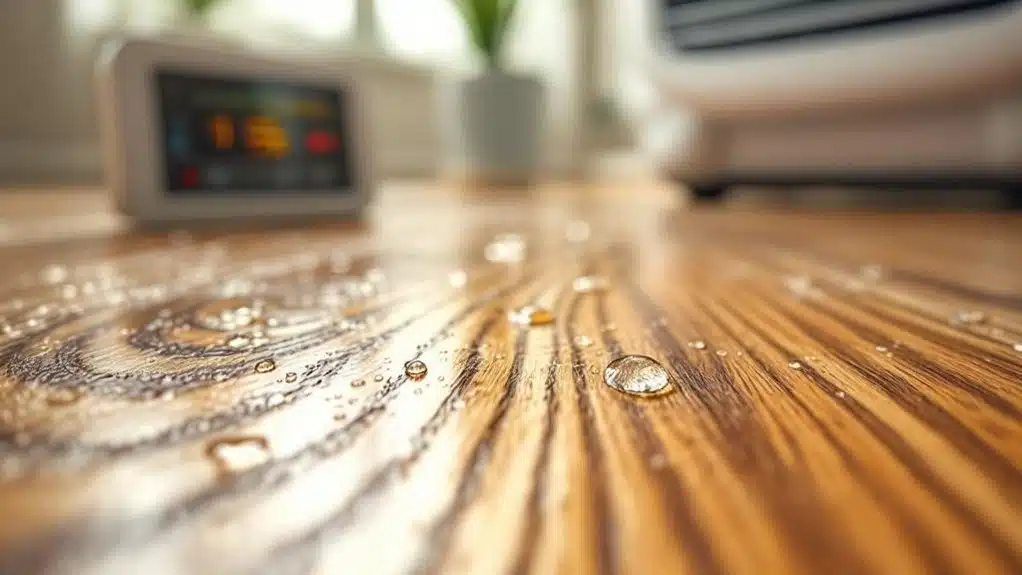
When you consider the climate in Warner Robins, understanding humidity levels is crucial, especially during the summer months. The region experiences significant humidity fluctuations because of its subtropical climate, with moisture levels peaking in July and August. These seasonal changes can impact various aspects of daily life, including outdoor activities and indoor air quality. You’ll notice that high humidity can make temperatures feel more oppressive, influencing your comfort. Furthermore, awareness of humidity levels can help you implement strategies for maintaining a healthy environment at home. By monitoring local forecasts and utilizing dehumidifiers when necessary, you can manage the effects of humidity fluctuations and create a more enjoyable living space for yourself and others in the community. Additionally, maintaining proper humidity levels is essential to prevent damage to hardwood flooring and ensure its longevity and beauty.
How High Humidity Affects Hardwood Floors
High humidity can greatly impact hardwood floors, causing them to expand and contract as they absorb moisture from the air. These humidity effects lead to noticeable hardwood expansion, which can result in gaps, warping, and buckling over time. When the air is saturated with moisture, your hardwood floors may swell, pushing against each other and creating pressure points. This can compromise the floor’s integrity and aesthetics. To mitigate these issues, maintaining consistent indoor humidity levels is essential. You might consider using dehumidifiers or air conditioning to regulate moisture, especially during humid months. Regularly checking your floors for signs of distortion can additionally help you address potential problems before they worsen, ensuring your hardwood remains beautiful and durable. Maintaining relative humidity between 45% and 65% is crucial for preserving your hardwood floors.
The Impact of Low Humidity on Wood
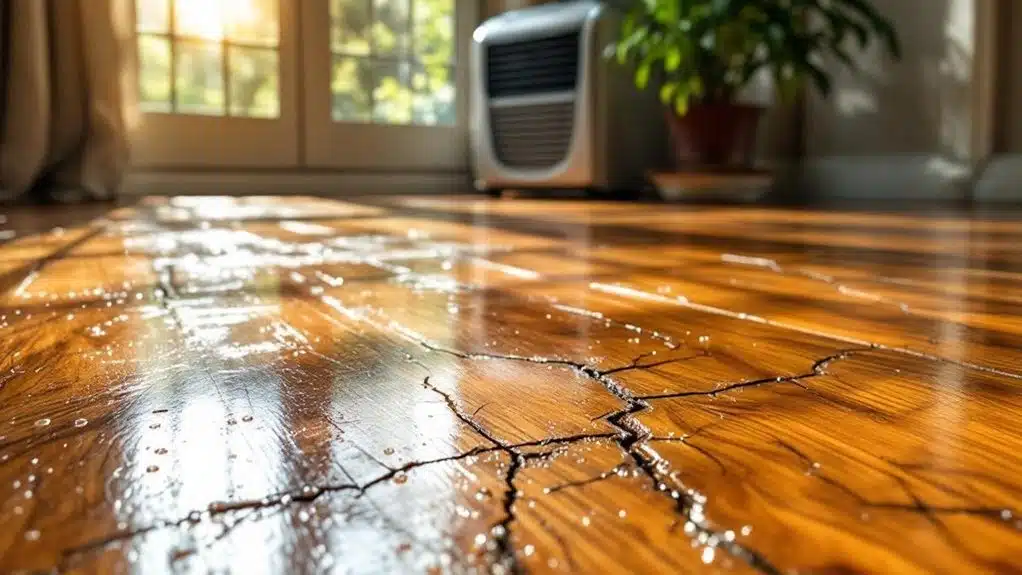
Although many people focus on the effects of high humidity, low humidity can likewise have detrimental effects on hardwood. When the air is too dry, wood tends to lose moisture, leading to wood shrinkage and cracks. This instability can compromise the integrity of your floors and furniture. You might notice gaps between floorboards or a warped appearance in your wooden surfaces. Without proper moisture control, these issues can escalate, potentially resulting in costly repairs. Maintaining a favorable humidity level is essential for preventing wood expansion and preserving the beauty and durability of your hardwood. Utilizing a humidifier can help add moisture to the air during dry seasons, further protecting your wood investments and guaranteeing they remain in excellent condition for years to come.
Tips for Managing Humidity in Your Home
Managing humidity in your home is crucial for the health of your hardwood and overall indoor environment. To achieve effective humidity control, consider using a dehumidifier during humid months and a humidifier in the dry season. Aim for indoor humidity levels between 30% and 50% for ideal comfort and wood protection. Incorporating indoor plants can also help regulate moisture levels; plants like peace lilies and spider plants naturally release humidity into the air. Furthermore, guarantee proper ventilation in kitchens and bathrooms to prevent excess moisture buildup. Regularly monitor humidity with a hygrometer, allowing you to adjust your strategies as needed. By taking these steps, you’ll create a healthier space for both your hardwood and your family.
Long-Term Maintenance for Hardwood Floors
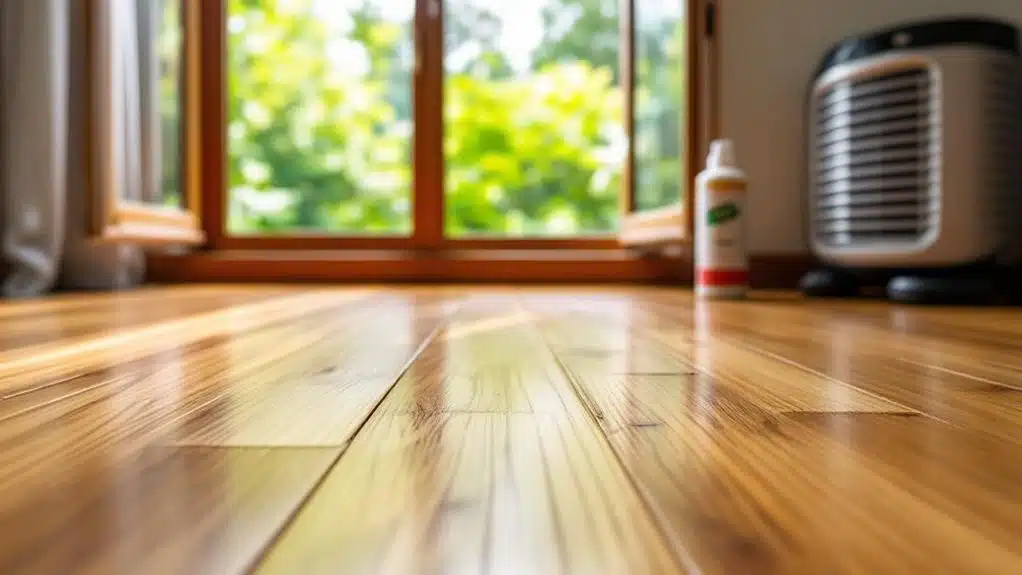
While maintaining your hardwood floors, it’s vital to adopt a consistent care routine to guarantee their longevity and appearance. Here are some fundamental maintenance tips:
- Regular Cleaning: Sweep or vacuum your wood floor weekly to remove dirt and debris, preventing scratches and wear.
- Humidity Control: Use a humidifier or dehumidifier to keep indoor humidity levels between 30-50%. This helps prevent warping and cracking over time.
- Periodic Refinishing: Every 5-10 years, consider refinishing your hardwood to restore its shine and protect the wood from damage.
Conclusion
In Warner Robins, maintaining the right humidity levels is essential for preserving your hardwood floors. Did you know that hardwood can expand or contract as much as 1/8 inch for every 10% change in humidity? To protect your investment, monitor humidity closely and use dehumidifiers or humidifiers as needed. Regular maintenance, like cleaning and refinishing, will additionally improve your floors’ longevity. By taking these steps, you can enjoy beautiful, durable hardwood flooring for years to come.