
Is It Ever Okay to Install Flooring Over Existing Tile?
You’re considering laying new flooring over your existing tile. It’s tempting—you’ll save money and time. But here’s what you need to know: not every tile installation supports this approach. Some conditions demand removal, while others make covering viable. The difference? Understanding what lies beneath and what preparation steps you can’t skip.
Key Takeaways
- Yes, installing flooring over tile is acceptable when the tile is structurally sound, level, and free of cracks or loose sections.
- Luxury vinyl planks and laminate are ideal materials for covering existing tile due to waterproofing and budget-friendly installation options.
- Proper surface preparation—cleaning, sanding, and leveling—is essential for adhesion and long-term durability of new flooring over tile.
- Moisture barriers prevent water infiltration beneath new flooring, protecting against mold and substrate deterioration over time.
- Removal is preferable when tile is deteriorated, uneven, or creates elevation issues that compromise new flooring performance.
When Removal Pays Off vs. When Covering Saves Money
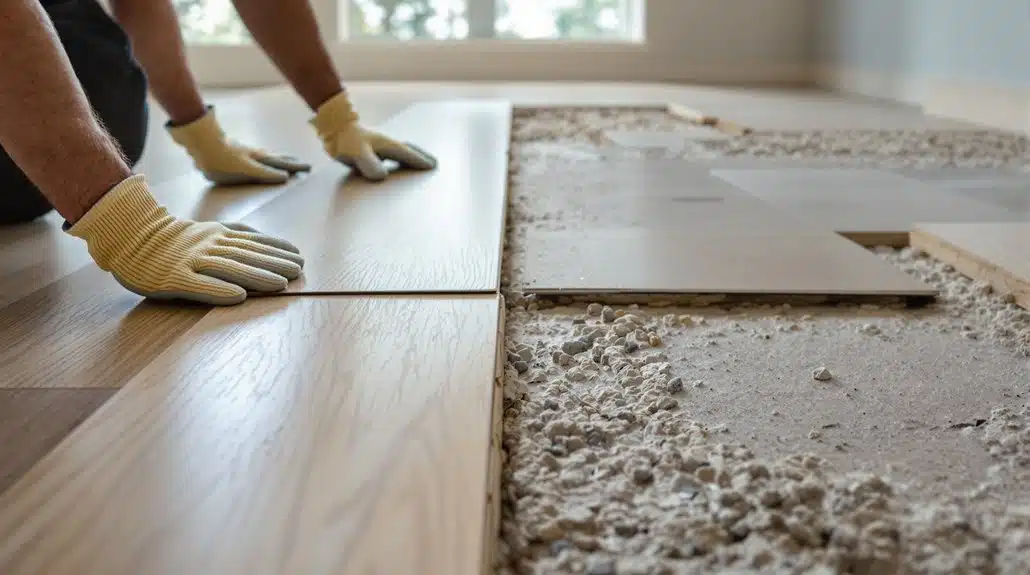
Before you decide whether to remove existing tile or install new flooring over it, you’ll need to assess several cost considerations and structural factors.
Removal pays off when tile’s deteriorated, creating an uneven substrate that compromises new flooring integrity. You’ll invest more upfront, but you’re solving underlying problems that’ll plague future installations. Covering saves money initially when tile’s structurally sound and level.
However, consider aesthetic impact carefully. Covering adds height, potentially creating elevation issues at doorways and affecting floor-to-base molding alignment. Removal prevents these complications, ensuring professional results that serve your clients’ long-term satisfaction.
Evaluate labor costs against material expenses. Sometimes removal’s true expense lies in disposal rather than installation time. If you’re considering LVP as your new flooring, its click-lock system makes installation straightforward whether you remove or cover existing tile. Assess each project individually—your decision should prioritize both budget constraints and quality outcomes.
Flooring Materials That Work Over Existing Tile
Once you’ve decided that covering tile makes financial and structural sense for your project, selecting the right flooring material becomes your next priority.
You’ll find several viable options that install successfully over existing tile:
- Luxury vinyl planks offer waterproof protection and realistic wood aesthetics without requiring tile removal
- Laminate options provide budget-friendly durability when you’ve properly prepared the tile surface
- Engineered hardwood works well over tile if you’ve guaranteed a stable, level substrate
- Click-lock systems minimize installation complexity and reduce labor costs
Your choice depends on moisture exposure, foot traffic patterns, and desired aesthetics. Luxury vinyl excels in bathrooms and kitchens owing to superior moisture resistance. Laminate options suit living areas where you’re serving family gatherings. The material’s scratch and dent resistance makes it particularly suitable for homes with pets and heavy furniture traffic. Each material requires proper acclimation and subfloor assessment before installation proceeds. Choose based on your space’s specific demands and your clients’ long-term needs.
Signs Your Current Tile Is Ready to Cover

Before you commit to installing new flooring over existing tile, you’ll need to assess whether your current surface can actually support it. Examine your tile condition carefully—the surface must be structurally sound with no cracks, chips, or loose tiles that’ll compromise your new floor’s stability. Check for moisture issues by performing a calcium chloride or plastic sheet test; trapped moisture will cause your new flooring to fail prematurely. Confirm the tile isn’t glossy; you’ll need to sand it down for proper adhesion. Verify the subfloor beneath isn’t soft or deteriorating, as this undermines everything above it. If you’re dealing with porcelain tile, keep in mind that its extremely durable composition and imperviousness to water make it an excellent base layer, provided it’s still properly adhered to the subfloor. When your existing tile passes these inspections, you’re ready to proceed confidently.
Prep Work for Flooring Over Tile
Now that you’ve confirmed your tile’s suitability, you’ll need to prepare the surface meticulously to guarantee proper adhesion and a long-lasting installation.
Begin your tile surface preparation by thoroughly cleaning the existing tile with a degreaser and allowing it to dry completely. Next, address any structural issues:
- Sand or grind the tile surface to improve texture and adhesion
- Fill cracks and low spots with appropriate leveling compound
- Install a moisture barrier installation over the tile to prevent water intrusion
- Confirm proper slope for drainage in wet areas
These preparatory steps are critical for serving your clients with durable, reliable flooring. Moisture barrier installation protects against future water damage that could compromise both your new flooring and the structure beneath. Your diligent preparation now prevents costly callbacks and confirms customer satisfaction long-term. If you’re planning to install new flooring in a bathroom, consider water-resistant options like porcelain or ceramic tiles, luxury vinyl plank, or properly sealed natural stone to ensure longevity in moisture-prone environments.
Long-Term Durability Risks and How to Prevent Them

Even when you’ve executed flawless prep work, several durability challenges can still emerge years after installation if you don’t address them proactively. Moisture management is critical—water infiltration beneath your new flooring deteriorates both the substrate and tile underneath, compromising structural integrity. Install a quality moisture barrier and guarantee proper ventilation to redirect humidity away from the installation area.
Substrate stability directly impacts long-term performance. You must monitor for movement or settling, as shifting tiles create stress points that crack new flooring. Use self-leveling compounds to eliminate high spots and hollows before installation.
Additionally, apply expansion strips at room perimeters and doorways to accommodate natural material movement. Schedule periodic inspections to catch issues early, and maintain consistent humidity levels between 30-50%. These preventative measures guarantee your flooring investment withstands daily wear while serving your clients reliably.
Conclusion
You’re standing at a crossroads where shortcuts and solid foundations meet. Installing flooring over existing tile is your bridge forward—but only if you’ve done your assignment. You’ll verify structural integrity, prep meticulously, and select compatible materials. That tile beneath becomes your foundation’s integrity test. Skip these steps, and you’re building on sand. Get them right, and you’ve transformed a liability into lasting stability.