
Signs Your Tile Grout Needs Replacing (And How to Handle It)
If you notice cracks, discoloration, or mold in your grout, it’s time to contemplate replacing it. Loose or missing grout can lead to bigger issues, while uneven tiles may affect stability. Foul odors signal potential mold growth, and if cleaning seems futile, that’s a big red flag. Additionally, keep an eye on your grout’s age; if it’s over 15 years, replacement is likely necessary. Stay tuned to learn how to handle these issues effectively!
Key Takeaways
- Cracks or Gaps: Visible cracks or missing grout indicate the need for replacement to prevent moisture infiltration and further damage.
- Discoloration: Stained or dull grout suggests dirt buildup or mold, requiring inspection and possible replacement if cleaning fails.
- Mold Growth: Persistent dark stains or odors signal mold presence; clean promptly or consider replacement for health and appearance.
- Loose Tiles: Loose or uneven tiles may require grout replacement to maintain stability and aesthetics; address promptly to avoid bigger issues.
- Age of Grout: Grout older than 5-15 years may show signs of wear; replacement can prevent additional water damage and maintain a healthy environment.
Cracks in the Grout
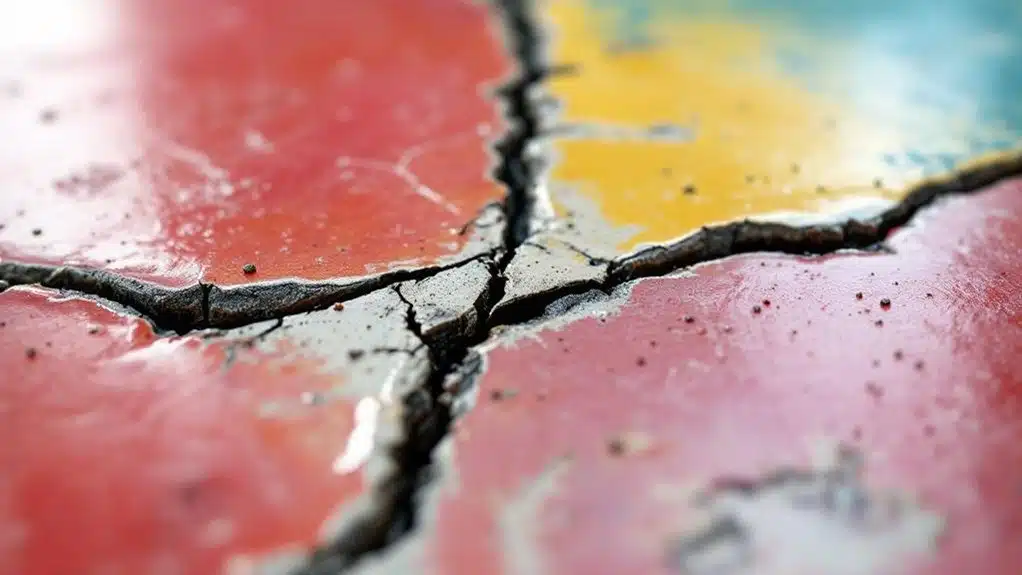
When you notice cracks in the grout, it’s often a clear sign that it’s time for a replacement. Cracked grout can compromise the overall grout integrity, allowing moisture to seep in and potentially cause further damage. To maintain your grout effectively, consider these simple maintenance tips: regularly clean surfaces with a gentle, pH-balanced cleaner, and avoid harsh chemicals that can erode the grout. Furthermore, keep an eye on the caulking around edges, as this can likewise wear down over time. If you spot cracks, don’t wait too long to replace the grout; addressing it promptly helps prevent more significant issues down the line. By prioritizing grout integrity, you’re ensuring a healthier and more visually appealing space for everyone to enjoy. Additionally, it’s important to remember that porcelain tile offers superior durability and water resistance, making it a great choice for areas prone to moisture.
Discoloration and Staining
If you’ve noticed your tile grout looking dull or stained, it’s time to take a closer look. Common causes of discoloration can range from dirt buildup to mold, and understanding these factors can help you decide if replacement is necessary. Fortunately, there are effective cleaning solutions that can restore your grout’s appearance before it becomes a bigger issue. Additionally, tile’s low maintenance nature makes it a popular choice for homeowners seeking easy upkeep and long-lasting beauty.
Common Causes of Discoloration
Discoloration in tile grout can happen for several reasons, often stemming from everyday wear and tear. One common cause is moisture, which can lead to mold and mildew growth, causing dark stains. Moreover, spills from food, drinks, or cleaning products can leave behind unsightly marks. Poor grout maintenance can worsen these issues; when you neglect regular cleaning, dirt and grime accumulate, resulting in discoloration. To combat this, consider implementing grout maintenance tips like sealing your grout regularly and cleaning spills promptly. For existing stains, look into discoloration remedies such as baking soda and vinegar solutions. By staying proactive, you can keep your grout looking fresh and vibrant, enhancing your space for those you serve. Additionally, professional installation of tile and stone flooring can significantly reduce the likelihood of grout damage in the long run.
Effective Cleaning Solutions
Many homeowners face the challenge of stained tile grout, but effective cleaning solutions can restore its original beauty. You can tackle discoloration with a few simple, natural cleaners that are easy to make at home. Here are some DIY solutions to evaluate:
- Baking Soda and Vinegar: Mix baking soda with water to form a paste, apply it, then spray with vinegar. This combo lifts stains effectively.
- Hydrogen Peroxide: Use a 3% hydrogen peroxide solution as a powerful spot treatment for tough stains.
- Lemon Juice: The acidity in lemon juice can brighten grout while leaving a fresh scent behind.
Mold and Mildew Growth
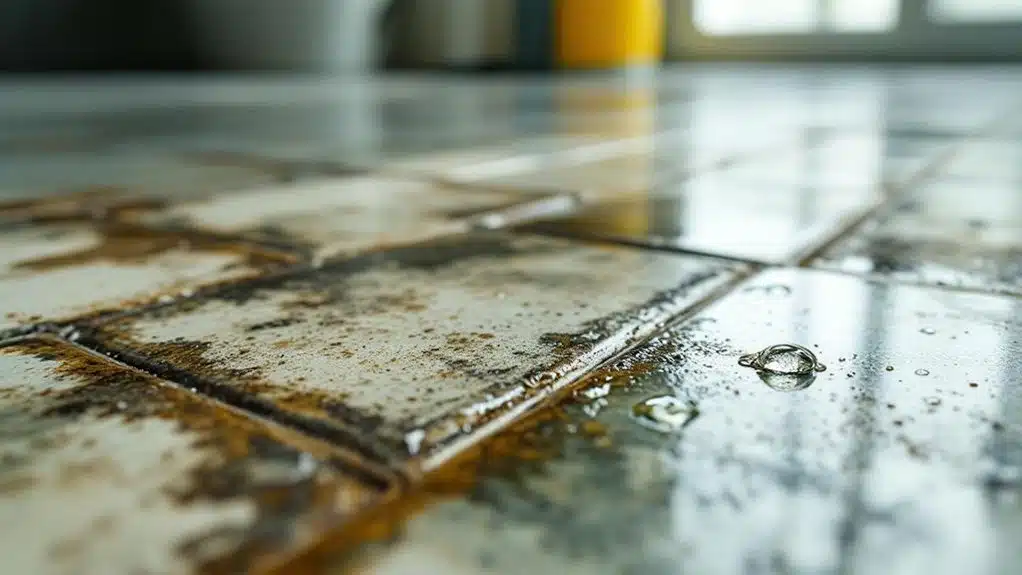
While you might not notice it right away, mold and mildew growth in your tile grout can quickly become a serious issue. Not only can it affect the appearance of your home, but it can additionally pose health risks. To keep your space safe and clean, focus on mold prevention techniques like proper ventilation and regular cleaning. If you spot mildew, prompt mildew treatment is essential.
Here’s a quick reference table to help you:
| Signs of Growth | Recommended Action |
|---|---|
| Dark stains | Use a vinegar solution for cleaning |
| Musty odor | Increase ventilation and dehumidify |
| Discoloration | Replace grout if persistent |
Stay proactive to guarantee a healthier environment for you and your loved ones!
Loose or Missing Grout
After addressing mold and mildew issues, it’s important to check for loose or missing grout in your tile work. Loose or missing grout can lead to bigger problems, so tackling it promptly is vital. Here are three key steps for effective grout maintenance:
- Inspect Regularly: Look for gaps or crumbling areas in your grout. This allows you to catch issues early.
- Perform Grout Repair: If you find loose or missing grout, replace it as soon as possible. Use a grout saw for removal and apply new grout to seal the gaps.
- Seal the Grout: After repairs, seal the grout to protect it from moisture and stains, enhancing its longevity.
Water Damage or Moisture Issues
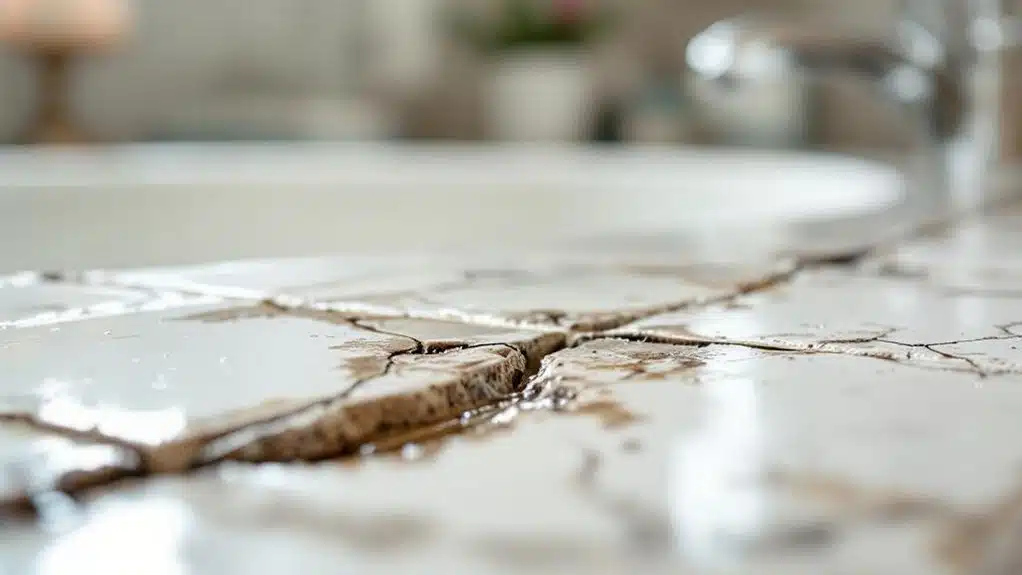
If you notice discoloration or a musty odor around your tiles, it’s likely a sign of water damage or moisture issues. These problems can stem from hidden water leaks, leading to significant damage if not addressed promptly. Effective moisture detection is essential for maintaining a healthy environment in your home.
| Signs of Moisture Issues | Next Steps |
|---|---|
| Discoloration | Inspect for leaks |
| Musty Odor | Use a moisture meter |
| Cracked Grout | Replace damaged grout |
Don’t ignore these signs. Investigating and resolving moisture issues can save you from costly repairs and create a safer space for you and your loved ones. Take action before it escalates!
Uneven Tile Surfaces
If you notice uneven tile surfaces in your home, it’s time to take a closer look. Conducting a visual inspection can help you identify the causes behind this issue, whether it’s because of improper installation or wear over time. Once you’ve assessed the situation, you can decide if repairs are possible or if it’s best to replace the grout entirely.
Visual Inspection Techniques
Uneven tile surfaces can be a clear indicator that your grout needs attention. When inspecting your tiles, focus on these key aspects:
- Grout Color: Look for discoloration or fading. A consistent grout color is crucial for a polished look.
- Grout Texture: Run your fingers along the grout lines. If you feel rough patches or uneven surfaces, it’s a sign your grout might be deteriorating.
- Tile Alignment: Check if tiles are level with each other. Uneven edges may indicate shifting or improper installation.
Causes of Unevenness
While various factors can contribute to uneven tile surfaces, one common culprit is improper installation. If the grout installation isn’t done correctly, it can lead to gaps and unevenness. This can happen when the substrate isn’t level, causing your tiles to settle differently over time. Moreover, fluctuations in humidity and temperature can cause the tiles to expand and contract, further exacerbating the problem. Over time, you might notice that some tiles sit higher or lower than others, creating an unsightly surface. Keeping an eye on these signs will help you maintain the beauty of your tile work. Regular inspections and addressing issues promptly can prevent costly repairs down the line, ensuring a smooth, even finish for your space.
Repair or Replace Options
Noticing uneven tile surfaces can be frustrating, but you have options for addressing the issue. You can choose between repair techniques and replacement materials, depending on the severity of the problem. Here are three options to contemplate:
- Self-Leveling Compound: This can help even out minor discrepancies without removing tiles. It’s a quick fix that many DIY enthusiasts can handle.
- Re-grouting: If the grout is part of the issue, re-grouting can improve the overall appearance and stability of your tiles.
- Full Replacement: For severe unevenness, replacing the affected tiles might be necessary. This option guarantees a long-lasting solution.
Evaluate your situation carefully, and choose the method that best serves your needs and upgrades your space.
Foul Odors From Grout Lines
If you catch a whiff of unpleasant odors wafting from your tile grout, it’s a clear sign that something’s amiss. Odors often signal mold or mildew growth, which can compromise your home’s air quality. To tackle this issue, start with some grout maintenance tips: regularly clean the grout with a gentle solution of vinegar and baking soda to prevent buildup. For odor removal techniques, consider using a steam cleaner to deep clean the grout lines effectively. If the smell persists in spite of your efforts, it might be time to think about replacing the grout altogether. Keeping your grout fresh not only improves your home’s appearance but also guarantees a healthier environment for you and your loved ones.
Difficulty Cleaning Grout
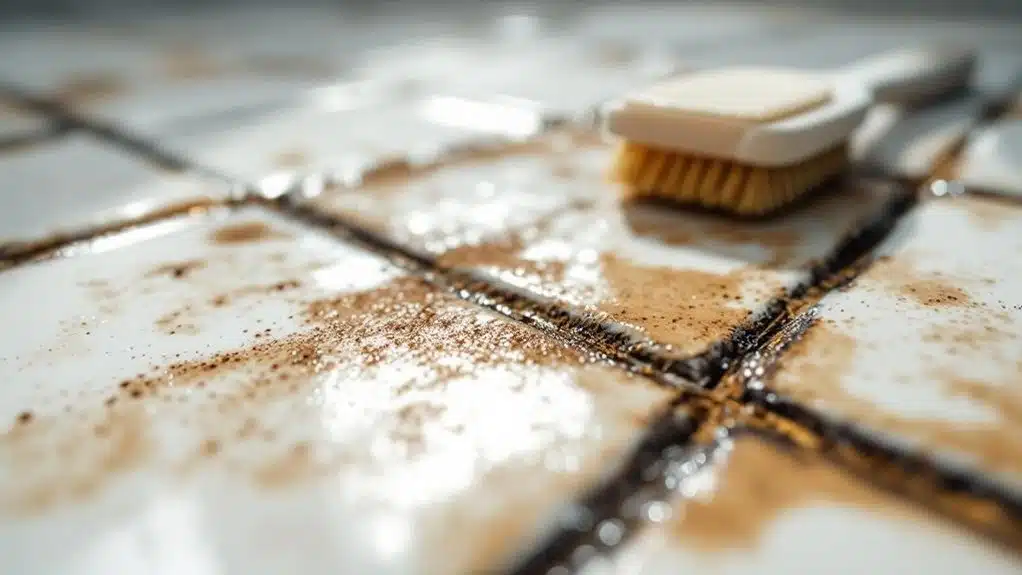
Have you ever found yourself scrubbing your tile grout only to see little to no improvement? If that’s the case, it’s time to reassess your grout’s condition. Difficulty cleaning grout often signals that it may need replacing. Here are three signs to watch for:
- Stubborn Stains: If your usual cleaning techniques aren’t working, stains might be embedded deep within the grout.
- Cracks or Gaps: Visible damage makes it hard to maintain cleanliness and can trap dirt and grime.
- Persistent Discoloration: If discoloration keeps returning after cleaning, it’s a clear indicator that the grout isn’t holding up.
For effective grout maintenance, consider replacing it if these signs resonate. Your home deserves beautiful, clean tile!
Age of the Grout
Grout doesn’t last forever, and its age can greatly impact its appearance and performance. Typically, grout lifespan ranges from 5 to 15 years, depending on factors like usage and maintenance. If your grout is nearing the end of its life, you might notice cracks, discoloration, or even mold growth. Regular grout maintenance, such as sealing and cleaning, can extend its lifespan, but eventually, replacement is necessary to keep your tiles looking fresh and to prevent water damage. If you’re serving others by maintaining a clean and safe environment, inspect your grout regularly. If it shows signs of wear and tear, consider replacing it to guarantee your space remains inviting and functional for everyone.
Conclusion
If you notice any of these signs, it’s time to replace your tile grout. Did you know that nearly 90% of homeowners have experienced grout issues at some point? Ignoring the problem can lead to bigger issues down the line, like water damage or costly repairs. Tackling grout replacement might seem intimidating, but with the right tools and a bit of elbow grease, you can restore your tiles and keep your space looking fresh and clean.