
The Timeless Appeal of Natural Stone Flooring – And How to Care for It
Natural stone flooring offers unmatched geological beauty—from marble’s crystalline veining to granite’s dense granular formations—that can last centuries with proper care. You’ll need to sweep daily with microfiber mops, clean weekly using pH-neutral solutions, and reseal every twelve to eighteen months. Avoid acidic cleaners, vinegar-based products, and ammonia formulations that’ll etch surfaces and strip protective sealants. Each stone type requires specific maintenance protocols, and understanding these distinctions will help you preserve your investment’s integrity and luminous finish for generations.
Key Takeaways
- Natural stone flooring offers unique aesthetic characteristics through marble’s veining, granite’s durability, and limestone’s warm, slip-resistant texture.
- Properly installed natural stone can last centuries due to its molecular density, thermal stability, and resistance to scratching and wear.
- Daily sweeping with microfiber mops and weekly pH-neutral cleaning prevent scratching and maintain the stone’s finish without etching.
- Resealing every twelve to eighteen months with penetrating sealers protects against moisture and preserves the stone’s integrity in high-traffic areas.
- Avoid acidic cleaners, vinegar solutions, ammonia products, and bleach formulations that etch surfaces, create fissures, and strip protective sealants.
Understanding Different Types of Natural Stone for Your Home
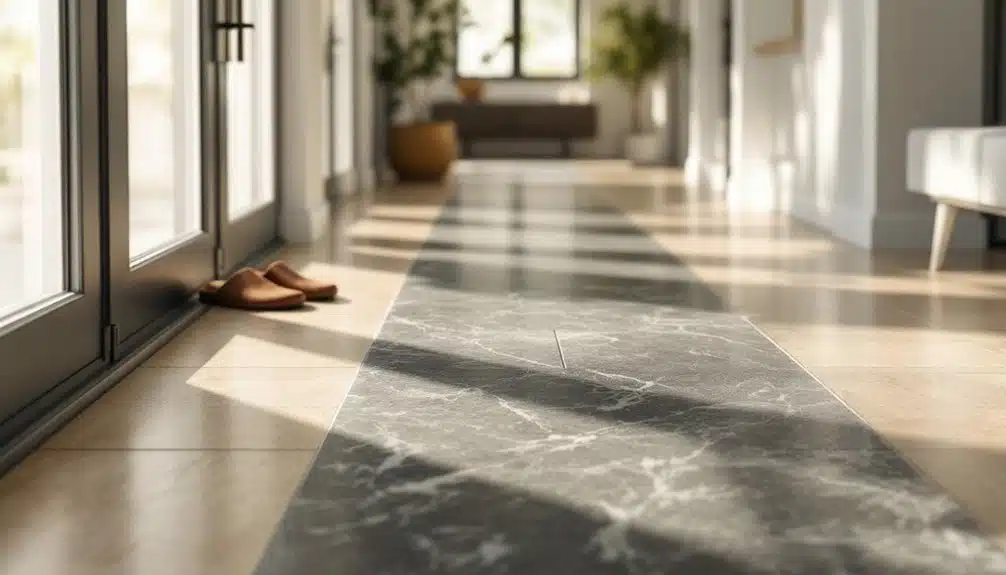
Which natural stone will best suit your flooring needs? Understanding the distinct characteristics of each material helps you make informed recommendations for your clients.
Marble vs granite presents a fundamental choice: marble offers elegant veining and softer tones but requires careful maintenance because of its porous nature and susceptibility to etching. Granite provides superior durability with varied crystalline patterns and exceptional resistance to scratches and heat.
Limestone advantages include its warm, earthy palette and naturally slip-resistant texture, making it ideal for high-traffic areas. Its sedimentary composition creates subtle fossil details and uniform coloring.
Slate delivers rich, layered hues with excellent water resistance, while travertine showcases distinctive pitted surfaces that add organic texture. Each stone’s specific porosity, hardness rating, and mineral composition determines appropriate applications. Beyond their aesthetic qualities, natural stone flooring options offer design flexibility through countless combinations of pattern, color, and shape to suit any area of the home.
Why Natural Stone Flooring Stands the Test of Time
When properly installed and maintained, natural stone flooring can last centuries rather than decades—a longevity that synthetic materials simply can’t match. The durability factors intrinsic to stone create surfaces that withstand heavy foot traffic while maintaining their structural integrity.
Key attributes contributing to stone’s endurance:
- Molecular density creates resistance to scratching, chipping, and wear patterns
- Natural variation conceals minor imperfections that would mar uniform surfaces
- Design versatility allows seamless integration across traditional and contemporary spaces
- Non-porous varieties resist moisture penetration when properly sealed
- Thermal stability withstands temperature fluctuations without cracking
You’ll find that stone’s ability to patina gracefully transforms aging into improvement rather than deterioration. This quality makes natural stone an investment in lasting beauty that serves clients seeking permanent solutions. For bathroom applications, materials like marble, granite, and slate remain water-resistant when properly sealed, though they require more maintenance than ceramic or vinyl alternatives.
The Unique Character and Beauty of Each Stone Variety
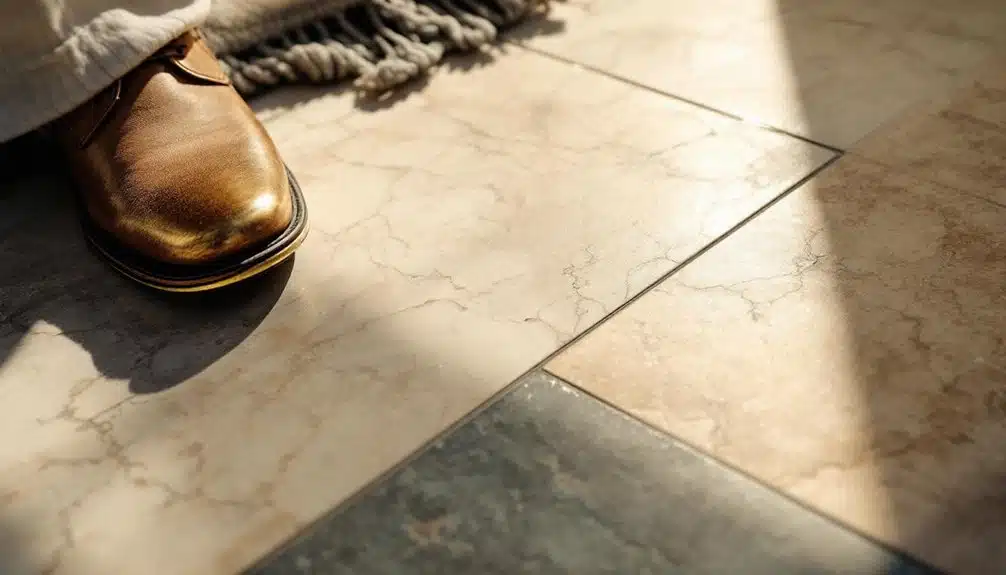
Natural stone flooring delivers aesthetic distinction through its geological fingerprint—each variety presenting unique mineral compositions, color palettes, and surface characteristics that synthetic materials cannot replicate. Marble showcases dramatic veining patterns with luminous crystalline surfaces, while granite offers dense granular formations in earth-toned spectrums. Limestone presents subtle color variations from cream to gray, featuring fossilized inclusions that tell ancient stories. Slate displays layered stratifications with rich texture differences, ranging from smooth honed finishes to natural cleft surfaces. Travertine reveals pitted formations and warm amber tones that create inviting environments for those you serve. Each stone type responds differently to finishing techniques—polished surfaces reflect light brilliantly, while honed and tumbled treatments provide slip-resistant functionality. Understanding these distinctions allows you to select materials that enhance spaces while meeting practical performance requirements. For those seeking alternatives, porcelain tile can mimic natural stone designs while offering increased water resistance and durability in high-traffic areas.
Essential Daily and Weekly Maintenance Practices
Your natural stone floor’s longevity depends on establishing consistent maintenance protocols that address both routine care and immediate hazard response. Daily sweeping removes abrasive particles that scratch the stone’s surface, while weekly deep cleaning with pH-neutral solutions maintains the finish without etching or dulling the material. Prompt spill management prevents staining agents from penetrating the stone’s porous structure, preserving both its structural integrity and aesthetic appeal. For high-traffic areas, increase cleaning frequency to 2-3 times per week to prevent dirt accumulation and maintain your stone’s natural luster. Professional services like grout sealing provide additional protection against moisture penetration and staining, extending the life of your natural stone installation.
Daily Sweeping and Dusting
Every day, loose particles of dirt, grit, and sand accumulate on natural stone surfaces, acting as abrasive agents that gradually wear down the stone’s protective sealant and polish. Implementing proper sweeping techniques and daily dusting prevents this microscopic damage from compromising your floors’ longevity.
Essential daily maintenance includes:
- Use microfiber dust mops to capture fine particles without scratching delicate surfaces
- Sweep high-traffic entryways and hallways twice daily to prevent dirt migration
- Deploy soft-bristled brooms for textured stone varieties like slate or tumbled travertine
- Empty dustpans immediately to avoid redistributing collected debris
- Focus on corners and baseboards where particles concentrate
This disciplined approach protects the investment your clients have made in their natural stone installations while maintaining the elegant appearance that makes these materials so desirable for discerning homeowners. For areas with intense foot traffic like kitchens and entryways, the natural resistance to moisture and durability of properly maintained stone flooring ensures it retains its beauty for decades.
Weekly Deep Cleaning Routine
While daily maintenance addresses surface-level contamination, weekly deep cleaning targets embedded residues that standard sweeping can’t remove. You’ll need pH-neutral cleaning solutions specifically formulated for natural stone—acidic or alkaline products compromise the stone’s integrity and sealant protection. Dilute the solution according to manufacturer specifications, then apply using a microfiber mop with controlled moisture levels. Excess water penetrates stone pores, causing discoloration and structural weakening.
For improved sanitation, steam cleaning offers chemical-free deep cleaning that lifts embedded dirt through high-temperature vapor. Nevertheless, you must verify your stone type tolerates steam exposure—porous varieties like limestone require cautious application. Focus systematically on high-traffic zones where oils and particulates accumulate. After cleaning, allow adequate drying time before resuming foot traffic, ensuring your clients’ floors maintain their pristine appearance.
Spill Prevention and Response
Liquid spills represent the most significant threat to natural stone flooring integrity, with acidic substances like wine, citrus juice, and vinegar capable of etching surfaces within minutes of contact. Implementing robust spill prevention strategies protects your clients’ investment while maintaining aesthetic appeal.
Immediate Response Protocol:
- Position absorbent microfiber cloths or paper towels directly onto spills—blot from the perimeter inward to prevent spread
- Apply pH-neutral stone cleaner diluted per manufacturer specifications for stubborn residues
- Rinse thoroughly with clean water to eliminate cleaning solution remnants
- Dry completely using soft, lint-free cloths to prevent water spots and mineral deposits
- Document spill location and substance type for pattern analysis
Your quick response determines whether surfaces retain their pristine condition or develop permanent damage requiring professional restoration.
Deep Cleaning and Sealing Your Stone Floors
Although routine maintenance preserves your stone floor’s appearance, periodic deep cleaning removes embedded contaminants that daily care can’t address. Professional-grade deep cleaning techniques utilize pH-neutral solutions and specialized extraction equipment to penetrate porous surfaces without causing etching or discoloration. You’ll need to identify your specific stone type—marble, granite, travertine, or slate—since each requires tailored approaches.
After thorough cleaning and complete drying, apply penetrating sealing products that bond within the stone’s microscopic pores rather than coating the surface. These sealers create invisible barriers against moisture, oils, and staining agents while maintaining the stone’s natural breathability. Most installations benefit from resealing every twelve to eighteen months, although high-traffic areas may require more frequent applications. Always test sealers in inconspicuous locations first to verify compatibility and desired results.
Protecting Your Investment: What to Avoid

Your stone flooring represents a significant investment that requires protection from common damaging practices. Acidic cleaners, abrasive compounds, and oil-based products can etch the surface, strip protective sealers, and penetrate the stone’s porous structure. Furthermore, applying sealant to contaminated surfaces or using incompatible sealing products creates moisture barriers that trap deterioration beneath the stone’s protective layer.
Harsh Chemical Cleaners
Although natural stone possesses remarkable durability, acidic and alkaline cleaners will irreversibly damage its crystalline structure through chemical etching. You’ll witness surface degradation that compromises both aesthetics and structural integrity, diminishing the flooring’s value for those you serve.
Avoid these damaging substances:
- Vinegar-based solutions that dissolve calcium carbonate in marble and limestone
- Ammonia products creating microscopic surface fissures and permanent discoloration
- Bleach formulations that strip sealant protection and alter stone pigmentation
- Citrus cleaners containing citric acid that erodes polished finishes
- Generic floor strippers with excessive pH levels causing irreparable pitting
Instead, you’ll protect your clients’ investments by selecting eco friendly alternatives specifically formulated for natural stone. These safe cleaning solutions maintain pH-neutral compositions, preserving the stone’s crystalline matrix while delivering superior cleanliness and longevity.
Improper Sealing Practices
Beyond selecting appropriate cleaning products, the protective barrier you apply to natural stone determines its resistance to staining, moisture penetration, and surface deterioration. You’ll compromise your clients’ flooring when you apply sealant to damp surfaces, trap moisture beneath non-breathable products, or select incompatible formulations for specific stone types. Polished marble requires different moisture barriers than honed limestone, yet many installers apply generic sealants uniformly. You’re creating vulnerability rather than protection when you skip proper surface preparation, apply excessive coats that yellow over time, or neglect manufacturer-specified curing periods. Dense stones like granite need penetrating sealers, while porous travertine demands multiple applications at recommended intervals. Your sealant application technique—including even coverage, adequate drying time, and periodic reapplication schedules—directly impacts the longevity you’re promising homeowners.
Restoring and Refinishing Natural Stone Surfaces
When natural stone floors lose their original luster in spite of regular maintenance, professional restoration becomes necessary to revive their appearance and structural integrity. Stone restoration techniques employ systematic approaches that address surface damage while preserving the material’s fundamental characteristics. Refinishing methods vary based on stone type and desired outcome.
Professional restoration typically involves:
- Diamond abrasion — Sequential grinding with progressively finer diamond pads removes scratches, etching, and lippage
- Honing — Creates a smooth, matte finish that conceals minor imperfections while maintaining slip resistance
- Polishing — Achieves mirror-like reflectivity through crystallization or mechanical buffing processes
- Sealer application — Penetrating treatments protect restored surfaces from future staining and moisture damage
- Color improvement — Specialized topical treatments deepen natural veining and restore uniform appearance
These interventions extend your stone’s serviceable life considerably.
Conclusion
You’ve now got the technical knowledge to preserve your stone’s crystalline structure and mineral integrity for generations. Consider this: properly maintained natural stone floors can last over 100 years, whilst most synthetic alternatives require replacement every 15-20 years. When you’re running your microfiber mop across those polished travertine tiles or sealing your honed marble’s porous surface, you’re protecting an investment that’ll outlive you—a legacy literally set in stone beneath your feet.