What Carpet Holds Up Best on Stairs With Heavy Foot Traffic?
For heavy stair traffic, you need solution-dyed nylon carpet with a dense, low-profile cut pile. Nylon outperforms every other fiber since it recovers from compression and resists the shearing forces your stairs create with every foot strike. Aim for a face weight between 40–60 oz. per sq. yd. and a pile height no taller than 1/2″. Get the specs right, and everything else about your decision becomes much clearer.
Key Takeaways
- Nylon is the best fiber for high-traffic stairs, offering superior durability, compression recovery, and stain resistance over other carpet materials.
- Solution-dyed nylon provides enhanced color retention and stain resistance, making it ideal for heavily used staircases.
- Choose dense, low-profile cut pile with a twist level of 5+ to withstand directional foot strikes without snagging.
- Aim for a face weight of 40–60 oz. per sq. yd. and pile height between 1/4″ and 1/2″ for optimal performance.
- Triexta is a cost-effective alternative to nylon, delivering comparable durability and performance on heavily trafficked stairs.
What Makes Stairs So Hard on Carpet?

Stairs subject carpet to a uniquely punishing combination of mechanical stresses that flat floor installations never experience. Each step concentrates foot traffic onto a narrow tread edge, creating intense localized pressure and abrasion. The bending stress at each nose accelerates fiber breakdown faster than horizontal surfaces experience. Foot strike angles likewise differ dramatically on stairs, generating shearing forces that loosen pile and weaken backing adhesion.
These compounding stresses directly affect stair safety, as worn, loose carpet creates dangerous slip and trip hazards for the people you serve. Consistent carpet maintenance becomes non-negotiable in high-traffic stair environments — not merely cosmetic upkeep, but a functional safety measure. Selecting carpet with slip-resistant features provides an essential extra layer of protection on stairs prone to hazards. Understanding these mechanical realities helps you select carpet engineered specifically to withstand stair-specific stress patterns.
The Best Carpet Fibers for Heavy Stair Traffic
Fiber selection determines how well your stair carpet withstands the shearing forces, abrasion, and compression cycles that stairs inflict daily. For households serving multiple occupants, fiber durability isn’t optional—it’s foundational.
Nylon remains the industry benchmark. It recovers from compression exceptionally well, resists abrasion, and delivers reliable stain resistance when treated with topical or built-in fluorochemical finishes. Solution-dyed nylon offers superior color retention under heavy use.
Wool provides natural resilience and essential stain resistance through its protective lanolin coating, though it demands more maintenance and carries a higher cost.
Avoid polyester on stairs. In spite of its stain resistance, it lacks sufficient fiber durability under repetitive directional stress, causing premature matting.
Triexta performs comparably to nylon at a lower price point, making it a practical alternative for high-traffic residential stairways. Understanding fiber characteristics helps ensure your stair carpet selection aligns with your household’s specific traffic patterns and maintenance capacity.
Cut Pile vs. Loop Pile: Which Style Holds Up Better?
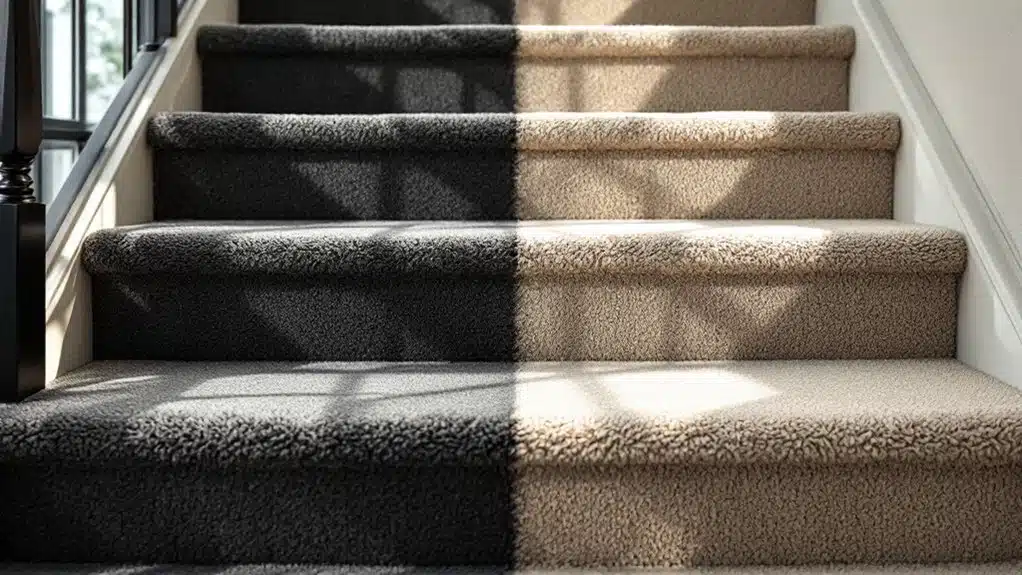
Beyond fiber selection, pile construction determines how your stair carpet responds to the concentrated foot strike patterns and edge wear that stairs produce. Cut pile advantages become clear on stairs: the severed yarn tips compress independently, preventing the snagging and pulling that damages loop configurations under repeated directional stress.
Loop pile durability excels on flat commercial floors, but stairs expose its critical weakness. A single broken loop can unravel an entire run, creating both safety hazards and accelerated deterioration for the households you’re outfitting.
For stair applications, choose a dense, low-profile cut pile with a twist level of 5 or higher. This construction resists crushing on nosings, maintains appearance under directional foot strikes, and delivers the long-term performance your clients expect. Establishing a regular cleaning routine will help preserve the carpet’s appearance and extend its lifespan on high-traffic stairs.
Carpet Specs That Actually Matter for Stairs
Once you’ve locked in the right pile construction, the next step is reading spec sheets accurately—because not all numbers that appear on carpet labels translate consistently to stair performance. Focus on face weight (oz. per sq. yd.), targeting 40–60 oz. for heavy traffic. Density matters more than carpet thickness alone—calculate it by multiplying face weight by 36, then dividing by pile height. Higher density means fibers stay upright under repeated compression. Pile height should stay between 1/4″ and 1/2″; anything taller shifts underfoot on stair nosings. Choose stair padding rated 7/16″ thick or less with 8 lb. density minimum—thicker padding causes carpet movement and accelerates seam failure. Twist level should hit 5+ twists per inch, ensuring fiber resilience under directional foot pressure.
How to Make Any Stair Carpet Last Longer
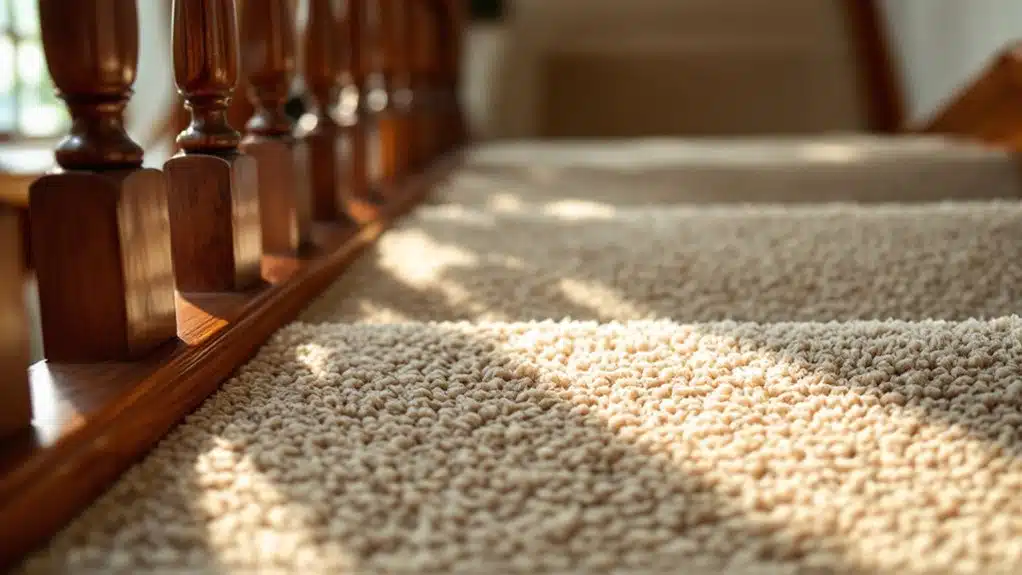
Even the most durable stair carpet degrades faster without a consistent maintenance routine. Apply these carpet maintenance tips to extend fiber integrity and appearance.
Vacuum stairs weekly using an upright or canister with a beater bar, working top to bottom. Address spills immediately — blot, don’t rub — using a pH-neutral cleaner to prevent fiber breakdown and staining.
Rotate traffic patterns where possible by repositioning stair runners periodically. Install carpet protector film during high-traffic events or moving days.
Schedule professional hot-water extraction cleaning annually to remove embedded grit that accelerates wear. For stair cleaning techniques, use a stiff-bristle hand brush on each tread to dislodge debris before vacuuming.
Inspect padding annually — compressed padding transfers stress directly to carpet fibers, accelerating deterioration faster than surface traffic alone.
Frequently Asked Questions
Can I Install Stair Carpet Myself, or Should I Hire a Professional?
You can tackle DIY installation if you’re skilled with tools, but for precise, long-lasting results on heavy-traffic stairs, professional services guarantee proper stretching, secure fastening, and expert finishing that protects your investment effectively.
How Much Does It Typically Cost to Carpet a Staircase?
You’ll typically spend $300–$1,500 carpeting a staircase, depending on stair carpet materials like nylon or wool. Factor in installation and maintenance tips—regular vacuuming and prompt stain removal—to maximize your investment’s longevity and serve your household well.
What Colors or Patterns Best Hide Dirt and Wear on Stairs?
Choose medium-toned, multi-tonal patterns—like tweeds or heathered blends—to best conceal dirt and wear. They’ll maximize stain resistance while texture variety naturally camouflages foot traffic evidence, helping you maintain cleaner-looking stairs for those you serve daily.
Are There Carpet Options That Work Well for Homes With Pets?
Coincidentally, you’ll find nylon and polyester among the best pet-friendly materials available. Their durable textures resist claws, stains, and odors effectively. You’ll want tight, low-pile constructions, as they’ll withstand your pets’ daily activity while remaining easy to clean.
How Long Does Stair Carpet Installation Usually Take to Complete?
You’ll typically complete stair carpet installation in four to six hours. Factor in carpet padding options for added time. Proper planning guarantees efficient stair carpet maintenance, helping you serve your household’s long-term comfort and safety needs effectively.
Conclusion
You’re fighting a war of attrition every time someone climbs those stairs, so your carpet choice is your frontline defense. Stick with nylon or wool in a low, dense cut pile, prioritize face weight over 40 oz., and don’t skip the quality pad. You’ll extend your carpet’s lifespan considerably by choosing correctly upfront rather than replacing cheap materials every few years.