
What Flooring Warranties Actually Cover — and What Voids Them
Flooring warranties cover manufacturing defects, premature wear, finish failures, and material integrity issues like delamination or cracking under normal use. They don’t cover moisture damage, improper installation, pet scratches, or normal fading. Your daily habits, cleaning products, and even skipping furniture pads can void coverage entirely. Warranties are legally binding contracts with strict conditions buried in the fine print — and knowing exactly what those conditions require makes the difference between an approved claim and a denied one.
Key Takeaways
- Flooring warranties cover manufacturing defects, premature wear, delamination, and finish performance like stain resistance and surface coating durability under normal use.
- Installation errors, including skipping acclimation periods or using incorrect adhesives, immediately void warranty protection with no grace period.
- Water damage, pet scratches, commercial misuse of residential products, and normal fading are typically excluded from coverage.
- Using non-approved cleaners like vinegar, steam mops, or oil-based soaps can void warranty claims by degrading protective finishes.
- Missing purchase receipts, undocumented maintenance, or deviating from manufacturer-approved installation methods can disqualify warranty claims entirely.
Manufacturer Warranty vs. Installation Warranty: What’s the Difference?
When purchasing flooring, you’ll encounter two distinct types of warranties: the manufacturer warranty and the installation warranty. Each carries distinct warranty terms and coverage limits you must understand before committing to a purchase.
The manufacturer warranty covers defects in the flooring material itself — fading, structural failures, or surface deterioration originating from production errors. This warranty binds the flooring manufacturer directly.
The installation warranty, issued by your contractor, covers workmanship errors — improper subfloor preparation, incorrect adhesive application, or faulty plank alignment. This warranty binds the installer, not the manufacturer.
These two warranties operate independently. A manufacturing defect won’t activate your installation warranty, and poor workmanship won’t trigger manufacturer coverage. Knowing which warranty applies to your specific issue helps you pursue the correct party efficiently. Professional contractors using certified installation professionals trained in the latest techniques are better positioned to honor comprehensive installation warranties and prevent workmanship-related issues.
What Your Flooring Warranty Actually Covers
Understanding exactly what your flooring warranty covers prevents costly assumptions and protects your investment when defects arise. Warranties typically define warranty duration and coverage limits precisely, so reviewing your documentation carefully matters.
Most flooring warranties cover:
- Manufacturing defects — structural flaws, premature wear, or finish failures originating from production
- Material integrity — delamination, cracking, or dimensional instability under normal use conditions
- Finish performance — stain resistance and surface coating durability within specified warranty duration periods
Coverage limits commonly exclude damage from improper maintenance, moisture exposure beyond product specifications, or subfloor irregularities. You’ll need to retain your purchase receipts and installation records to substantiate any claim. Understanding these boundaries lets you serve your clients or household members confidently, ensuring you pursue legitimate claims without delays caused by insufficient documentation. Maintaining consistent indoor humidity is essential to prevent moisture-related damage that could void your warranty coverage.
What Most Flooring Warranties Won’t Cover
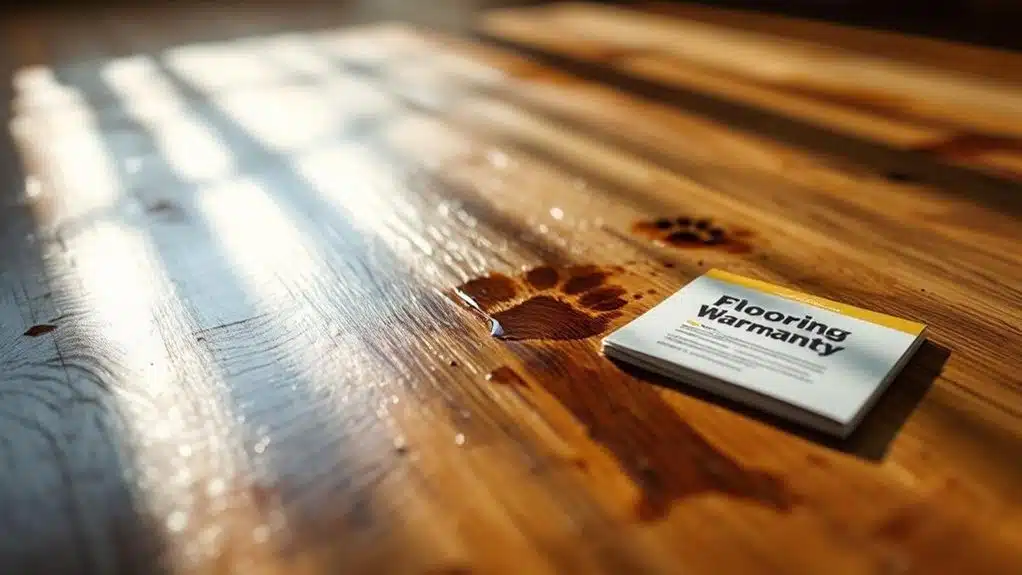
Knowing what your warranty covers is only half the equation — the exclusions are where most claims get denied. Understanding warranty limitations helps you protect clients from costly surprises. LVP flooring’s water resistance makes it particularly important to clarify what moisture-related damage is and isn’t covered under warranty terms.
| Excluded Condition | Why It’s Denied |
|---|---|
| Water or moisture damage | Installation environment responsibility |
| Improper subfloor prep | Installer or homeowner liability |
| Commercial use in residential product | Product misapplication |
| Normal wear and fading | Expected product degradation |
Common misconceptions include assuming warranties cover pet scratches, flood damage, or color variation — they typically don’t. Manufacturers likewise void coverage when unapproved cleaning products are used. Always review exclusion clauses before recommending a product to someone you’re serving, ensuring their investment stays protected through proper expectations set upfront.
How Improper Installation Voids Your Flooring Warranty Immediately
When you install flooring incorrectly, you forfeit your warranty protections the moment the job is done—no grace period, no exceptions. Manufacturers publish precise installation standards covering subfloor preparation, acclimation periods, adhesive types, fastener spacing, and expansion gap requirements, and deviating from any one of these specifications constitutes grounds for claim denial. You’re responsible for either following these technical standards yourself or verifying that your installer does, as the manufacturer holds you accountable regardless of who drove the nail or spread the glue. Professional flooring specialists with over 18 years of experience understand these warranty requirements and ensure installations meet manufacturer specifications to protect your coverage.
Installation Mistakes That Void
Most flooring warranties become void the moment improper installation occurs—and manufacturers don’t offer second chances. Understanding installation errors and their warranty implications protects both you and your clients.
Common installation mistakes that immediately void coverage include:
- Skipping acclimation periods — failing to allow flooring materials to adjust to the environment’s temperature and humidity before installation
- Ignoring subfloor preparation requirements — installing over uneven, damp, or structurally compromised subfloors violates manufacturer specifications
- Using incorrect adhesives or fasteners — substituting non-approved products invalidates material performance guarantees entirely
You must follow every manufacturer-specified procedure precisely. Document each installation step thoroughly, including moisture readings, subfloor measurements, and product lot numbers. This documentation establishes compliance and protects warranty validity when clients submit future claims. Proper installation ensures flooring maintains structural integrity and performs as designed under the demands of everyday use.
Manufacturer’s Required Installation Standards
Each manufacturer publishes installation standards that function as legally binding warranty conditions—ignore them, and you forfeit coverage immediately. These installation guidelines specify subfloor flatness tolerances, moisture thresholds, adhesive requirements, expansion gap measurements, and acclimation periods. You must review them before touching a single plank.
Conduct compliance checks at every project phase—before, during, and after installation. Document subfloor moisture readings, ambient temperature logs, and adhesive spread rates. Manufacturers increasingly require photographic evidence proving you followed their protocols.
When you’re installing flooring for clients, your professional reputation depends on honoring these standards precisely. A single deviation—incorrect trowel notch size, insufficient acclimation time, or missing underlayment specifications—eliminates warranty protection entirely. Working with professional installation teams ensures that manufacturer standards are met consistently and documentation is properly maintained throughout the project. Protect your clients by treating manufacturer documentation as non-negotiable installation law, not optional guidance.
Cleaning Products and Daily Habits That Void Flooring Warranty Coverage
Even after a flawless installation, you can void your flooring warranty through something as routine as mopping with the wrong cleaner. Many manufacturers explicitly prohibit oil-based soaps, steam mops, abrasive scrubbers, and ammonia-based solutions, and using any of these can permanently nullify your coverage. Your daily habits—dragging furniture, skipping protective pads, or allowing standing water to sit—compound the damage and give manufacturers documented grounds to deny your claim. Excess water causes hardwood to swell or cup, resulting in visible damage that manufacturers will not cover under warranty.
Harmful Cleaning Product Choices
When it comes to flooring warranties, what you clean your floors with matters just as much as how often you clean them. Many homeowners hold common misconceptions about which products are safe, assuming eco friendly options or natural solutions are always warranty-compliant. They’re not always.
Manufacturers specify approved cleaning agents, and deviating from that list voids your coverage. Avoid these harmful choices:
- Vinegar or citrus-based cleaners — their acidity degrades protective finish coatings
- Steam mops — excessive moisture penetrates flooring joints, causing irreversible swelling
- Oil-based soaps — they leave residue that breaks down surface sealants over time
The Flooring Specialist recommends consulting pH-neutral cleaners specifically formulated for your tile or stone type to ensure warranty compliance and long-term floor protection. Always cross-reference your warranty documentation before introducing any product. When serving clients or household members, verifying product compliance protects both the floor and the people relying on its longevity.
Daily Habits That Void
Cleaning products aren’t the only threat to your warranty coverage — your daily habits carry equal weight. Your daily routines directly affect warranty validity in ways most homeowners overlook. Dragging furniture without felt pads, wearing high heels on hardwood, or allowing pet nails to scratch surfaces repeatedly can each trigger exclusion clauses. Manufacturers document acceptable cleaning habits explicitly, and deviating from their guidelines creates grounds for denial. You must sweep or vacuum using manufacturer-approved attachments, avoiding rotating brush rolls that gouge surfaces. Wet-mopping frequency matters too — excessive moisture exposure documented through repeated claims signals neglect rather than normal wear. Using pH-neutral cleaners protects your warranty by preventing damage to grout and flooring materials while maintaining manufacturer specifications. Review your warranty’s maintenance schedule, follow it precisely, and log your cleaning habits consistently. Serving your clients or household means protecting their investment through disciplined, documented daily care.
How Subfloor Problems Can Invalidate Your Flooring Warranty
Subfloor conditions play a critical role in determining whether your flooring warranty remains valid. Manufacturers require proper subfloor preparation before installation, and neglecting this step creates significant warranty implications.
Common subfloor issues that void coverage include:
- Moisture concerns: Increased subfloor moisture levels cause warping, buckling, and adhesive failure, shifting repair responsibilities entirely to you
- Installation integrity: An unlevel or structurally compromised subfloor prevents proper flooring longevity and nullifies manufacturer obligations
- Pre-existing damage: Rot, delamination, or instability documented after installation confirms negligent preparation
Before installation, you must test moisture levels, verify levelness within manufacturer tolerances, and document subfloor conditions thoroughly. Working with professional installation specialists ensures that all preparation requirements are met to protect your warranty coverage. Retain all inspection records, as manufacturers will request this documentation when evaluating warranty claims. Proper subfloor preparation protects both your clients and your professional reputation.
Does Moisture Damage Fall Under a Flooring Warranty?
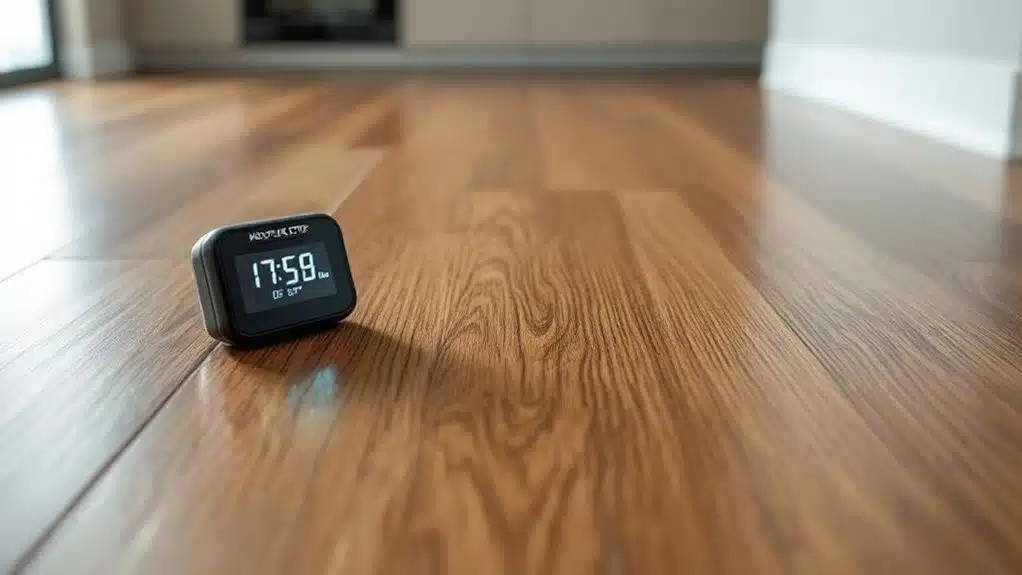
Moisture damage sits at the center of most flooring warranty disputes, and understanding how manufacturers treat it will save you significant time and money. Most warranties explicitly exclude moisture-related failures, classifying them as installation or environmental errors rather than product defects. This distinction carries serious warranty implications for homeowners and contractors alike.
Manufacturers require documented moisture control measures before and during installation. You must conduct subfloor moisture testing, record the results, and maintain readings within the manufacturer’s specified thresholds. Without this documentation, you’ll find moisture claims rejected immediately.
Some premium products offer limited moisture resistance coverage, but these provisions apply only under precisely defined conditions. Read each clause carefully, noting exclusions, testing requirements, and acceptable moisture variance ranges before proceeding with any installation.
Hidden Flooring Warranty Conditions Most Homeowners Miss
When you sign off on a flooring warranty, you’re often agreeing to conditions buried in the fine print that can void your coverage without warning. Manufacturers frequently require specific cleaning products, humidity controls, and acclimation procedures that you must follow precisely to keep the warranty intact. Miss one of these overlooked maintenance requirements, and you’ll find your claim denied even when the defect appears legitimate.
Fine Print Surprises
Most flooring warranties contain conditions buried in the fine print that can void your coverage before you ever notice a problem. Understanding warranty exclusions, coverage limits, and claim processes safeguards both you and those you serve.
Watch for these fine print surprises:
- Homeowner responsibilities: Many warranties require documented maintenance guidelines specific to your flooring types, or coverage limits apply immediately.
- Product specifications: Installation deviations from manufacturer-approved methods nullify warranty transfers and damage types coverage entirely.
- Hidden claim processes: Submitting claims without original purchase receipts, professional installation records, or moisture testing documentation disqualifies your request automatically.
Read every warranty exclusion carefully before installation begins. Matching your flooring types to realistic coverage limits guarantees you’re genuinely protecting the households depending on your guidance.
Overlooked Maintenance Requirements
Failing to follow manufacturer-specified maintenance schedules is one of the fastest ways to void your flooring warranty without realizing it. Most warranties require documented routine inspections, specific cleaning products, and seasonal upkeep protocols that many homeowners skip entirely. You’ll need to retain receipts for approved cleaners, log inspection dates, and address humidity fluctuations according to the manufacturer’s guidelines. Neglecting these requirements gives manufacturers legitimate grounds to deny your claim. For hardwood, that means controlling indoor humidity between 35–55%. For luxury vinyl, it means avoiding harsh chemical cleaners. Review your warranty’s maintenance addendum carefully — it often contains obligations buried in technical language. When you’re advising clients or family members, make certain they understand these responsibilities before installation, not after a problem surfaces.
How to File a Flooring Warranty Claim Without Getting Denied
Filing a flooring warranty claim successfully requires more than just noticing a defect and calling your retailer—it demands a structured, documented approach from the moment you identify a problem. Understanding the warranty claim process helps you avoid common denial reasons before they arise.
Start by gathering:
- Proof of purchase and installation records, including contractor credentials and installation date
- Photographic documentation of the defect alongside measurements and room conditions
- Maintenance logs confirming you’ve followed manufacturer-specified cleaning and care protocols
Submit everything simultaneously rather than piecemeal. Manufacturers look for gaps in your documentation trail to justify rejection. If your claim gets disputed, request the denial in writing—it legally obligates them to specify their reasoning, giving you a clear path to appeal or escalate effectively.
How to Read Your Flooring Warranty Before You Buy
When you pick up a flooring warranty document before signing anything, you’re not reading marketing copy—you’re reviewing a legally binding contract that defines exactly what the manufacturer will and won’t cover. Start by locating the warranty duration section, which specifies whether coverage is lifetime, limited-term, or prorated over time. Next, decode the warranty terminology carefully—terms like “wear-through,” “delamination,” and “residential use” carry precise legal definitions that directly affect claim eligibility. Identify what triggers coverage versus what constitutes exclusion. Cross-reference installation requirements, maintenance obligations, and subfloor conditions against your project’s actual constraints. If any condition is unachievable in your setting, that warranty offers less protection than it appears to. Read it before purchasing—not after installation, when it’s already too late to choose differently.
Frequently Asked Questions
Can I Transfer My Flooring Warranty to a New Homeowner After Selling?
Some flooring warranties allow transfer, but you’ll need to review your warranty’s transfer policies carefully. You must notify the manufacturer promptly and guarantee the new homeowner understands their responsibilities to maintain coverage validity.
Does Pet Urine Damage Ever Qualify for Flooring Warranty Coverage?
Pet urine damage rarely qualifies for coverage, as most manufacturers list pet stains under warranty exclusions. You’ll find that moisture-related damage from pets typically voids your warranty, so you’re responsible for prevention and remediation costs.
How Long Do Most Flooring Warranties Typically Last for Residential Use?
Like medieval guild craftsmen once guaranteed their stonework, your warranty duration typically spans 10–25 years for residential flooring. You’ll find coverage limitations vary widely by material, so always review manufacturer terms carefully before installation.
Are Area Rugs Required to Maintain Certain Flooring Warranty Protections?
Some warranties don’t require area rug maintenance, but you’ll want to review your warranty exclusions carefully. Certain manufacturers specify rug placement over high-traffic zones to prevent wear patterns that’d otherwise void your coverage entirely.
Do Flooring Warranties Differ Between Commercial and Residential Property Installations?
Yes, flooring warranties differ considerably between commercial installations and residential installations. You’ll find commercial warranties typically impose stricter wear ratings, heavier traffic thresholds, and shorter coverage periods, while residential installations typically receive broader protections and longer warranty terms.
Conclusion
Your flooring warranty is only as strong as the knowledge backing it up. Understanding what’s covered, what voids coverage, and how to file correctly keeps your investment protected. Don’t let hidden conditions catch you off-guard — read every clause before you sign. Like a contract written in invisible ink, the exclusions matter just as much as the guarantees. Apply these technical insights methodically, and you’ll navigate any warranty claim with confidence and precision.