
What to Know About Moving Heavy Furniture After New Flooring Installation
You’ve just installed new flooring, and you’re enthusiastic to reclaim your space. But moving heavy furniture too soon can compromise your investment through indentations, seam separation, and permanent damage. The curing time varies considerably by material type, and you’ll need specific equipment to protect your floors. Understanding these critical timelines and techniques will determine whether your new floors remain pristine or deteriorate prematurely.
Key Takeaways
- Wait 24-48 hours minimum before moving furniture; hardwood requires 3-7 days for proper curing.
- Use felt pads or furniture sliders to distribute weight and prevent floor damage.
- Laminate flooring supports 50 PSI; hardwood supports 100 PSI; vinyl and tile support 200+ PSI.
- Avoid clustering heavy furniture in one area; stagger pieces to prevent stress concentration points.
- Watch for uncured flooring signs: tacky feel, strong adhesive smell, soft spots, or seams shifting.
How Long to Wait Before Moving Furniture
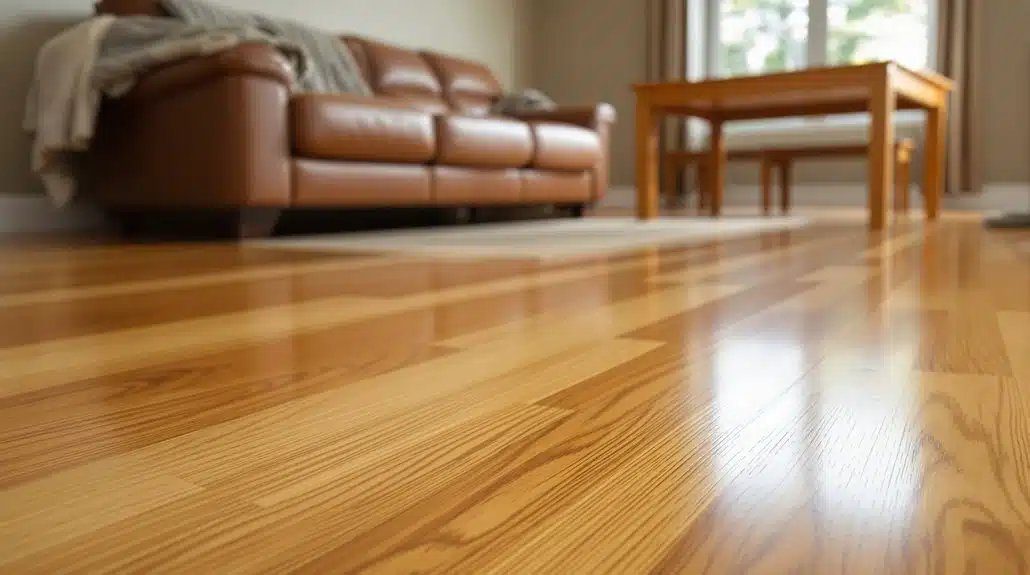
Since flooring adhesives and finishes require adequate curing time to achieve full hardness, you’ll want to wait before moving heavy furniture back into the room. Most installations need 24 to 48 hours minimum, though some materials require up to a week for complete curing.
Rushing this process risks permanent indentations and surface damage that’ll compromise your flooring’s integrity. When you’re finally ready to move furniture, plan your furniture alignment carefully to enhance weight distribution across the floor. Use furniture sliders beneath heavy pieces to prevent dragging and concentrated pressure points. This deliberate approach protects your investment while ensuring your newly installed flooring performs effectively for years. Consult your flooring manufacturer’s specific curing recommendations—they vary by product type and environmental conditions. Proper care during this initial period maintains your flooring’s long-term durability, which is essential for preserving your home’s value and attracting potential buyers down the line.
Curing Times by Flooring Type
Since different flooring materials cure at vastly different rates, you’ll need to adjust your timeline based on what’s been installed. Laminate and vinyl typically cure within 24-48 hours, allowing you to move furniture relatively quickly. Hardwood requires 3-7 days because of moisture-sensitive installation techniques and polyurethane finishes. Tile sets faster—usually 24 hours—though epoxy grout needs additional time. Concrete takes the longest, demanding 7-28 days depending on sealant application.
Flooring adhesives greatly impact curing duration. Moisture-based adhesives require extended drying periods, while water-based alternatives cure faster. Always consult your flooring manufacturer’s specifications, as installation techniques and environmental conditions—humidity, temperature, ventilation—affect actual cure times. Moving furniture prematurely risks compromising adhesive bonds, causing permanent damage to your investment. LVP flooring offers exceptional durability once fully cured, making it highly resistant to scratches and dents from heavy furniture. When in doubt, wait longer rather than risk costly repairs.
How Much Weight Can New Flooring Handle?
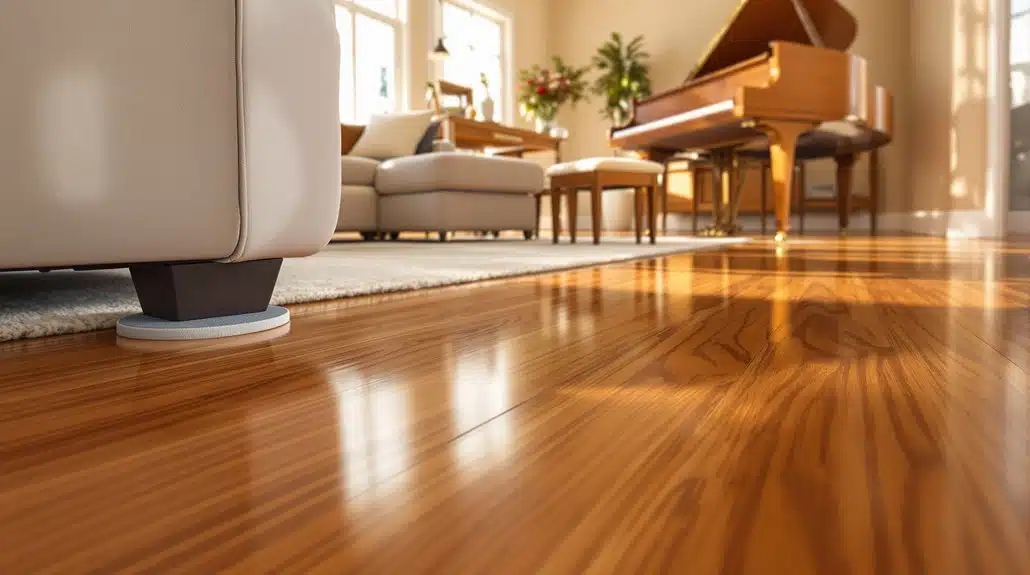
You’ll need to understand your new flooring’s weight capacity before you move furniture back into the space, as different materials handle loads differently and premature weight can cause permanent damage. Allow the recommended curing time for your specific flooring type—whether it’s hardwood, laminate, vinyl, or tile—since the material won’t reach full strength until this period ends. Position heavy furniture carefully by using protective pads, distributing weight across multiple contact points, and avoiding concentrated loads on small areas until your flooring has fully cured. For luxury vinyl plank installations, avoid heavy furniture during the initial settling period to prevent dents and damage that can compromise the scratchproof and scuff-resistant surface.
Weight Capacity by Material Type
Different flooring materials handle weight differently, and understanding these limitations is critical before moving heavy furniture across your newly installed floors.
Hardwood floors typically support 100 pounds per square inch when properly installed, making them suitable for standard furniture arrangements. Laminate flooring offers less durability, handling roughly 50 pounds per square inch, requiring cautious placement of heavy pieces. Vinyl and tile provide excellent weight capacity, supporting 200+ pounds per square inch, allowing you greater flexibility with furniture placement.
When evaluating furniture weight and material strength, consult your flooring manufacturer’s specifications. Concentrated loads—like furniture legs—create pressure points that exceed distributed weight calculations. You’ll want to use furniture pads beneath heavy items to distribute weight evenly and prevent indentation or damage. This protective measure safeguards your investment while serving your flooring’s longevity. Luxury vinyl plank options like EVP feature a high-density core board that provides exceptional durability for handling furniture weight while offering a cushioned walking experience.
Curing Time Requirements First
Before you move that sofa back into the room, your new flooring needs adequate curing time to develop its full structural integrity. The curing process strengthens your floor’s foundation, and you shouldn’t rush this critical phase.
| Flooring Type | Minimum Curing Time |
|---|---|
| Epoxy | 72 hours |
| Polyurethane | 48-72 hours |
| Concrete sealer | 24-48 hours |
| Wood finish | 7-14 days |
| Tile adhesive | 24-48 hours |
Flooring sensitivity peaks during early curing stages. Moving heavy furniture prematurely risks surface damage, indentations, and compromised durability. Your responsibility to maintain these installations means respecting manufacturer guidelines strictly. Check documentation for specific wait times before resuming normal activities. Patience protects your investment and guarantees longevity for those depending on quality results from your work.
Furniture Placement Best Practices
Once your flooring’s curing period ends, you’ll still need to distribute weight carefully to prevent damage. Heavy furniture concentrates pressure on small surface areas, potentially causing dents or cracks in newly installed flooring.
When planning your furniture layout, position heavier pieces on load-bearing walls when possible. Use felt pads or furniture sliders beneath all legs to disperse weight evenly and minimize direct contact with the floor surface. Space optimization matters here—avoid clustering multiple heavy items in one area, which creates stress points.
Spread furniture throughout rooms to distribute loads naturally. If you must place heavy pieces together, stagger them and leave adequate spacing between items. Consider your flooring material’s specifications; some surfaces handle concentrated weight better than others. By strategically positioning furniture and using protective measures, you’ll preserve your new flooring’s integrity while serving your space’s functional needs.
What Equipment You Need for Safe Moving
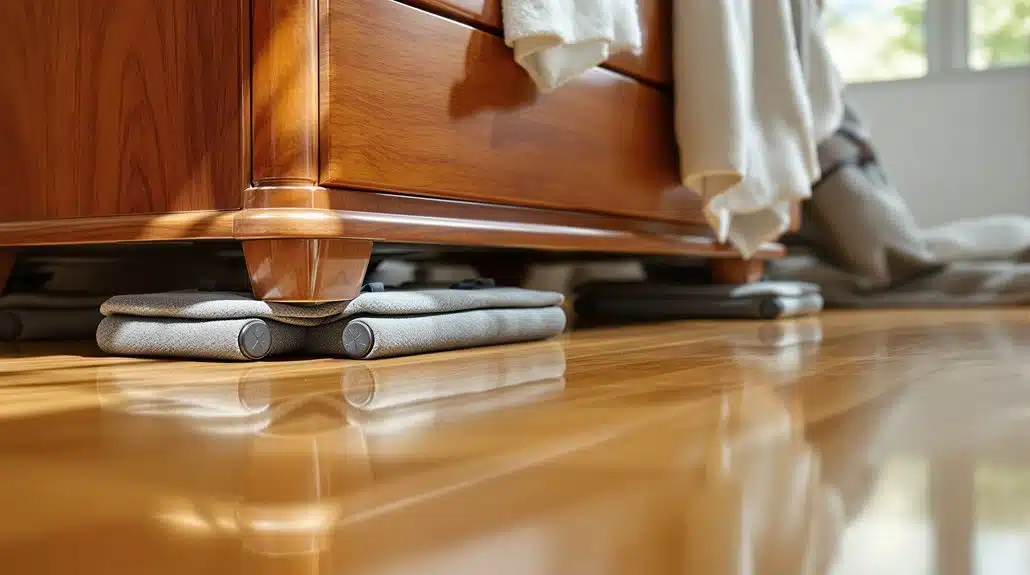
The right tools make all the difference when you’re moving heavy furniture across new flooring. You’ll need moving dollies with smooth wheels to distribute weight evenly and prevent floor damage. Protect your investment by using protective padding—blankets, felt sliders, or foam sheets—underneath furniture legs and along all contact points.
Invest in furniture sliders for smoother gliding across surfaces. A dolly jack helps you lift heavy items safely, reducing strain injuries. Quality straps secure loads during transport, preventing shifts that could scratch floors or harm your team.
Don’t overlook a tape measure for planning routes and doorways. Work gloves protect your hands while ensuring better grip control. Proper equipment isn’t an expense; it’s insurance that safeguards both your newly installed flooring and your team’s physical wellbeing during the moving process.
Signs Your Flooring Isn’t Ready Yet
Even with the best equipment at your disposal, moving furniture too soon can undo all your preparation work. You’ll want to perform thorough flooring checks before repositioning anything heavy.
Watch for these installation indicators that signal your floor isn’t ready. If adhesive still smells strong or feels tacky underfoot, it hasn’t fully cured. Check seams and edges—they shouldn’t shift or separate when you apply pressure. Moisture readings matter too; use a moisture meter to verify levels are within manufacturer specifications.
Notice any soft spots, squeaking, or slight movement in the surface. These suggest the foundation hasn’t set completely. Consult your flooring documentation for cure times specific to your material type.
Waiting the recommended period protects your investment and guarantees durability when you finally move your furniture.
Common Mistakes That Damage Fresh Floors
While you’re keen to reclaim your space, rushing furniture back onto fresh flooring is one of the most common—and costly—mistakes homeowners make. Protect your investment by avoiding these damaging errors:
- Dragging heavy furniture directly across the surface, which creates scratches and gouges
- Skipping furniture sliders underneath chair and table legs during movement
- Neglecting protective covers on furniture bottoms that contact the floor
- Placing items immediately without allowing adequate curing time per manufacturer specifications
You’re serving your flooring’s longevity by exercising patience. Use furniture sliders consistently—they’re inexpensive and highly effective. Apply protective covers to any furniture base making contact with your floor. These precautions prevent irreversible damage and preserve your flooring’s aesthetic and structural integrity for years ahead.
Conclusion
You shouldn’t ignore curing times—they’re non-negotiable for floor longevity. A homeowner who moved a leather sectional onto hardwood after 36 hours experienced permanent indentations that required costly refinishing. You’ll protect your investment by waiting the full recommended period, using protective sliders, and distributing weight strategically. Rushing this process costs you considerably more in repairs than the inconvenience of temporary furniture placement warrants.