
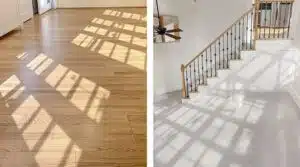
Upstairs vs. Downstairs Flooring: Do They Have to Match?
Your upstairs and downstairs floors don’t have to match — but they should feel intentional together. Downstairs spaces benefit from durable hardwood, tile, or luxury vinyl, while upstairs rooms favor carpet or engineered hardwood for comfort and noise reduction. The key is maintaining shared undertones, consistent trim, and smart connections that unify different materials. Get…

What Home Inspectors Look for When They Check Your Floors
When a home inspector evaluates your floors, they’re systematically checking for structural failures, moisture intrusion, pest damage, and material defects that could cost you thousands in repairs after closing. They’ll walk every surface, probe soft spots, measure slope consistency, and assess each flooring type for its specific failure points. From subfloor rot to hollow tiles…

Best Time of Year to Install New Flooring in a Georgia Home
Fall is the best time to install new flooring in a Georgia home. Mild temperatures and lower humidity create stable conditions that let adhesives cure properly and give materials time to acclimate without fighting the state’s notorious moisture. Spring works as a secondary option if you monitor indoor humidity carefully. Summer’s high humidity and winter’s…

Best Flooring for Home Offices When You’re On Your Feet All Day
If you’re standing six or more hours daily, your flooring choice directly impacts your musculoskeletal health. Cork, luxury vinyl plank, and rubber flooring are your best options, each offering cushioning, durability, and slip resistance — the three non-negotiable performance criteria. Avoid concrete, ceramic tile, and bare hardwood, as they lack shock absorption and accelerate fatigue.…

How Often Should Landlords Replace Flooring Between Tenants?
You don’t replace flooring on a fixed schedule — you replace it when age, damage, and habitability standards converge to make continued use impractical or legally indefensible. Carpet typically lasts 5–7 years under rental conditions, while hardwood or tile can last decades with proper care. You’re responsible for distinguishing normal wear and tear from tenant…

How to Pick Grout Color — and Why It Matters More Than Most People Think
Grout color shapes how your entire tile installation looks, feels, and functions — yet most people treat it as an afterthought. Matching grout creates seamless, expansive surfaces, while contrasting grout defines each tile with sharp clarity. Your tile size, room lighting, and maintenance tolerance all influence the right choice. Light grout shows stains faster; dark…

What’s Actually Included in a Flooring Estimate — and What to Watch Out For
A flooring estimate should cover material costs, labor, subfloor preparation, and disposal fees — but most first quotes leave out critical line items like subfloor leveling, threshold strips, and existing floor removal. You’ll additionally need to account for a 10–20% material waste allowance that contractors don’t always disclose upfront. Vague labor descriptions and missing material…

Can You Install Hardwood Over a Concrete Slab in a Georgia Home?
You can install hardwood over a concrete slab in your Georgia home, but the state’s punishing humidity makes moisture control the difference between floors that last decades and floors that warp within months. Engineered hardwood outperforms solid hardwood over concrete because of its cross-ply construction, and proper moisture testing is non-negotiable before any installation begins.…

What Flooring Warranties Actually Cover — and What Voids Them
Flooring warranties cover manufacturing defects, premature wear, finish failures, and material integrity issues like delamination or cracking under normal use. They don’t cover moisture damage, improper installation, pet scratches, or normal fading. Your daily habits, cleaning products, and even skipping furniture pads can void coverage entirely. Warranties are legally binding contracts with strict conditions buried…

What to Put on Your Mudroom Floor When You Live in Georgia (Red Clay Is No Joke)
If you live in Georgia, your mudroom floor needs to handle red clay’s sticky, staining, iron-rich mess without falling apart. Your best options are porcelain tile, luxury vinyl plank, or sealed concrete — all non-porous, easy to clean, and tough enough for daily clay tracking. Skip hardwood, carpet, and laminate entirely; they’ll stain and warp…